In just a few years, online betting has gone from niche to mainstream, with legal sports wagering now permitted in 38 states and most of those allowing people to place bets directly from their phones.
Sportsbooks generate billions in annual revenue, and app downloads for sports betting apps have increased several-fold since 2019, turning what was once an occasional trip to a casino into a constant, portable form of “entertainment.”
At the same time, multiple studies have documented sharp rises in gambling participation and help-seeking for addiction in jurisdictions that legalized mobile sports betting, including large spikes in searches and calls for gambling help after online sportsbooks went live.
Clinically, the American Psychiatric Association recognizes gambling disorder as a behavioral addiction in the Diagnostic and Statistical Manual of Mental Disorders (DSM-5): a condition marked by a “persistent and recurrent problematic gambling behavior” that causes significant impairment, including a need to wager more money, repeated failed attempts to quit, and continued gambling despite serious harm.
Lawsuit investigations argue that modern gambling platforms are built in ways that make this progression far more likely: users can hold accounts on multiple sportsbooks, compare odds in real time, and fire off dozens of wagers during a single game, all while being hit with constant bonuses and “boosted” bets.
Research and advocacy groups increasingly note that young men are disproportionately represented among those in financial distress from sports betting, including higher rates of bankruptcies, damaged credit, and skipped essentials to cover gambling losses.
Against this backdrop, the core of the sports betting addiction lawsuit is that these products are marketed as casual entertainment, but function in practice as highly engineered systems that reinforce addictive behavior and make it difficult for a person addicted to stop.
Features like 24/7 access, live in-game betting, instant deposits, and frequent promotions all interact with the same reward and reinforcement mechanisms that underlie other addictions, driving many gamblers to keep chasing winnings and cover mounting losses with more money.
Even as operators promote responsible gambling and offer self exclusion lists, early data and state reports show rising calls to problem-gambling helplines and increasing demand for treatment in the same places mobile sports betting has taken off.
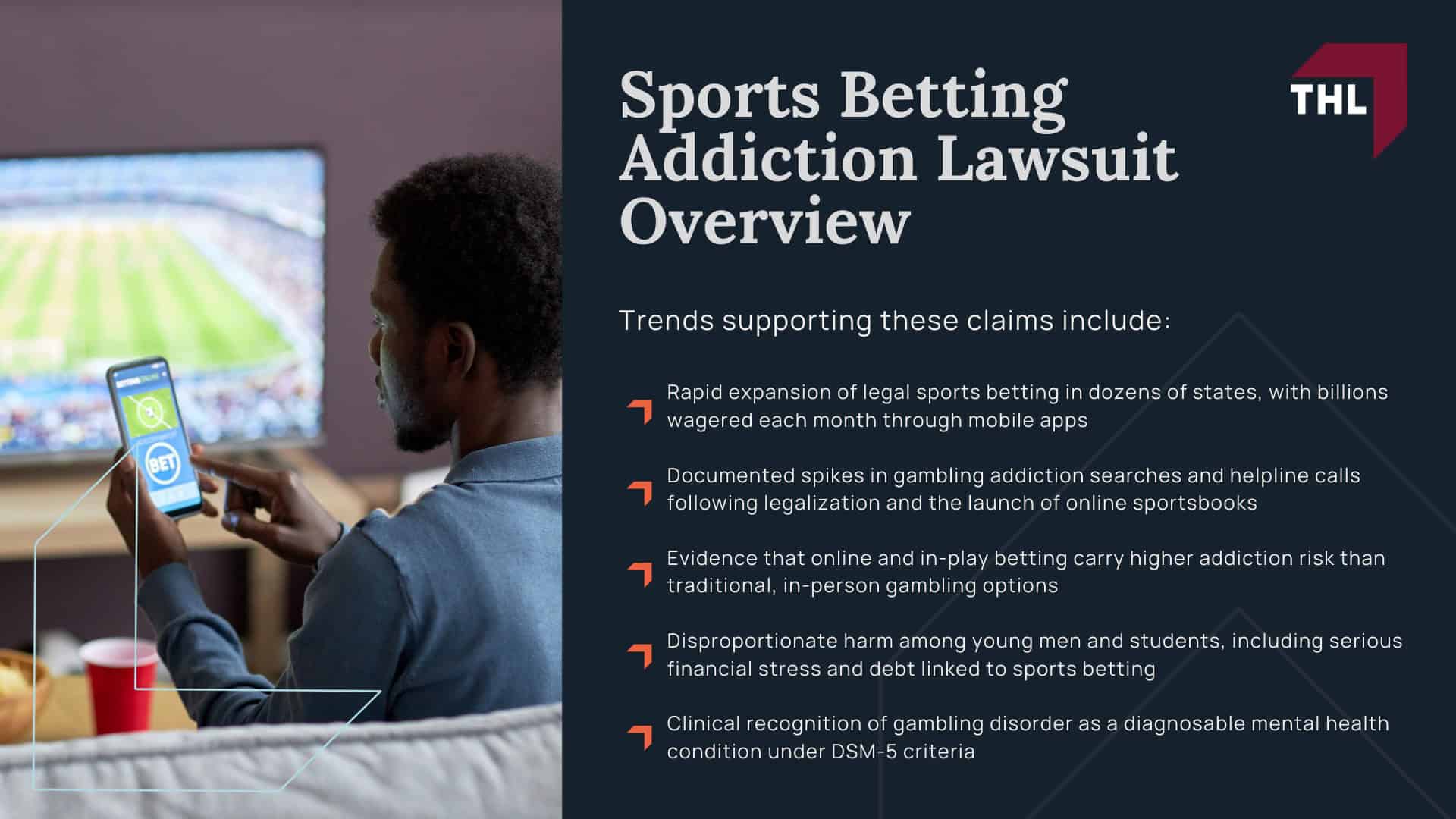
Trends supporting these claims include:
- Rapid expansion of legal sports betting in dozens of states, with billions wagered each month through mobile apps
- Documented spikes in gambling addiction searches and helpline calls following legalization and the launch of online sportsbooks
- Evidence that online and in-play betting carry higher addiction risk than traditional, in-person gambling options
- Disproportionate harm among young men and students, including serious financial stress and debt linked to sports betting
- Clinical recognition of gambling disorder as a diagnosable mental health condition under DSM-5 criteria
Together, these data points form the backbone of current and emerging claims: that major sportsbooks designed and promoted products that predictably foster addiction, encouraged people to treat high-risk wagering as harmless fun, and did not meaningfully intervene even when users showed clear signs of harm.
For those who suffered substantial financial or emotional harm while using these apps, current investigations aim to determine whether platform design or marketing practices may have contributed to the progression of their gambling addiction.
How Sportsbooks May Contribute to Gambling Addiction
Research suggests that mobile gambling platforms can make it easier for a person with a vulnerability to develop a gambling problem, because bets are available at any time, from almost anywhere, with just a few taps.
Early data from helplines and prevalence studies show that in states that allow online betting, both gambling participation and help-seeking for addiction have increased, with calls skewing younger and often involving young men.
The National Council on Problem Gambling estimates that millions of adults in the U.S. have mild to severe gambling problems, and clinicians report that sportsbook users often delay seeking resources until debt, anxiety, or relationship strain become overwhelming.
Experts note that constant app access, fast deposits, and live in-game markets can reinforce betting in the same moments people are stressed, bored, using alcohol, or trying to “win it back,” which can make stopping much harder.
While operators promote responsible gambling tools such as deposit limits, time-outs, and self exclusion lists, surveys and public-health commentary indicate that many high-risk users either do not use these tools or only encounter them after significant harm has occurred.
Public health discussions increasingly frame modern sports betting as a population-level risk: millions of people are encouraged to gamble legally through heavy advertising and user-friendly websites, even though only a fraction will recognize early warning signs or seek help before serious financial or emotional damage has occurred.
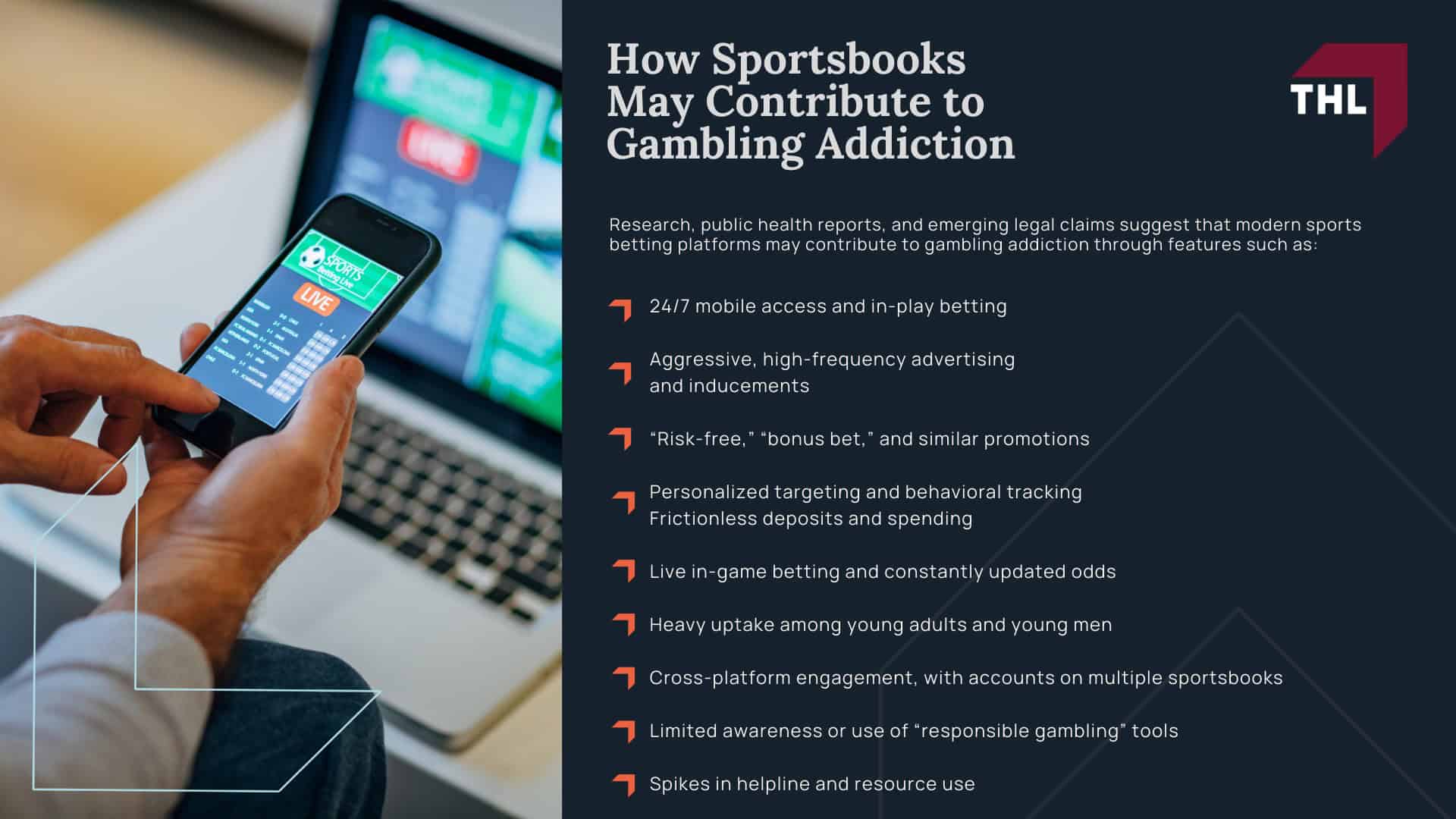
Research, public health reports, and emerging legal claims suggest that modern sports betting platforms may contribute to gambling addiction through features such as:
- 24/7 mobile access and in-play betting, which allow users to place rapid, repeated wagers from anywhere, correlating with higher rates of problem sports betting and worse mental-health indicators.
- Aggressive, high-frequency advertising and inducements (including celebrity-backed ads) that normalize betting as part of watching sports and heavily promote “bonus” or incentive offers.
- “Risk-free,” “bonus bet,” and similar promotions alleged in lawsuits (e.g., Baltimore vs. DraftKings and FanDuel) to mislead consumers, encourage higher stakes, and keep vulnerable users engaged.
- Personalized targeting and behavioral tracking, where operators analyze betting patterns to identify heavy or vulnerable bettors and then serve tailored offers, a practice specifically criticized in the Baltimore complaint as exploiting addiction-related behaviors.
- Frictionless deposits and spending, including instant transfers from bank accounts and cards, which make it easy to wager larger amounts quickly and are highlighted in research as a risk factor for escalating losses.
- Live in-game betting and constantly updated odds, which dramatically increase the number of betting “events” per game and are associated with higher addiction risk compared to more traditional, slower forms of gambling.
- Heavy uptake among young adults and young men, a group repeatedly identified in NCAA and other studies as disproportionately engaged in sports betting and more likely to report harms such as anxiety, missed obligations, and financial trouble.
- Cross-platform engagement, with accounts on multiple sportsbooks, which can multiply opportunities to bet, stack promotions, and compound losses across several apps at once.
- Limited awareness or use of “responsible gambling” tools, such as deposit limits or self-exclusion registers, with research showing relatively low enrollment in national exclusion systems despite large high-risk populations.
- Spikes in helpline and resource use: The National Problem Gambling Helpline reporting double-digit percentage increases in calls, texts, and chats, and state helplines (like North Carolina’s) seeing record call volumes after mobile sports betting launches.
Why These Cases Differ From Ordinary Gambling Loss Disputes
Sports betting addiction claims differ from simple gambling losses because they focus on the underlying patterns of compulsive behavior, not whether a person won or lost a particular wager.
These cases examine whether a sportsbook’s design, marketing, or promotional infrastructure may have contributed to the development or escalation of addiction, rather than placing blame on a single financial outcome.
Unlike ordinary disputes, where a bettor might argue over payout errors or account issues, these claims look at behavioral reinforcement, such as constant notifications, rapid in-game betting, and incentives that encourage continued wagering.
The question is not whether someone made a bad bet, but whether the platform’s systems played a role in creating or worsening a loss of control.
Investigators also consider whether vulnerable users were exposed to misleading offers, high-frequency inducements, or repeated pushes to re-engage at moments when they were attempting to stop.
These cases often involve evidence of emotional, psychological, and financial harm that goes far beyond routine betting losses.
As a result, they resemble personal injury–style claims rooted in addiction and consumer harm, not traditional gambling disputes.