The DraftKings gambling addiction lawsuit centers on claims that the company’s online sportsbooks were deliberately designed to encourage excessive betting and exploit users’ psychological vulnerabilities.
Plaintiffs argue that DraftKings used deceptive marketing and misleading promotions (including so-called risk-free bets and “No Sweat” wagers) to make betting appear safe and winnable, when in reality users were continually exposed to escalating financial risk.
These tactics reportedly promote compulsive betting, causing individuals to place bets far more frequently and for larger amounts than they ever intended.
Many people describe the devastating aftermath of losing money they could not afford, entering cycles of financial distress and emotional strain that worsened over time.
DraftKings’ aggressive marketing has reached wide and vulnerable audiences, including college students and young adults targeted through sports programming, social media, and sponsorships tied to athletic events.
The platform’s mobile apps, available in nearly every legalized betting state, have made gambling accessible to over one million players, many of whom have reported difficulty controlling their betting habits.
Attorneys allege that this combination of convenience, constant advertising, and psychological manipulation represents a dangerous business model: one that blurs the line between entertainment and addiction.
As lawsuits continue to be investigated, courts will examine whether DraftKings’ business practices crossed into negligence or consumer fraud, and whether the company should be held financially accountable for the harms caused by its design choices.
What Is Being Alleged Against DraftKings?
In the wake of the sports betting boom, DraftKings is facing lawsuit investigations that claim its platform’s design and marketing amount to predatory gambling practices.
Attorneys argue that the company’s mobile games and sportsbook features are engineered to keep users engaged through constant promotions, notifications, and reward loops that make stopping nearly impossible.
The complaints say these tactics are different from traditional casino games, combining accessibility with personalization to create a higher risk of addiction and emotional harm.
Some plaintiffs and families even allege that users driven into financial ruin and despair by the app’s manipulative systems have taken their own lives.
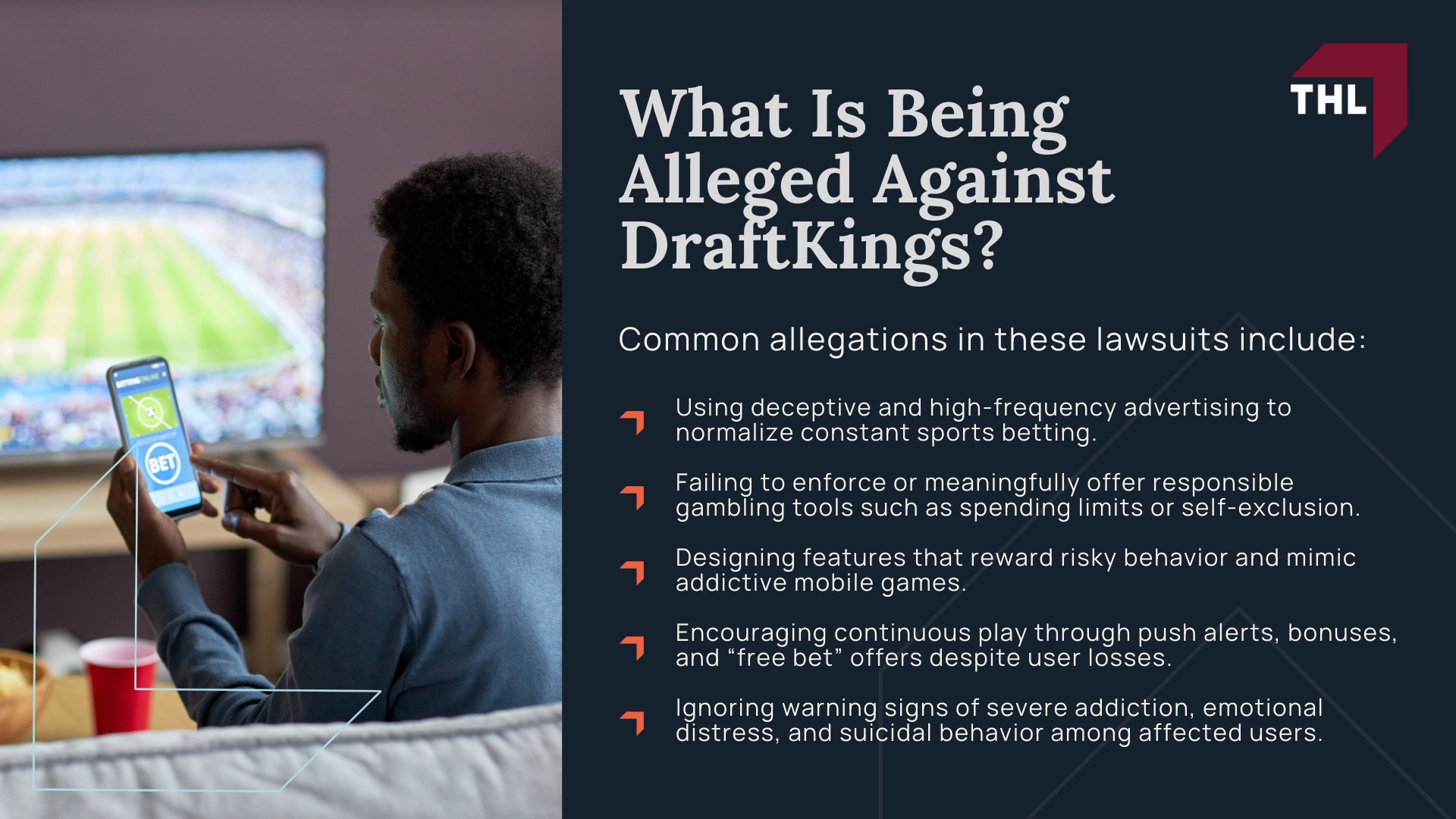
Potential allegations include:
- Using deceptive and high-frequency advertising to normalize constant sports betting.
- Failing to enforce or meaningfully offer responsible gambling tools such as spending limits or self-exclusion.
- Designing features that reward risky behavior and mimic addictive mobile games.
- Encouraging continuous play through push alerts, bonuses, and “free bet” offers despite user losses.
- Ignoring warning signs of severe addiction, emotional distress, and suicidal behavior among affected users.
Cases and Regulatory Actions Involving DraftKings
Regulators and public entities are pursuing actions against DraftKings that focus on unfair practices and deceptive practices in how sports betting apps are marketed and operated; these are distinct from the individual addiction claims our law firm is investigating.
City and state actions typically aim to protect the public at large (seeking fines, injunctions, and policy changes) while individual lawsuits focus on a person’s specific financial harm and health impacts from gambling problems fueled by product design.
In short: public actions test whether DraftKings’ systems and ads are lawful; private cases examine how those same systems harmed a particular person who was given direct access to constant betting through mobile features and promos.
Important cases & regulatory actions (by date) include:
- Feb 28, 2023 – New York ad rules tighten: NY regulators formally move to curb terms like “risk-free,” signaling a crackdown on potentially deceptive practices in sportsbook advertising.
- Nov 20, 2024 – Ohio settlement ($425,000): The Ohio Casino Control Commission accepts a settlement with DraftKings over offering prohibited wagers (including certain college props) and allowing unapproved funding methods.
- Apr 3, 2025 – City of Baltimore lawsuit: Baltimore sues DraftKings (and FanDuel), alleging unfair practices and deceptive practices such as “bonus bet” promos and data-driven targeting that exacerbate addiction, framed as a public-health and consumer-protection action.
- Jul 15, 2025 – Federal class action (E.D. Pa.): Macek et al. v. DraftKings alleges misleading “No Sweat/risk-free” promotions, manipulative design, and self-exclusion failures, an example of broader legal claims aimed at promo and product design.
- Jul 25–30, 2025 – Massachusetts fine ($450,000): The Massachusetts Gaming Commission fines DraftKings for accepting credit-card-funded wagers (prohibited in MA), ordering refunds and remediation, an enforcement action that undercuts “responsible play” claims around funding controls.
These actions help establish a record that DraftKings’ systems and messaging have drawn official scrutiny for deceptive practices and operational lapses.
An individual claim centers on how those same systems led to financial harm and health impacts in a person’s life.
This can mean escalating losses, inability to stop, and documented gambling problems because the app’s features and promos gave users direct access to high-frequency wagering and nudged them to keep betting.