The focus of the lawsuit investigations against FanDuel is how modern sports betting platforms (especially their mobile betting apps) may be contributing to a rise in frequent, high-risk wagering that produces significant harm.
States that have legalized sports betting, particularly with online and mobile access, have seen increases in personal bankruptcies, debt collections, and drops in credit scores, suggesting that the model may expose users to heightened financial risk.
For example, a recent study found bankruptcies rose about 28% in states with online sports betting.
Unlike traditional casino play, where users go to a physical location and are more aware of “time spent” and “money spent,” mobile sportsbooks such as FanDuel operate with constant access and personalized promotions.
These apps are alleged to use deceptive marketing tactics, including frequent bonus bets, “risk-free” offers, push notifications and event sponsorships, all designed to promote compulsive betting and capitalize on real-time engagement.
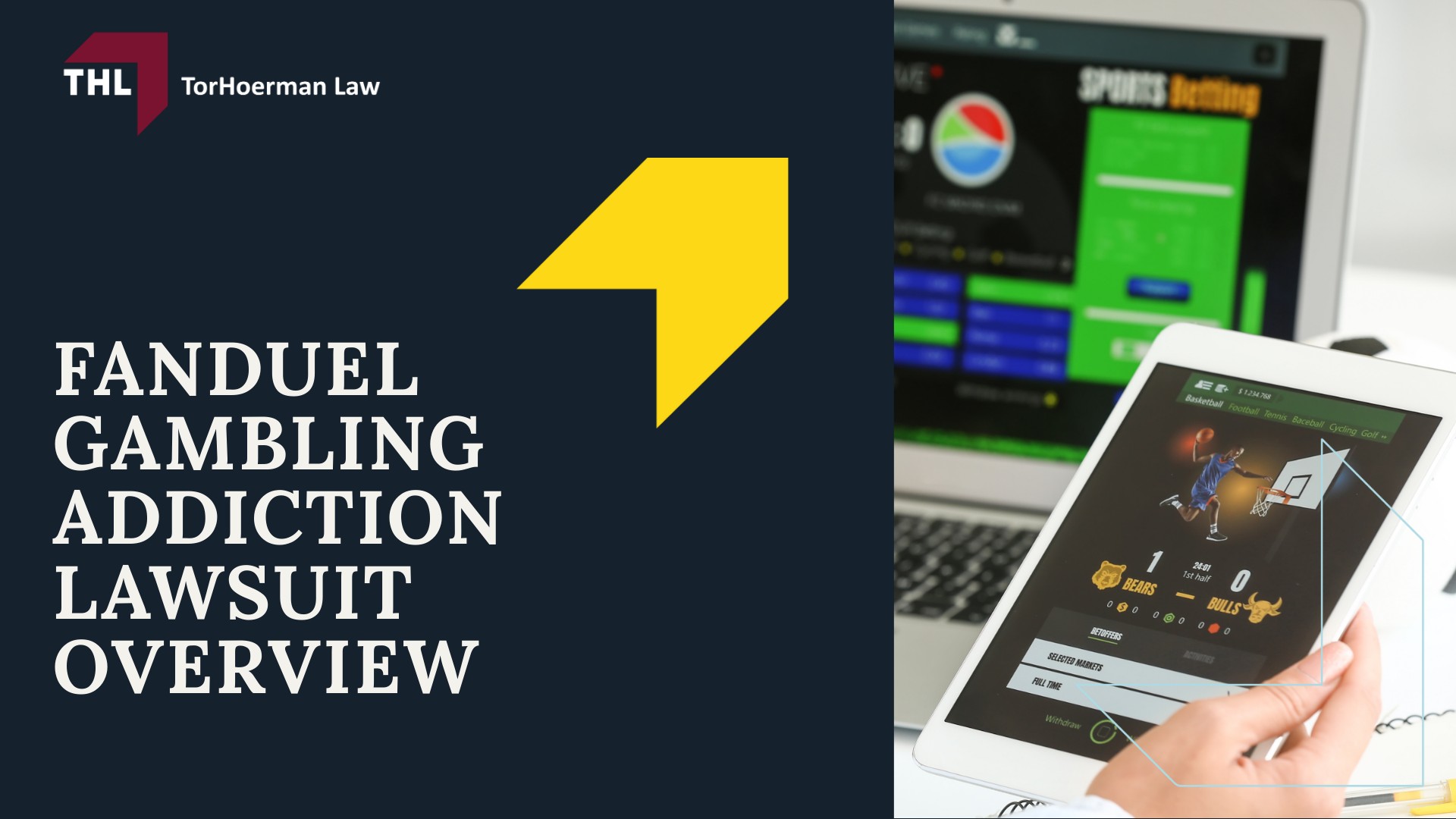
Plaintiffs claim that FanDuel’s systems encouraged habitual betting (even when users were suffering mounting losses and recognizing they could not stop) resulting in serious gambling related losses, emotional distress and in some cases the need for extensive treatment.
Lawsuits argue that frequent gamblers should be able to seek financial compensation to recover financial losses, cover therapy or rehab costs, and be compensated for long-term impacts tied to problematic gambling habits that resulted from aggressive platform design.
These legal claims underscore that online sportsbooks like FanDuel are a different breed of risk compared to casinos or slot machines where the pace, personalization and access can turn entertainment into a high-velocity harm machine.
FanDuel and similar companies could potentially be held accountable for how their mobile platforms and marketing practices affected vulnerable users.
What is Alleged in Gambling Addiction Lawsuits?
Recent lawsuits filed across the country claim that mobile sports betting companies like FanDuel and DraftKings knowingly designed products that fostered dependency and encouraged excessive wagering.
Plaintiffs allege that users developed gambling addictions or worsened existing gambling disorders after being targeted with constant offers, push notifications, and misleading promotions disguised as “free bets” or “risk-free wagers.”
These tactics, according to complaints, blurred the line between entertainment and addiction, especially for younger sports bettors who were new to online gambling.
Many claimants describe escalating gambling problems, mounting financial losses, and emotional distress that disrupted their lives and relationships.
The lawsuits argue that these companies should be held accountable for prioritizing profits over consumer safety and failing to protect known problem gamblers.
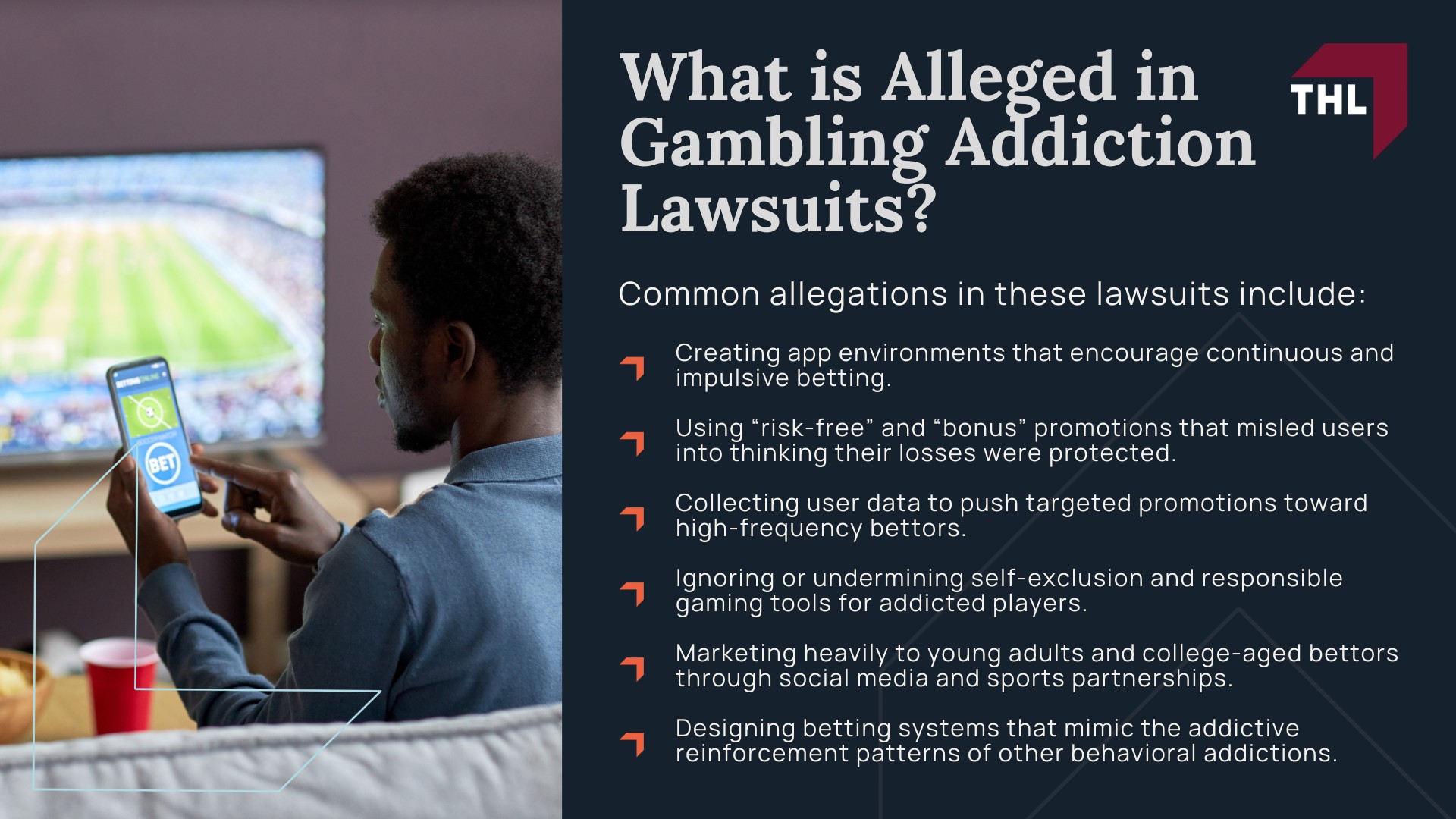
Common allegations in these lawsuits include:
- Creating app environments that encourage continuous and impulsive betting.
- Using “risk-free” and “bonus” promotions that misled users into thinking their losses were protected.
- Collecting user data to push targeted promotions toward high-frequency bettors.
- Ignoring or undermining self-exclusion and responsible gaming tools for addicted players.
- Marketing heavily to young adults and college-aged bettors through social media and sports partnerships.
- Designing betting systems that mimic the addictive reinforcement patterns of other behavioral addictions.
Cases and Regulatory Action Involving FanDuel
Public lawsuits and regulator actions are stacking up around FanDuel, most alleging unfair or deceptive practices in how the app markets and operates, while individual addiction claims (the focus of this page) center on a person’s specific financial harm and health impacts tied to product design (e.g., VIP inducement, ignored self-exclusion, constant promos).
City and state matters typically seek fines, injunctions, or policy changes to curb practices across sports betting apps; private cases seek compensation for a particular user who was given direct access to high-frequency betting and nudged to keep wagering.
Together, these tracks form the factual backdrop for individual claims: they do not prove liability in your case, but they help show the conduct at issue is being scrutinized by courts, regulators, and major newsrooms.
Below is a snapshot of notable FanDuel-related cases and enforcement:
- Oct. 1, 2024 – Patel v. FanDuel/Flutter (S.D.N.Y.): Former Jacksonville Jaguars employee Amit Patel sues FanDuel for $250M, alleging a VIP host used perks/credits and persistent outreach to keep him betting despite addiction red flags; reporting cites more than $1.1M in credits and extensive host contact.
- Apr. 3, 2025 – City of Baltimore v. DraftKings & FanDuel: Baltimore sues both operators for unfair and deceptive practices (e.g., “bonus bet” promos and targeted data use) that exacerbate compulsive gambling; complaint seeks penalties and injunctive relief.
- Apr. 4, 2025 – National VIP scrutiny: In-depth reporting details how VIP programs at FanDuel/DraftKings keep high-value bettors playing “no matter the cost,” and notes mounting litigation and proposed federal limits (e.g., the SAFE Bet Act).
- July 2024 – NJ DGE fine: New Jersey regulators fine FanDuel for accepting wagers on a PFL event that had already occurred—an example of operational lapses that sit adjacent to harm-prevention controls.
- Nov. 20, 2024 (issue discovered) / Jan. 23, 2025 (reported) – Iowa self-exclusion lapse: FanDuel tells regulators a problem affected lifetime self-exclusion; Iowa notes the company did not notify within the required timeframe.
- July 16, 2025 – Iowa IRGC fines FanDuel $125,000 for five violations tied to wagering/responsible-gaming obligations.
- July 15, 2025 – Massachusetts MGC fines FanDuel $15,000 for taking 7,155 unapproved LPGA bets (Mar 2023–Jun 2024); MGC approved the civil administrative penalty.