An underage gambling addiction claim typically begins with one core question: did a minor access online gambling or online sports betting in a way that should have been prevented, and did that access contribute to escalating harm?
Many families notice a pattern consistent with problem gambling or compulsive gambling: repeated deposits, chasing losses, secrecy, irritability, and a growing need to lose money gambling just to keep playing.
A formal diagnosis is not always required to raise concerns, but documented symptoms aligned with gambling disorder standards in the Diagnostic and Statistical Manual of Mental Disorders (DSM) can strengthen an investigation into gambling behavior and harm.
These cases may also consider how the sports betting boom and legalized sports betting expanded access through mobile sports betting, making online betting available 24/7 with constant prompts to wager.
If a minor developed online gambling addiction or online sports betting addiction, the legal focus is often on whether safeguards were meaningful, consistently applied, and designed to keep minors out.
If your family’s experience involves youth access, escalating money gambling, and measurable losses, it may be worth evaluating whether a gambling addiction lawsuit is possible.
What Platforms Are Being Investigated For Legal Action?
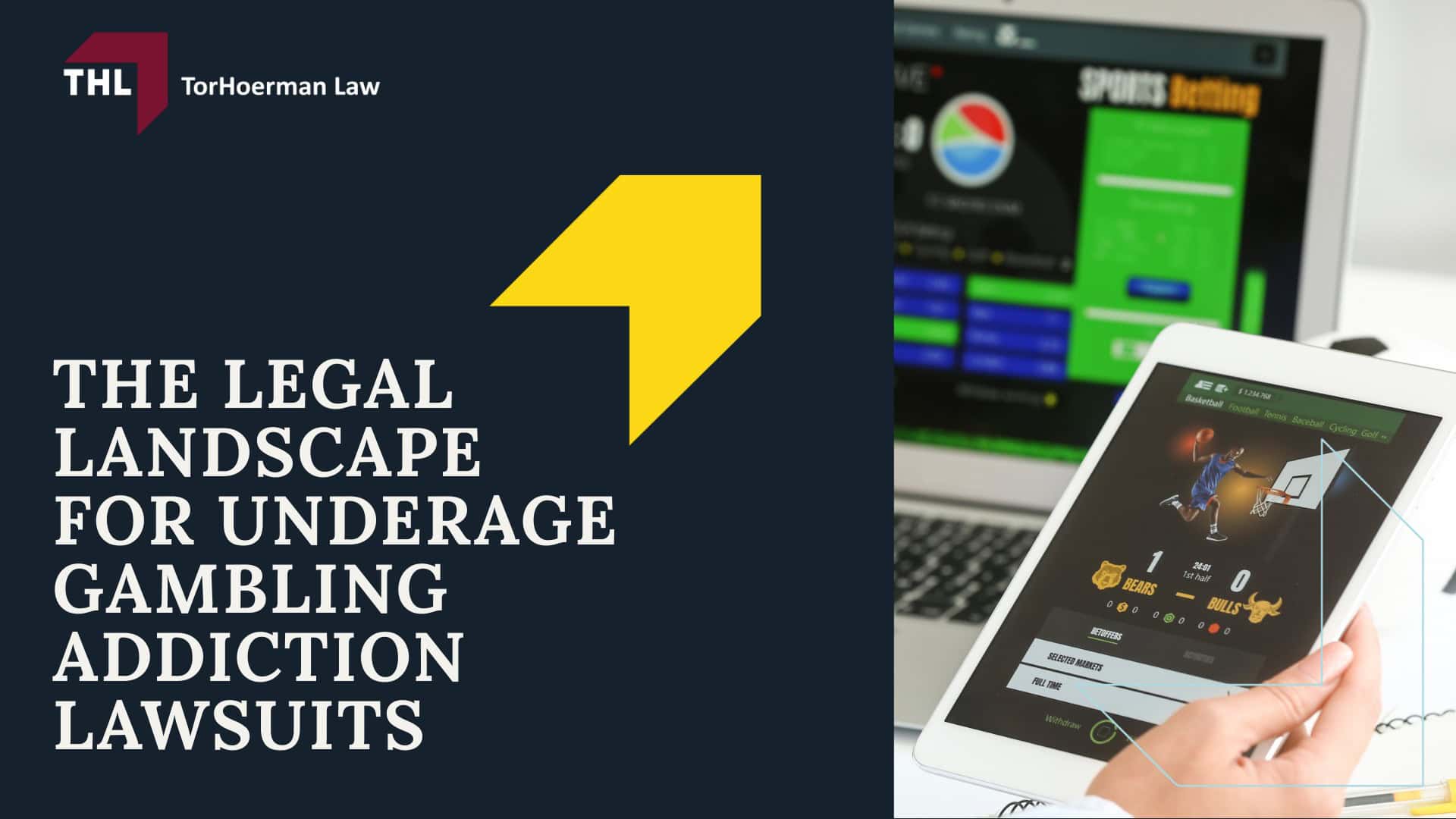
Investigations in an underage gambling addiction lawsuit typically focus on the specific online sportsbooks and online gambling platforms a minor used to place bets, especially platforms that offer mobile sports betting with fast sign-up, easy funding, and constant wagering opportunities.
The legal question is not just whether the app offers sports betting, but whether the platform’s age-gating and identity checks were meaningful in practice, or whether a minor could create an account, deposit money, and start betting with limited friction.
These cases also examine whether the platform permitted funding methods that made underage access easier, such as saved payment credentials on a shared device, third-party payments, or repeat deposits that were processed without strong verification.
An underage gambling lawsuit may also look closely at “growth” features that can intensify compulsive gambling behavior once a user is inside the system, including deposit prompts, bonus structures, streak/reward mechanics, and rapid-fire bet types that encourage repeated wagering.
Marketing and engagement tactics matter too, especially when promotions are framed as “risk-free,” when bonus terms are confusing, or when push notifications and emails repeatedly nudge users back into the app.

In the broader sports betting boom, platforms competed aggressively for engagement, and lawsuits may scrutinize whether those engagement strategies created predictable risk for minors who are more vulnerable to impulsive decision-making.
Because the facts and laws can vary, the most important step is linking a specific platform to the underage activity: which app was used, how the minor gained access, what the bet and deposit history shows, and whether the account reflects patterns consistent with escalating addiction.
If you can identify the app(s), dates, and activity timeline, it becomes easier to evaluate whether that platform’s practices may be relevant to legal action tied to underage gambling addiction.
Gathering Evidence For A Underage Gambling Addiction Lawsuit
Evidence is what turns a painful experience into a provable narrative in an underage gambling addiction lawsuit, especially when the gambling happened through mobile apps and online platforms where activity can escalate quickly.
The goal is to preserve records that show who accessed the account, how the account was funded, how often bets were placed, and how the harm developed over time.
The earlier you gather documentation, the easier it is to capture complete histories before records are deleted, accounts are modified, or devices are replaced.
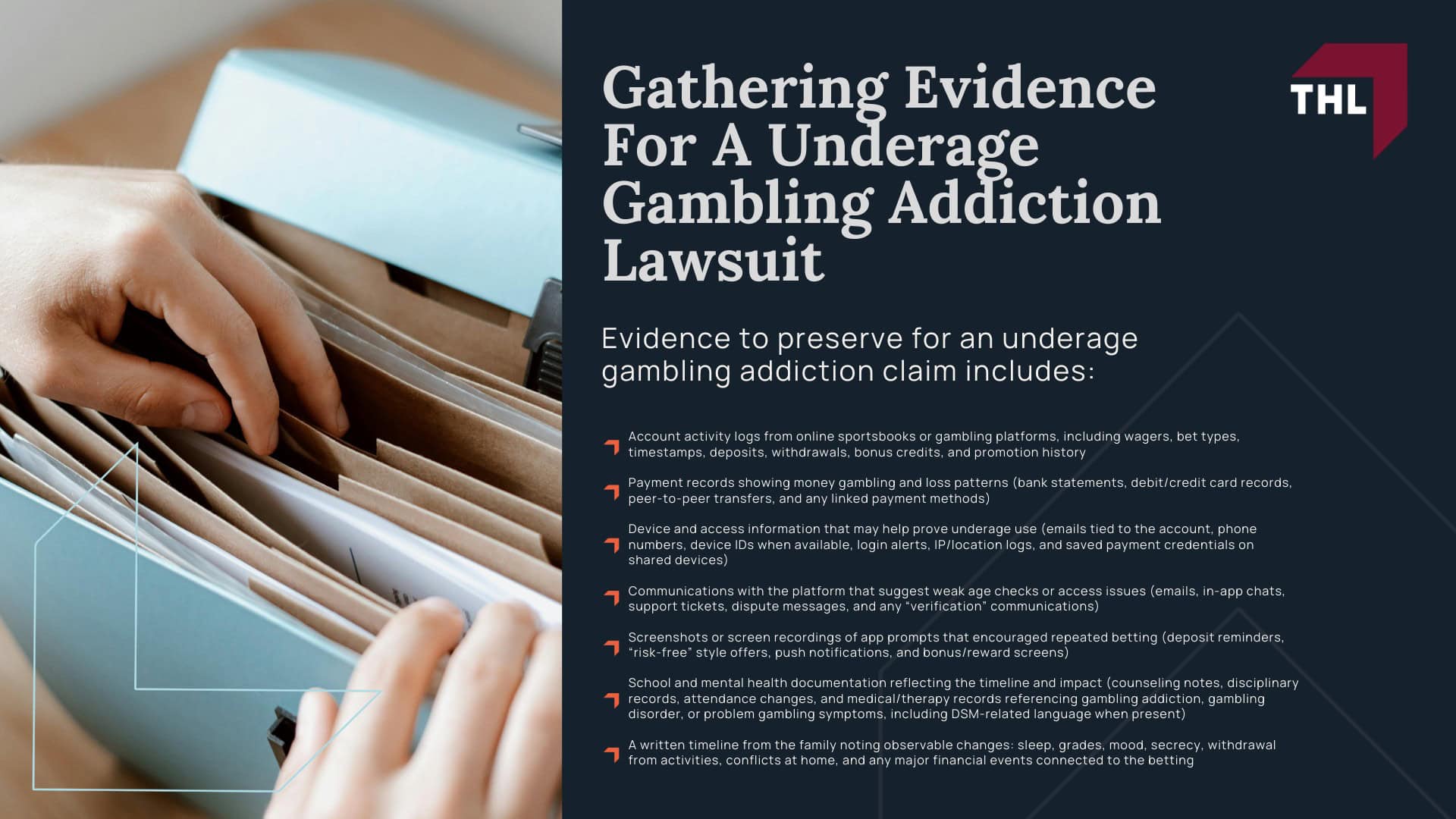
Evidence to preserve for an underage gambling addiction claim includes:
- Account activity logs from online sportsbooks or gambling platforms, including wagers, bet types, timestamps, deposits, withdrawals, bonus credits, and promotion history
- Payment records showing money gambling and loss patterns (bank statements, debit/credit card records, peer-to-peer transfers, and any linked payment methods)
- Device and access information that may help prove underage use (emails tied to the account, phone numbers, device IDs when available, login alerts, IP/location logs, and saved payment credentials on shared devices)
- Communications with the platform that suggest weak age checks or access issues (emails, in-app chats, support tickets, dispute messages, and any “verification” communications)
- Screenshots or screen recordings of app prompts that encouraged repeated betting (deposit reminders, “risk-free” style offers, push notifications, and bonus/reward screens)
- School and mental health documentation reflecting the timeline and impact (counseling notes, disciplinary records, attendance changes, and medical/therapy records referencing gambling addiction, gambling disorder, or problem gambling symptoms, including DSM-related language when present)
- A written timeline from the family noting observable changes: sleep, grades, mood, secrecy, withdrawal from activities, conflicts at home, and any major financial events connected to the betting
Preserving these records helps connect the platform activity to real-world harm and supports a clearer, fact-based case about how underage access occurred and how the addiction escalated.