The first 24 hours after a Glen Carbon car accident can affect your physical recovery and the evidence available if you later pursue an injury claim.
Some injuries are apparent immediately, while symptoms of a concussion or mild traumatic brain injury may not appear or be noticed until hours or days after the crash.
Neck, back, and other soft-tissue injuries may also become more noticeable after the initial shock of the collision subsides, making prompt medical evaluation and accurate documentation important.
Evidence can also change or disappear soon after a collision.
Vehicles may be repaired or moved, surveillance footage can be overwritten, roadway conditions can change, and witnesses may become more difficult to locate.
Taking reasonable steps during the first day can preserve information about how the crash occurred and document the injuries and financial losses that followed.
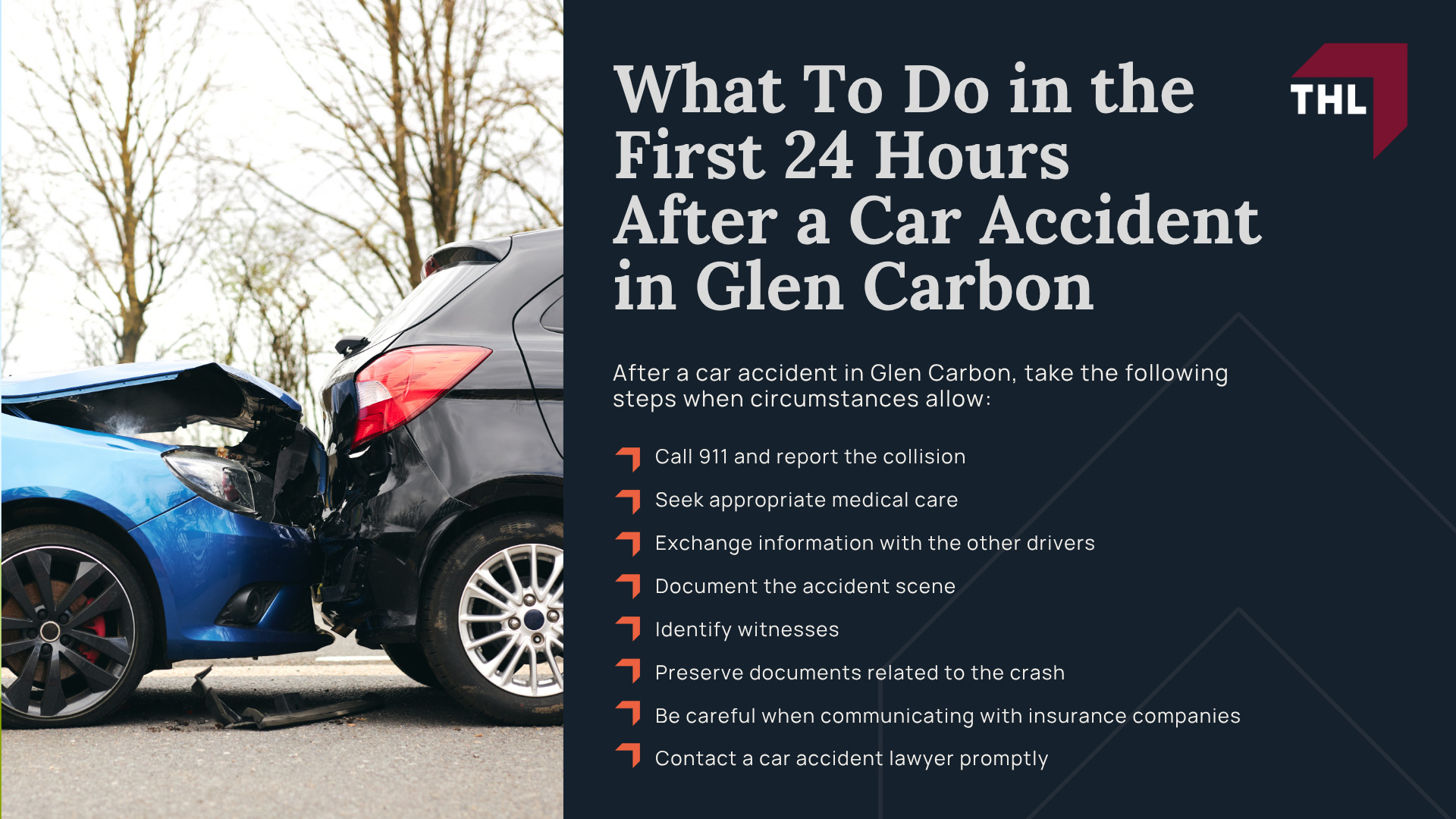
After a car accident in Glen Carbon, take the following steps when circumstances allow:
- Call 911 and report the collision. Police and emergency responders can address immediate safety concerns, provide medical assistance, and create records documenting the crash.
- Seek appropriate medical care. Do not assume the absence of immediate pain means you were not injured. Tell medical providers about the collision and any symptoms you are experiencing so the condition and treatment are documented.
- Exchange information with the other drivers. Obtain names, contact information, insurance details, driver’s license information, license plate numbers, and vehicle information.
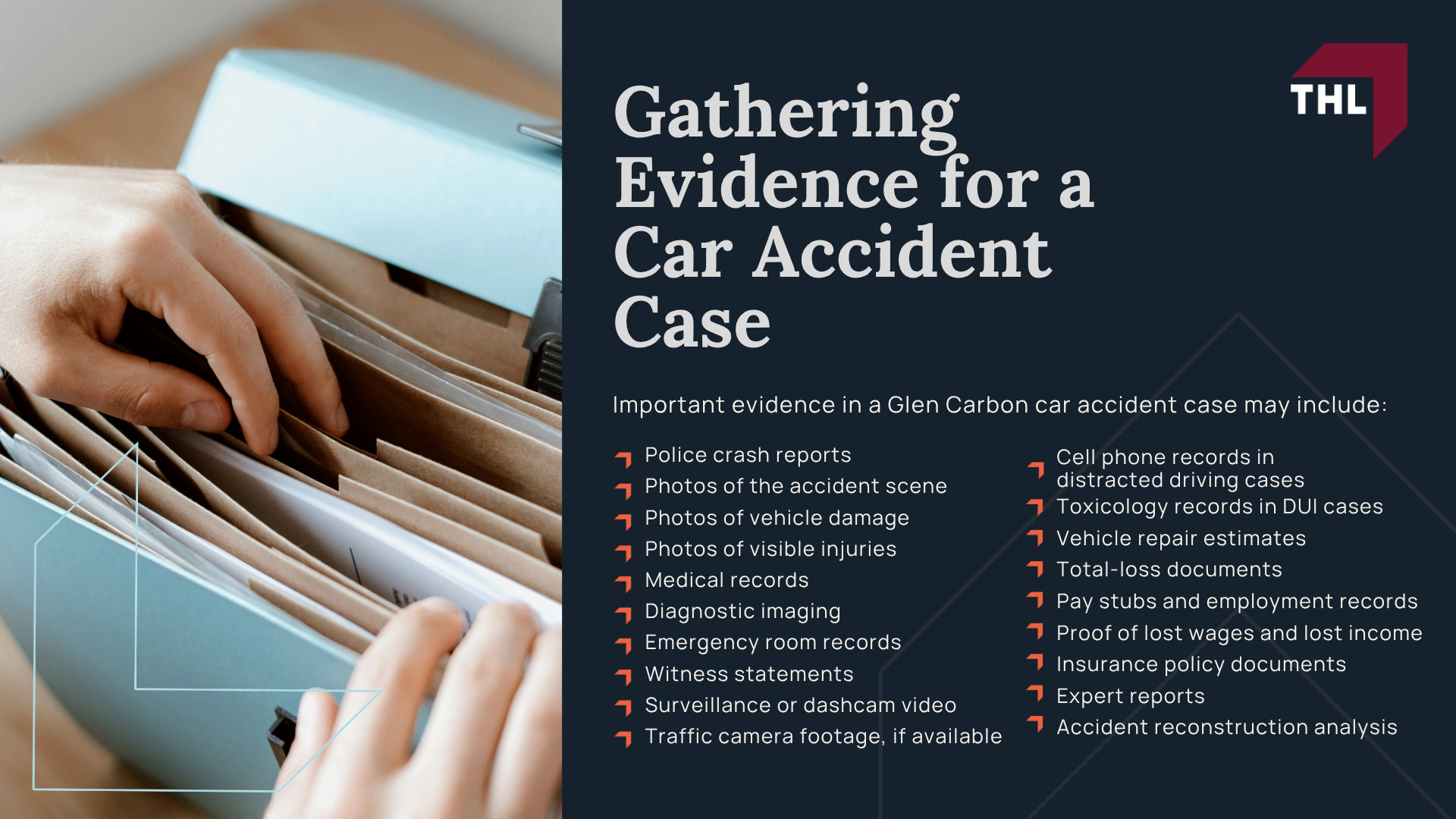
- Document the accident scene. Photograph or record the vehicles, visible damage, debris, skid marks, traffic signals, signs, roadway conditions, and other physical evidence when it is safe to do so.
- Identify witnesses. Obtain names and contact information from people who saw the collision or its immediate aftermath.
- Preserve documents related to the crash. Keep medical records, discharge instructions, insurance correspondence, towing bills, repair estimates, receipts, and records showing missed work or other financial losses.
- Be careful when communicating with insurance companies. The other driver’s insurance adjuster may request a recorded statement or ask questions about fault and injuries before the available evidence and medical information are complete. Your own insurer may have separate reporting and cooperation requirements under your policy.
- Contact a car accident lawyer promptly. An attorney can investigate the collision, preserve time-sensitive evidence, identify applicable insurance coverage, and determine which filing deadline applies to the claim.
Illinois generally requires an action seeking damages for personal injuries to be filed within two years after the cause of action accrues under 735 ILCS 5/13-202, although different deadlines can apply in certain cases.
Contacting a lawyer soon after the accident also provides more time to obtain evidence and evaluate liability rather than waiting until the statute of limitations is approaching.
Common Causes of Glen Carbon Car Accidents
Car accidents in Glen Carbon may result from driver negligence, unsafe roadway behavior, vehicle defects, or other conditions that increase the risk of a collision.
Speeding, distracted driving, impaired driving, and failure to yield are common factors in crashes involving passenger vehicles.
Similar conduct can also cause bicycle accidents and motorcycle accidents, where riders may face greater physical exposure when a collision occurs.
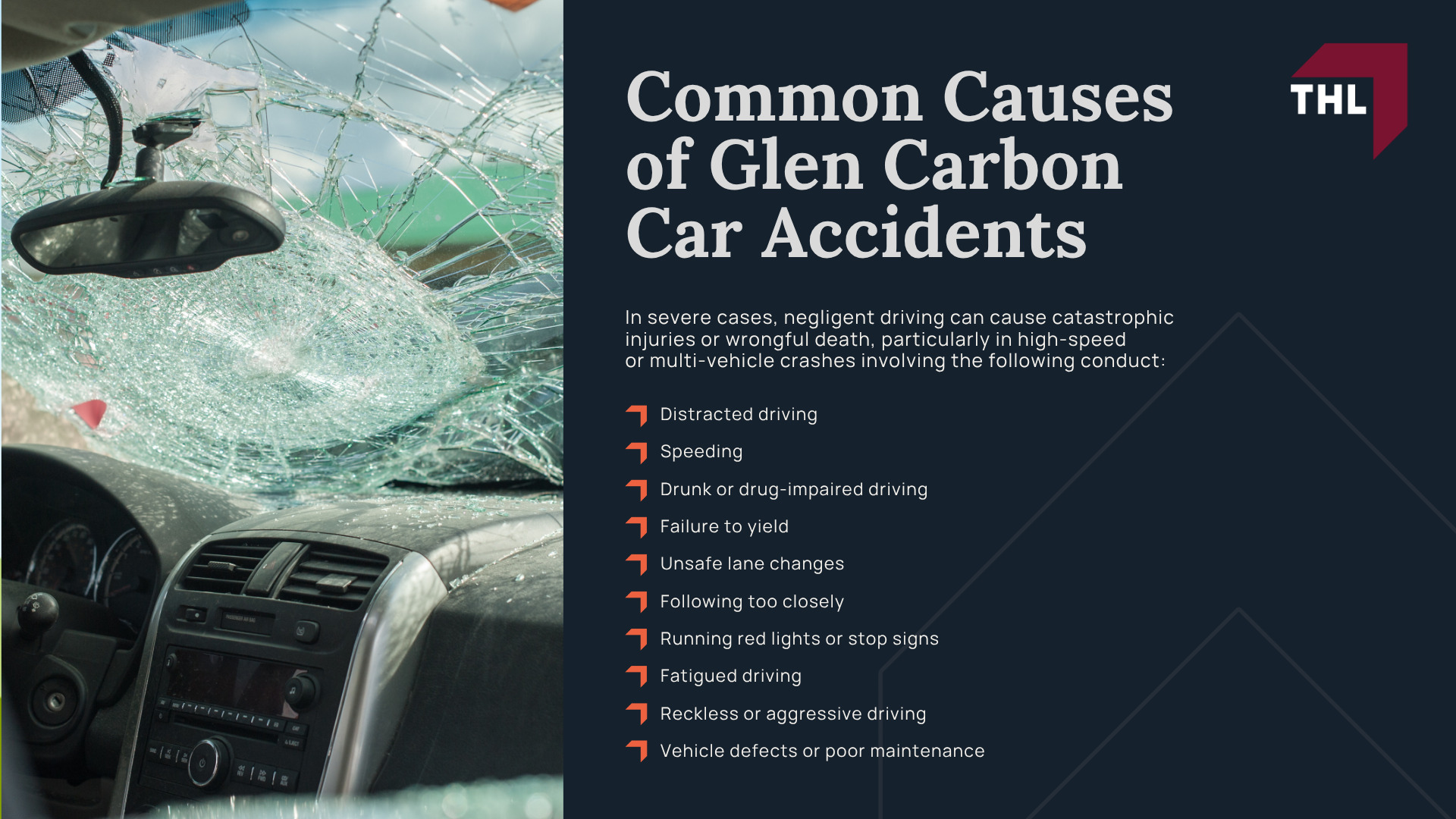
In severe cases, negligent driving can cause catastrophic injuries or wrongful death, particularly in high-speed or multi-vehicle crashes involving the following conduct:
- Distracted driving: Texting, using a phone, adjusting navigation systems, eating, or other distractions can prevent a driver from responding to changing traffic conditions.
- Speeding: Driving above the posted limit or too fast for road, weather, or traffic conditions can reduce reaction time and increase crash severity.
- Drunk or drug-impaired driving: Alcohol and drugs can impair judgment, coordination, reaction time, and a driver’s ability to operate a vehicle safely.
- Failure to yield: Drivers who fail to yield at intersections, during turns, or when entering traffic can cause side-impact and other serious collisions.
- Unsafe lane changes: Failing to check mirrors or blind spots, signal, or leave adequate space can lead to sideswipe and merging accidents.
- Following too closely: Tailgating reduces the time available to stop and is a common cause of rear-end collisions.
- Running red lights or stop signs: Disregarding traffic controls can result in high-impact intersection crashes.
- Fatigued driving: A tired driver may have slower reaction times, impaired attention, or difficulty remaining alert behind the wheel.
- Reckless or aggressive driving: Excessive speeding, weaving through traffic, unsafe passing, and other dangerous maneuvers can place multiple road users at risk.
- Vehicle defects or poor maintenance: Defective brakes, tires, steering components, or other mechanical problems may contribute to a crash and can raise questions about additional liable parties.
Common Car Accident Injuries
A car crash can cause injuries ranging from temporary soft-tissue damage to permanent neurological, orthopedic, or internal injuries.
The type and severity of an injury often depend on the force of the collision, the direction of impact, vehicle speed, seat position, and whether the occupant was restrained.
Some injuries require surgery, rehabilitation, or long-term medical care, while traumatic events can also produce psychological conditions such as PTSD.
When a loved one suffers fatal injuries in a collision, surviving family members may also have rights under Illinois wrongful death law.
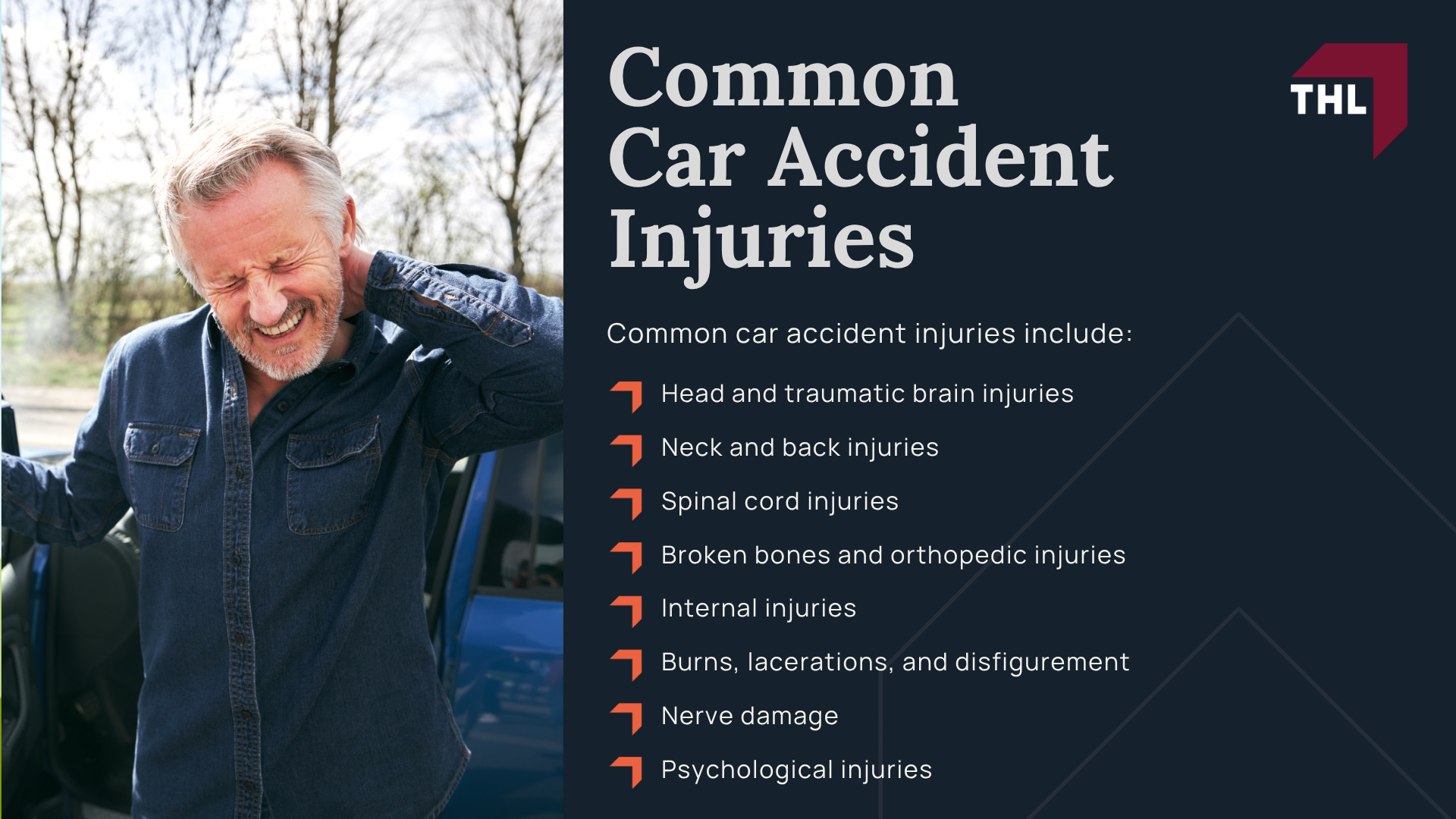
Common car accident injuries include:
- Head and traumatic brain injuries: Concussions, brain contusions, diffuse axonal injuries, and other traumatic brain injuries can affect memory, concentration, balance, behavior, and other neurological functions.
- Neck and back injuries: Whiplash, herniated discs, spinal fractures, muscle injuries, and other back injuries can cause pain, weakness, limited mobility, or chronic symptoms.
- Spinal cord injuries: Damage to the spinal cord can result in partial or complete paralysis, sensory loss, and long-term functional limitations.
- Broken bones and orthopedic injuries: Fractures and injuries to the shoulders, knees, hips, arms, and legs may require surgery, immobilization, physical therapy, or extended recovery.
- Internal injuries: Blunt-force trauma can damage internal organs or cause internal bleeding that may require emergency treatment.
- Burns, lacerations, and disfigurement: Broken glass, vehicle fires, airbags, and contact with damaged vehicle components can cause burns, deep cuts, scarring, or permanent disfigurement.
- Nerve damage: Trauma to the spine or extremities can damage nerves and cause numbness, weakness, chronic pain, or reduced function.
- Psychological injuries: A serious collision may contribute to anxiety, depression, sleep disturbances, or PTSD, particularly after violent crashes or incidents involving severe injury or death.
- Fatal injuries: High-speed, head-on, rollover, pedestrian, and multi-vehicle collisions can result in injuries that lead to death at the scene or after emergency medical treatment.
Medical records, diagnostic imaging, specialist evaluations, rehabilitation records, work restrictions, and prognosis evidence can help establish how an injury affected the person’s health, employment, and daily life after the crash.