In the world of cryptocurrency fraud, pig butchering scams (sometimes called “pig slaughter scams”) have become especially insidious.
Rather than a quick theft, these are long, emotionally manipulative cons engineered to lure victims over weeks or months, convince them to invest large sums, and then strike when the victim’s guard is down.
The schemes blend romance, mentorship, and investment pitch under one roof, combining social engineering with fraudulent schemes.
In many cases, scammers begin with fake profile personas, often glamorous or successful, on dating apps or social media platforms, to approach potential victims with charm and apparent sincerity.
Over time, they gradually shift conversations toward an investment opportunity, citing “inside tips,” “exclusive deals,” or high returns to make the victim believe they’re getting ahead.
These promises are supported by fake websites, fake dashboards, manipulated app balances, or “paper gains” that make the victim think the investment is real.
Meanwhile, the scammers may create multiple new identities, rotate accounts, and hide their trail via digital payment platforms so that tracing the transfer of funds becomes highly complex.
The result: many victims end up suffering significant financial losses, often with stolen funds disappearing into opaque crypto networks.
Because many scammers operate in concert, in overseas fraud factories or scam centers, the scale is enormous (millions of dollars per victim in some cases), and victims are rarely isolated occurrences.
Here’s a breakdown of how the process typically unfolds:
- Initial Contact (Hunting Phase): The scammer sends unsolicited messages (via social media, WhatsApp, Telegram, dating apps) using a fake profile. They may pose as someone who accidentally obtained your contact information or through a casual encounter.
- Relationship Building/Trust Phase: Over the course of days or weeks, they warm up the interaction by chatting about life, shared interests, emotions, and family. They build trust and lower the victim’s defenses.
- Introduction of an Investment Opportunity: The scammer pivots to suggesting a cryptocurrency investment or “brokerage opportunity” that seems credible; sometimes they show screenshots or “real results.”
- Small Test Transfer: The victim is invited to transfer a small amount of money (crypto or fiat) to the scam platform or wallet. The scammer “credits” their account, showing gains.
- Pressure to Increase Investments: The victim is then pressured to invest more, often citing limited-time “exclusive deals” or promising better returns if they act quickly.
- Fake Website / App & Dashboard Illusion: The funds are collected on fake websites or fraudulent platforms that display bogus balances, controlled by the scammer.
- Lockout/Withdrawal Failure: When the victim attempts to withdraw or transfer funds, the site/app becomes unresponsive or restrictions are imposed, effectively freezing access.
- Disappear, Relaunch, or Shift Identities: The scammer vanishes, deletes profiles, or spins up new identities. The funds are transferred to other wallets via crypto mixes, layered transfers, or exchanges.
- Aftermath & Denial: Victims realize the money is gone. Because the scam was built over a long period, with multiple layers and many intermediaries, tracing the transfer funds path is extremely hard.
- Scale & Factory Model: In large operations, multiple victims feed funds into a common pool; some scammers are themselves people trafficked or forced to work in “fraud factories,” effectively human trafficking victims turned operators.
These scams are powerful because they exploit both emotion and greed in sequence, making victims believe they’re part of a real investment.
The combination of fake sites, rotating identities, and opaque cryptographic transfers makes detection and recovery extremely difficult.
Many victims never report, feeling shame or uncertainty about what to do next.
Yet, under the right conditions, especially when law enforcement seizes assets tied to the scam, there can be a path to retrieving stolen funds.
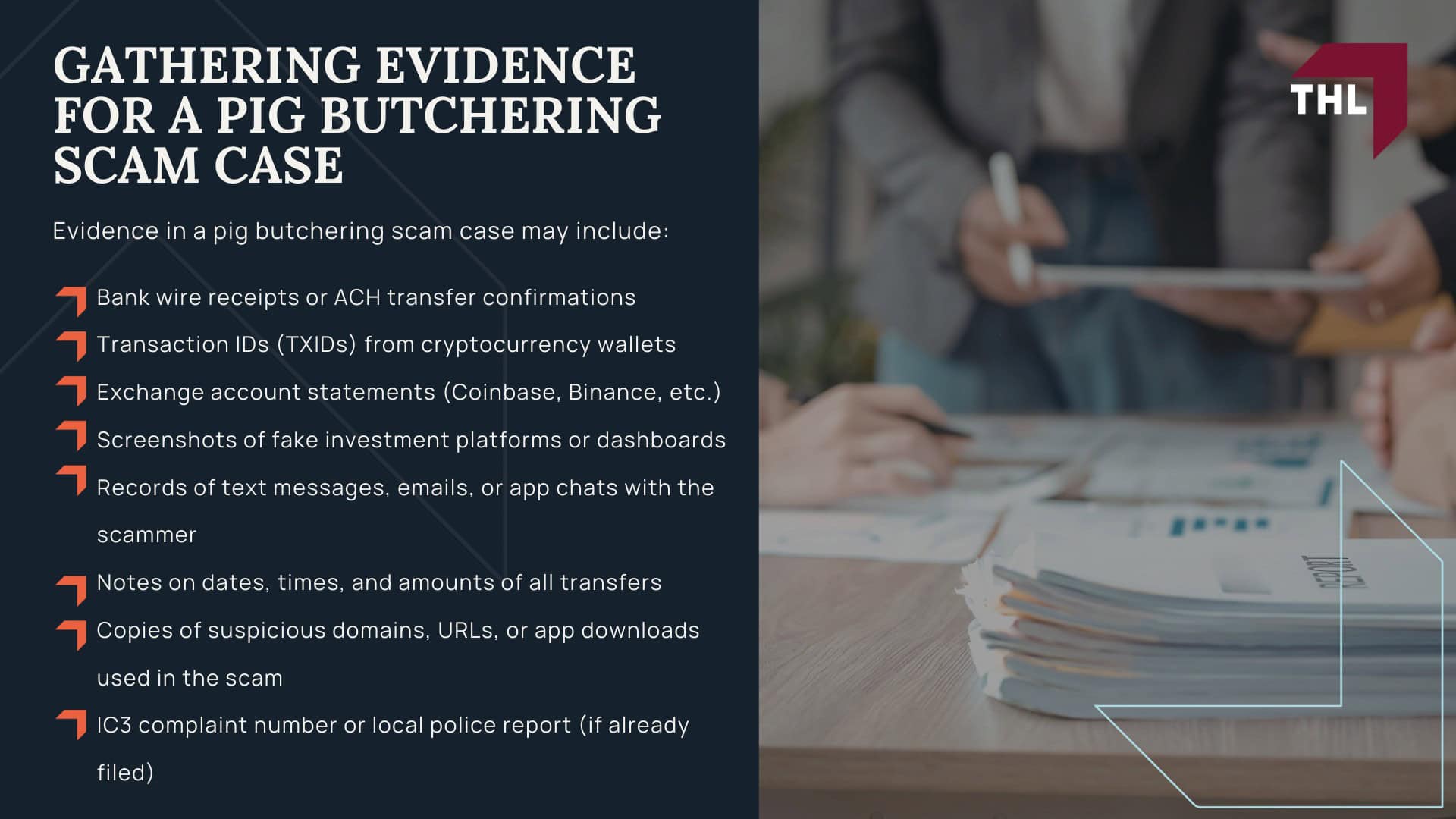
The key is having strong documentation of how the funds moved, the emotional and transactional context, and legal counsel capable of understanding seizure-based return mechanisms.
After you see the signs, report quickly, preserve every record, and seek legal review before acting further.
What Platforms Do Pig Butchering Scams Take Place On?
Pig butcherings cams often begin in ordinary places, making it difficult for victims and families of victims to identify them before it’s too late.
Many victims first encounter a scammer through Facebook, dating apps, or even random, unsolicited text messages that seem harmless at first glance.
Scammers build trust on these platforms, later steering conversations toward supposed investment opportunities.
Once trust is established, scammers lure victims to fake investment platforms or are urged to transfer money through legitimate financial services.
This blend of everyday communication channels with recognizable financial platforms make the schemes convincing.

Platforms in which pig butchering scams take place include:
- Facebook and Facebook Messenger
- Dating apps such as Tinder, Bumble and Hinge
- Unsolicited text messages or WhatsApp chats
- Fraudulent investment websites or fake brokerage apps
- Legitimate cryptocurrency exchanges
- Coinbase
- Binance
- Kraken
- Digital payment platforms like PayPal or Zelle (to move initial funds)
The Impact of Pig Butchering Scams on Victims and Their Families
Pig butchering scams don’t just take money; they have the power to ruin a person’s life.
A single person’s life savings, retirement funds, or generational wealth can be wiped out overnight, leaving victims in shock, feeling shame and confusion.
Families are suddenly forced to confront the blow of financial ruin and emotional betrayal, wondering how someone they trusted could lead them to financial ruin.
Some victims experience anxiety, depression, and emotional trauma from the breach of trust.
Others may withdraw socially or feel hesitant to share their story because of stigma or fear.
Especially when parents or elderly loved ones have been scammed, adult children often carry a burden of guilt and responsibility.
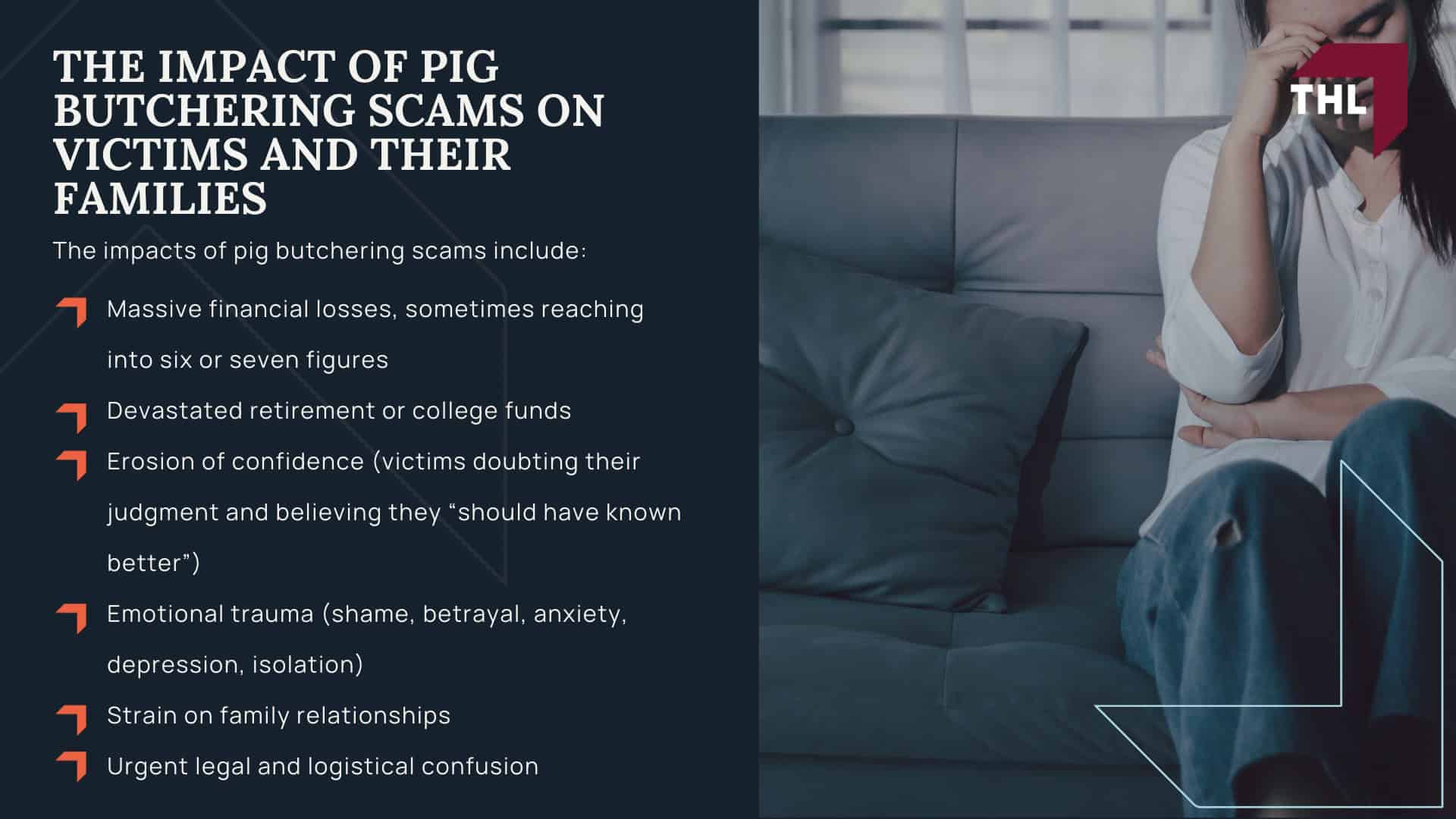
The impacts of pig butchering scams include:
- Massive financial losses, sometimes reaching into six or seven figures
- Devastated retirement or college funds
- Erosion of confidence (victims doubting their judgment and believing they “should have known better”)
- Emotional trauma (shame, betrayal, anxiety, depression, isolation)
- Strain on family relationships
- Urgent legal and logistical confusion
An important part of healing this trauma is reclaiming control.
That begins with documenting your (or your family member’s) experience, reaching out for support, and contacting qualified legal help.
News Reports and Media Highlighting Pig Butchering Scams
Media coverage has increasingly spotlighted pig butchering scams as a global crisis exploiting emotional trust and digital finance.
Journalists have uncovered how victims met strangers online, were lured into “investment opportunities”, and eventually watched their life savings vanish.
These stories often document how scammers built long-term relationships through text messages and social media, then pushed victims toward fake brokerage websites or apps.
As awareness has grown, it has become increasingly apparent that these are not isolated frauds, but sophisticated operations that leave personal and financial scars on victims.

News reports and media that have highlighted pig butchering scams include:
- Time Magazine: A study estimates that pig butchering scammers have stolen more than $75 billion, tracing flows of funds from victims to exchanges and exposing the scale of the “industry”.
- Reuters: A special report traced fraudulent crypto investment schemes run from Asia, including how some funds land in accounts connected to trade organizations.
- PBS: Coverage on how human trafficking victims are forced to operate scam networks.
- ABC News: “Inside the Crypto Con” investigated how text-based romance scam quickly transition into investment fraud.
- Wall Street Journal: WSJ profiled a lawyer taking on pig butchering cases, showing that even in high-dollar fraud cases there are potential opportunities for financial recovery.