There is no single nationwide statute of limitations for an NEC formula lawsuit.
The deadline depends on the state law governing the claim, the identity of the person filing, whether the child survived, and facts such as the child’s age, date of diagnosis, and location of treatment.
Many NEC baby formula cases involve babies born prematurely or low birth weight babies who received Similac, Enfamil, or another cow’s milk-based preterm infant formula in a neonatal intensive care unit.
Plaintiffs allege that Abbott and Mead Johnson failed to adequately warn parents and medical providers about the reported risk of NEC associated with certain products sold under these baby formula brands.
The filing period for a child diagnosed with NEC may differ from the deadline governing a parent’s individual claim, a survival action, or a wrongful death lawsuit.
Some states pause or extend the deadline for a minor child, while others apply separate discovery rules, statutes of repose, or restrictions that can cause related claims to expire sooner.
Federal cases against the baby formula companies are coordinated in the NEC baby formula MDL in the Northern District of Illinois.
The federal baby formula MDL centralizes discovery and other pretrial proceedings in federal court, but it does not create one national filing deadline or extend an expired state statute of limitations.
Although families sometimes search for an NEC class action lawsuit, the federal proceeding is an MDL rather than a class action.
Each family retains an individual lawsuit, and the applicable deadline must be evaluated under the law governing that particular claim.
Families should not assume that an older NEC diagnosis is automatically too late or that the child’s age preserves every possible claim.
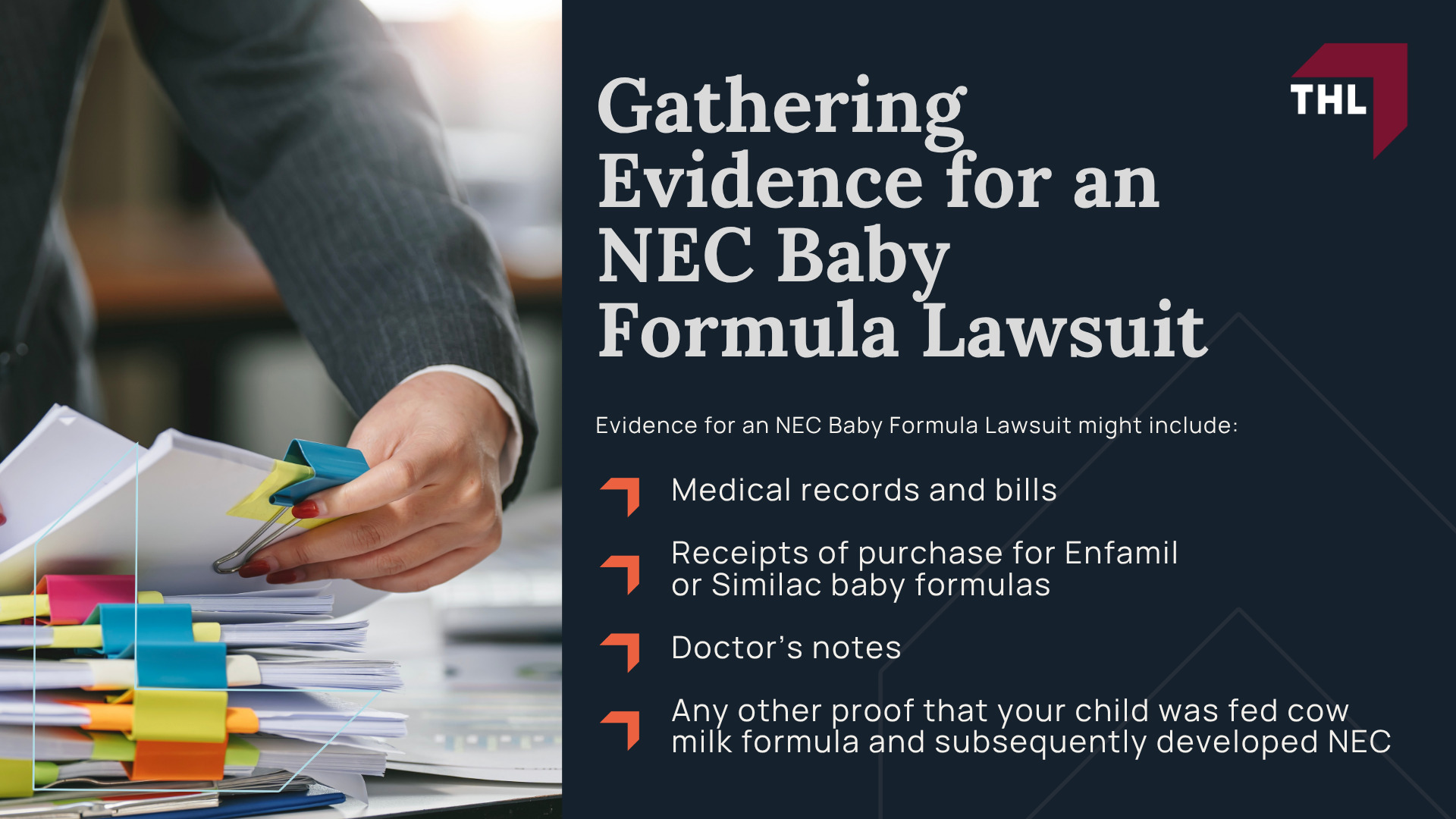
NEC formula lawyers must review the medical history, formula exposure, date and location of treatment, current age, and applicable state law before determining how much time remains to file.
Which Filing Deadline Applies to an NEC Claim?
An NEC diagnosis may give rise to several related legal claims, and each claim can follow a different filing deadline.
The applicable statute of limitations depends on who is bringing the claim, whether the child survived, the state law governing the case, and any rules involving minors, discovery, or statutes of repose.
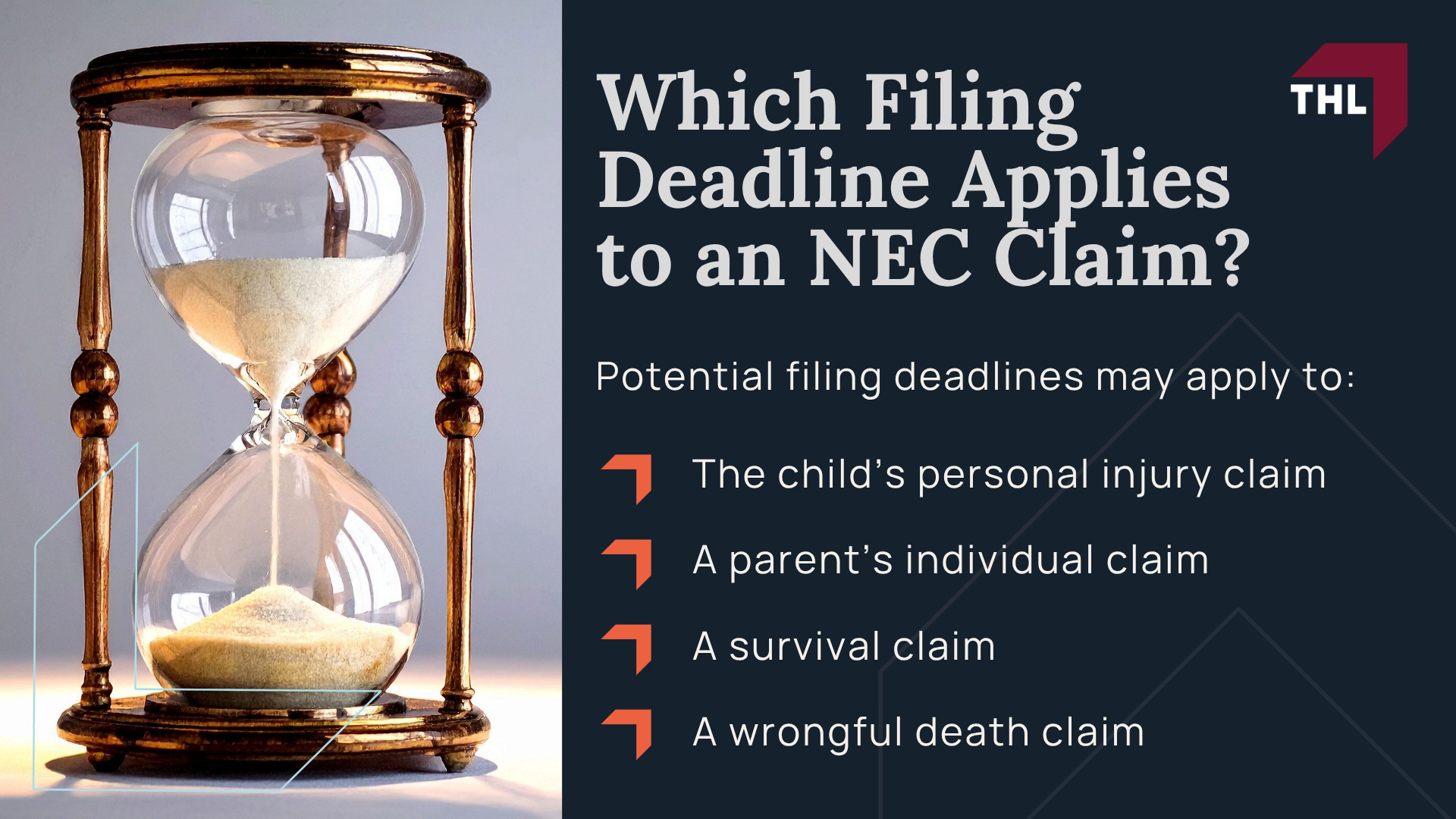
Potential filing deadlines may apply to:
- The child’s personal injury claim: A parent or legal guardian may file on behalf of a minor child who survived NEC. Some states pause or extend the child’s filing period during minority, but the length and operation of these rules vary.
- A parent’s individual claim: Parents may have separate claims for qualifying medical expenses, caregiving costs, lost income, or other losses permitted under state law. These claims may expire before the child’s own personal injury claim.
- A survival claim: If a child dies from NEC complications, the estate may pursue damages the child sustained before death, including medical expenses and pain and suffering. The filing period for a survival action may differ from the deadline governing other claims.
- A wrongful death claim: Qualifying family members or an estate representative may file a wrongful death lawsuit for losses resulting from the child’s death. Wrongful death statutes commonly impose a separate deadline measured from the date of death or another event defined by state law.
Minority tolling that preserves a child’s personal injury claim does not necessarily extend a parent’s claim, survival action, or wrongful death lawsuit.
Families should have each potential claim evaluated separately rather than assuming that one deadline applies to the entire case.
An attorney must review the child’s date of birth, NEC diagnosis, formula exposure, state and location of treatment, current age, and any date of death before calculating the applicable filing deadlines.
Who Can File an NEC Baby Formula Lawsuit?
A parent or legal guardian may be able to file a lawsuit on behalf of a child who developed necrotizing enterocolitis after receiving certain cow’s milk-based baby formula products.
Many claims involve preterm babies who received Similac, Enfamil, preterm formula, or a human milk fortifier before their NEC diagnosis.
People who may be able to file an NEC claim include:
- A parent or legal guardian: A parent or guardian may bring a product liability claim on behalf of an injured minor child.
- An adult NEC survivor: A person who developed NEC as an infant may be able to pursue their own claim if the applicable statute of limitations and minority-tolling rules preserve it.
- The representative of a child’s estate: If a child died from NEC complications, an appointed estate representative may be able to pursue survival claims for losses the child experienced before death.
- Qualifying family members: State law may allow certain parents or other relatives to bring a wrongful death lawsuit after an infant dies from NEC.
The NEC infant formula MDL includes individual federal lawsuits against Abbott Laboratories and Mead Johnson, but it does not determine who is legally permitted to file in every case.
Eligibility depends on the child’s medical and feeding records, the identity of the formula or fortifier administered, the injuries suffered, the person bringing the claim, and the law of the state governing the lawsuit.