Active LitigationMDL 3026
Toxic Baby Formula NEC Lawsuit Facts
TorHoerman Law is actively accepting claims for the Toxic Baby Formula NEC Lawsuit.


The NEC Baby Formula Lawsuit refers to a significant amount of cases filed against major baby formula manufacturers, specifically Abbott Laboratories (maker of Similac Infant Formula) and Mead Johnson & Company (maker of Enfamil Formula).
Infant Formula NEC Lawsuits claim that premature babies fed cow milk based formulas are at an increased risk to develop NEC.
Scientific studies have shown that premature infants fed cow milk based formula were at an increased risk to develop NEC compared to premature infants fed only human breast milk.
Enfamil and Similac Baby Formula Lawsuits allege that the manufacturers failed to adequately warn healthcare providers and parents about the potential dangers associated with their products, despite knowing the risks involved.
Families pursuing NEC lawsuits may seek compensation for medical expenses, long-term care, pain and suffering, and other losses associated with the child’s injuries.
The damages available in an individual case depend on the facts of the claim and applicable law.
NEC baby formula litigation continues in federal and state courts, with recent cases producing different outcomes.
TorHoerman Law obtained a $495 million jury verdict against Abbott Laboratories in July 2024.
The Missouri Court of Appeals affirmed that verdict in May 2026.
In August 2026, Abbott announced agreements resolving the Gill case and NEC claims involving approximately 2,000 additional individuals for an aggregate amount of approximately $670 million.
Litigation involving Mead Johnson has followed a different course.
A $60 million Illinois verdict against Mead Johnson was reversed on appeal and returned to the trial court for further proceedings.
In August 2026, a federal jury returned a defense verdict for Mead Johnson in the Inman case, the first Mead Johnson bellwether in the federal NEC multidistrict litigation to reach a jury.
These results show that NEC lawsuits remain highly dependent on the medical evidence, feeding history, warnings at issue, applicable law, and circumstances of each individual case.
No global settlement has been announced for Enfamil NEC claims.
The NEC Baby Formula Lawsuits are centered around claims that major baby formula manufacturers, such as Abbott Laboratories (maker of Similac) and Mead Johnson & Company (maker of Enfamil), knowingly marketed and sold cow’s milk-based formulas that significantly increased the risk of necrotizing enterocolitis (NEC) in premature infants and low birth weight babies.
NEC Baby Formula Plaintiffs argue that these companies failed to adequately warn parents and healthcare providers about the heightened risks associated with their products, despite mounting scientific evidence linking cow’s milk-based formulas to NEC.
Legal claims in the NEC Infant Formula Litigation typically include product liability, negligence, failure to warn, and breach of warranty, among other potential claims.
The companies have generally responded by denying the allegations, arguing that their products are safe and that NEC is a multifactorial condition with no definitive link to formula feeding.
They have also asserted that they provided sufficient warnings and that the benefits of their products outweigh the risks.
Plaintiffs allege that evidence developed during the litigation supports their claims that formula manufacturers knew about concerns surrounding NEC risk in premature infants but failed to provide adequate warnings.
Abbott Laboratories and Mead Johnson dispute the allegations and have defended the safety and medical use of their preterm nutrition products.
The outcome of an individual NEC lawsuit depends on the evidence and legal issues presented in that particular case.
Necrotizing enterocolitis (NEC) is a severe gastrointestinal condition that primarily affects premature infants, especially those born before 37 weeks of gestation.
The disease causes inflammation and bacterial invasion of the intestinal wall, leading to the death of intestinal tissue and, in severe cases, perforation of the bowel.
This perforation allows harmful bacteria to leak into the abdomen, potentially leading to widespread infection and sepsis, which can be life-threatening.
The exact cause of NEC is not fully understood, but it is believed to involve a combination of factors, including an immature immune system, reduced blood flow to the intestines, and the introduction of bacteria through feeding, particularly when cow’s milk-based formulas are used.
NEC can develop rapidly and requires immediate medical attention.
Symptoms often include feeding intolerance, abdominal swelling, bloody stools, and lethargy.
Despite advances in neonatal care, NEC remains one of the leading causes of illness and death in preterm infants.
Treatment typically involves stopping feedings, draining the stomach, administering antibiotics, and, in severe cases, surgery to remove the damaged portion of the intestines.
Even with prompt treatment, many infants who survive NEC face long-term complications that can significantly impact their quality of life.
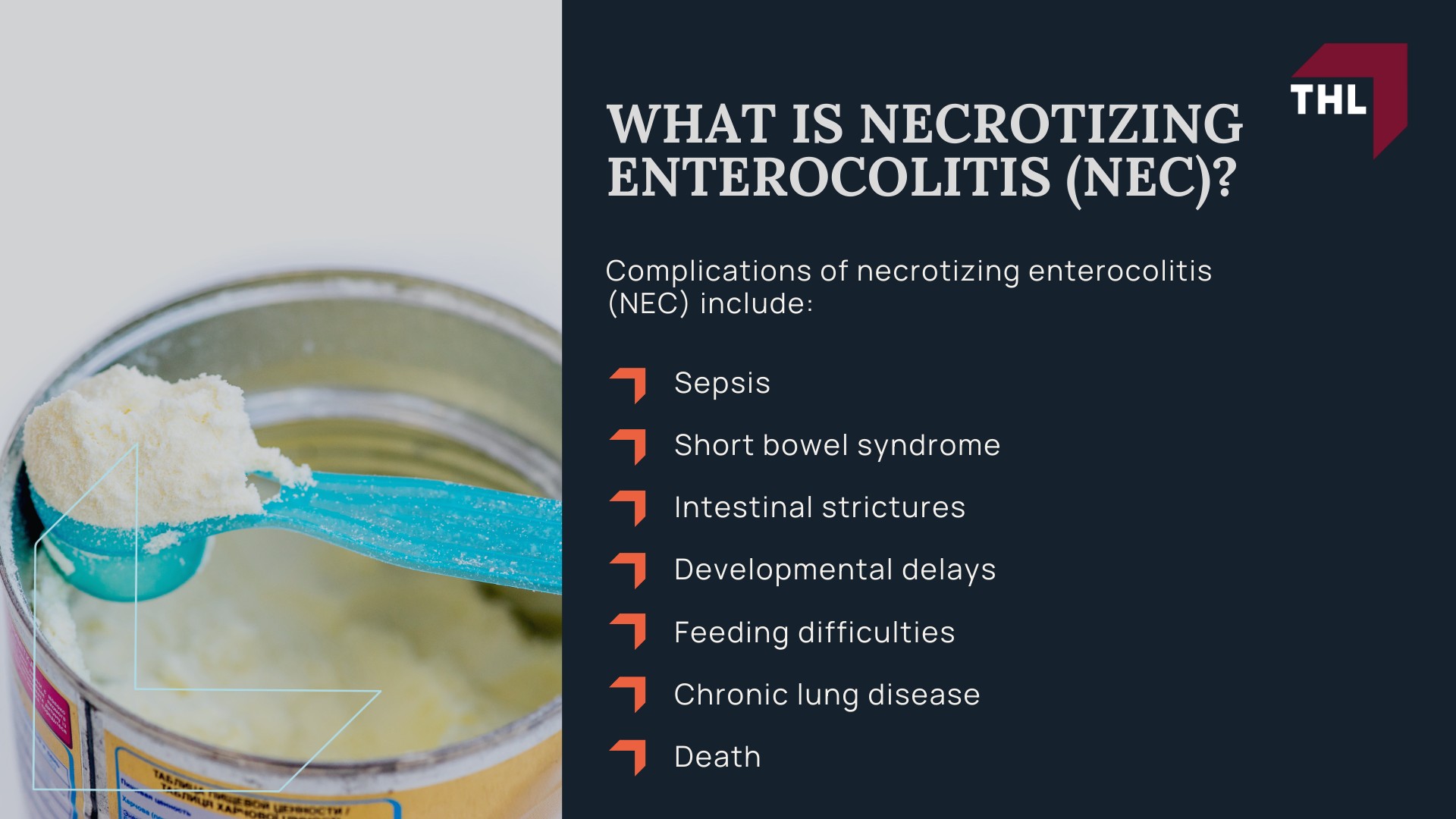
Complications of necrotizing enterocolitis (NEC) include:
Cow’s milk-based baby formulas, such as Similac and Enfamil, have been linked to an increased risk of developing necrotizing enterocolitis (NEC) in premature infants.
Research has shown that preterm infants who are fed cow’s milk-based formulas are more likely to develop NEC compared to those who are exclusively fed human milk.
The immature intestines of premature babies are less capable of digesting cow’s milk proteins, which can lead to inflammation, bacterial overgrowth, and eventually, NEC.
A meta-analysis published in the journal Pediatrics found that preterm infants fed human milk were 77% less likely to develop NEC than those fed cow’s milk-based formula.
The Journal of Perinatology has highlighted that the introduction of cow’s milk-based formula into the diet of preterm infants disrupts the gut microbiota, increasing the likelihood of intestinal inflammation.
Despite these findings, many hospitals continue to use cow milk formulas in neonatal intensive care units (NICUs) due to their availability and cost, which raises ethical concerns about patient safety versus profitability.
These scientific insights are central to the ongoing lawsuits against formula manufacturers, as plaintiffs argue that the companies failed to adequately warn about these known risks.
Medical research comparing human milk and cow’s milk-based nutrition in premature infants has become an important part of the scientific evidence cited in NEC baby formula litigation.
The NEC Baby Formula Lawsuits specifically target certain Similac and Enfamil formula products that are alleged to increase the risk of necrotizing enterocolitis (NEC) in premature infants.
NEC Lawsuits claim that these cow’s milk-based formulas were marketed and used in hospitals despite evidence of their potential dangers to vulnerable infants.
Similac Infant Formulas Named in NEC Lawsuits:
Enfamil Baby Formula Products Named in NEC Lawsuits:
Lawsuits naming Similac and Enfamil premature infant formula are specifically for the types of infant formulas used in hospitals and medically administered by healthcare professionals.
Similac and Enfamil formula sold on the shelves of supermarkets and stores across the country are separate products and are not included in the NEC Baby Formula Lawsuits.
The specific type of infant formulas used in the NICU will likely be listed on the medical and feeding records related to the treatment of your premature baby.
TorHoerman Law is currently accepting potential NEC claims involving Enfamil products manufactured by Mead Johnson.
A family may qualify for an Enfamil NEC case review when a premature or low-birth-weight infant received an Enfamil cow’s milk-based formula or fortifier in a hospital or neonatal intensive care unit (NICU) and was later diagnosed with necrotizing enterocolitis.
Relevant factors may include:
TorHoerman Law is no longer accepting NEC clients with claims against Similac. We are still accepting clients with claims against Enfamil.
Contact our law firm for a free consultation or use the chatbot on this page to find out whether you may qualify for an Enfamil NEC claim.
Medical and hospital records may provide important evidence about a premature infant’s formula exposure, NEC diagnosis, treatment, and resulting injuries.
Evidence relevant to an Enfamil NEC claim may include:
These records may help establish the product administered, the timing of exposure and diagnosis, and the medical consequences associated with the child’s NEC.
Damages in an NEC lawsuit refer to economic and non-economic losses allegedly resulting from the child’s injuries.
The types and amount of damages available depend on the severity of the child’s condition, medical treatment, long-term needs, applicable state law, and other circumstances of the individual claim.
Damages sought in NEC lawsuits may include:
The damages available in an individual NEC lawsuit depend on the evidence and law applicable to the claim.


