Short Bowel Syndrome (SBS) is a severe condition often resulting from surgical removal of a significant portion of the intestine, which may be necessary when infants develop necrotizing enterocolitis (NEC).
NEC primarily affects premature infants and can cause the death of intestinal tissue, often leading to urgent surgical intervention.
When a significant portion of the intestine is removed to save the infant’s life, the remaining portion may not be able to absorb sufficient nutrients, leading to Short Bowel Syndrome.
This condition results in chronic malabsorption, meaning that children with SBS face challenges in absorbing essential nutrients, fluids, and electrolytes, which can hinder their growth and development.
Children with SBS often require lifelong support, including specialized diets, IV nutrition, and, in severe cases, intestinal transplants.
The connection between NEC and SBS is critical, as cow’s milk-based formulas are linked to a heightened risk of NEC, which subsequently increases the risk of SBS following surgical treatment.
This devastating outcome can lead to a complex, costly medical journey for both the child and their family.
Our legal team is here to help families facing this hardship and to seek justice from the makers of major baby formula brands.
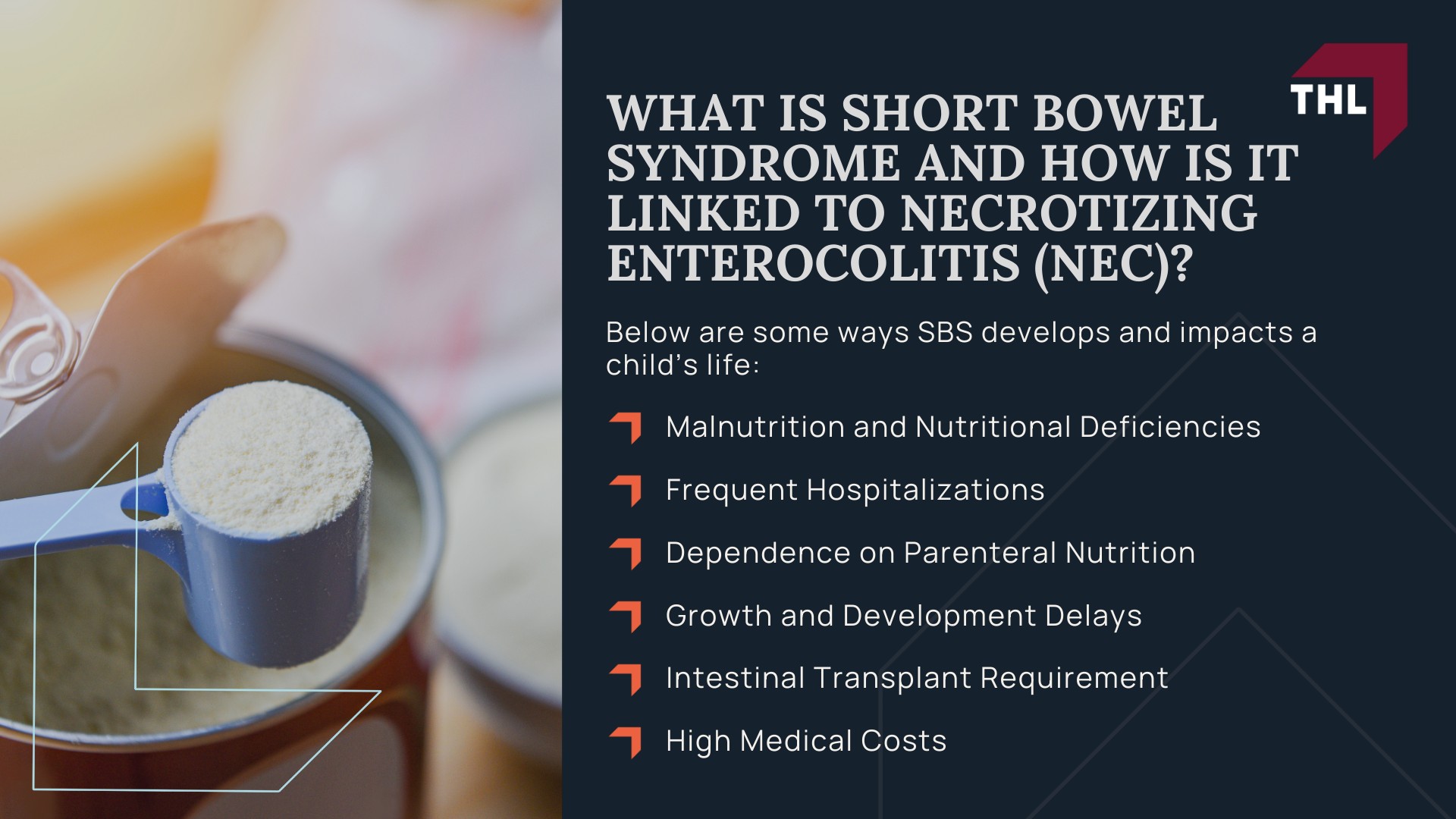
Below are some ways SBS develops and impacts a child’s life:
- Malnutrition and Nutritional Deficiencies: Due to reduced intestinal capacity, children with SBS often struggle to absorb essential nutrients, leading to chronic malnutrition.
- Frequent Hospitalizations: Children with SBS may experience recurrent infections or complications that require regular hospital stays.
- Dependence on Parenteral Nutrition: Many children need long-term intravenous (IV) nutrition to supplement what they can’t absorb through regular feeding.
- Growth and Development Delays: The condition often impacts growth, potentially leading to developmental delays due to poor nutrient absorption.
- Intestinal Transplant Requirement: Severe cases may eventually require an intestinal transplant to improve quality of life.
- High Medical Costs: Ongoing treatment and specialized care for SBS can result in significant medical expenses over a child’s lifetime.
TorHoerman Law understands the challenges families face and is committed to supporting those affected by NEC and SBS.
Information on Necrotizing Enterocolitis (NEC)
Necrotizing enterocolitis (NEC) is a serious gastrointestinal disease that primarily affects premature babies, often within the first few weeks of life.
This condition occurs when the lining of the intestine becomes inflamed and begins to die, potentially leading to a life-threatening rupture of the intestinal wall.
NEC is one of the most common and dangerous conditions treated in neonatal intensive care units, where fragile premature infants are especially susceptible to infection and gastrointestinal complications.
Babies with NEC can develop symptoms like abdominal swelling, bloody stools, and feeding intolerance, which often require immediate medical intervention.
Treatment for NEC can range from antibiotics and supportive care to emergency surgery for removing damaged portions of the intestine.
Families affected by NEC often face extensive emotional and financial challenges, given the prolonged medical treatments and potential long-term health consequences.
For parents navigating this difficult journey, understanding the causes, risks, and treatments associated with NEC is crucial.
Increased Risk of NEC Linked to Cow Milk Based Formula
Research has shown that premature babies who are fed cow’s milk-based formula have a higher risk of developing NEC compared to those who are exclusively breastfed or given donor milk.
Studies show that infants fed cow’s milk formulas, such as Similac and Enfamil, face significantly higher rates of NEC than those receiving human milk.
Moreover, infants fed exclusively on human milk or donor milk exhibited a much lower incidence of NEC, emphasizing the protective factors in human milk that are absent in cow-based formulas.
Studies from sources like The Journal of Pediatrics and a 2021 American Academy of Pediatrics article highlight that exclusive breastfeeding or donor milk feeding could reduce NEC risks by up to 90%.
Cow’s milk-based formulas, by contrast, lack critical immune-boosting components and may exacerbate inflammation, increasing susceptibility to NEC.
Scientific Studies Indicating Increased Risk of NEC from Cow’s Milk-Based Formula:
- Journal of Pediatrics (2009): Found a 90% reduced NEC risk in infants fed exclusively with human milk compared to cow-based formulas.
- American Academy of Pediatrics (2021): Reported a 77% lower NEC incidence in premature infants fed human breast milk only.
- Cochrane Study (2019): Showed premature infants on cow-milk formula were seven times more likely to develop NEC.