Chicago
Case Types We Handle
Personal Injuries
Car Accidents
Truck Accidents
Motorcycle Accidents
Bicycle Accidents
Construction Accidents
Nursing Home Abuse
Wrongful Death
Slip and Fall Accidents
Daycare Injury & Abuse
Edwardsville
Case Types We Handle
Personal Injuries
Car Accidents
Truck Accidents
Motorcycle Accidents
Bicycle Accidents
Nursing Home Abuse
Wrongful Death
Slip and Fall Accidents
Daycare Injury & Abuse
Premises Liability
St. Louis
Case Types We Handle
Personal Injuries
Car Accidents
Truck Accidents
Motorcycle Accidents
Bicycle Accidents
Construction Accidents
Nursing Home Abuse
Wrongful Death
Slip and Fall Accidents
Daycare Injury & Abuse
Dangerous Drugs
Defective Products
Chemical Exposure

UHS Lawsuit for Abuse in Psychiatric Facilities [2026 Update]

4.9
Google
677 reviews

Sexual Abuse Lawsuits Against UHS Psychiatric Facilities

The UHS Lawsuit for abuse in psychiatric facilities centers on widespread allegations of sexual misconduct, neglect, and systemic failures at hospitals operated by Universal Health Services.

If you or a loved one suffered from abuse at a UHS psychiatric facility, contact TorHoerman Law today for a free and confidential legal consultation.

On this page, we’ll discuss the UHS Lawsuit for Sexual Abuse at Mental Health Facilities, the specific psychiatric institutions and mental health hospitals named in sexual abuse claims, and much more.

UHS Lawsuit

Legal Claims Against UHS for Abuse in Behavioral Health Centers

The UHS Lawsuit for abuse in psychiatric facilities centers on widespread allegations of sexual misconduct, physical abuse, and systemic neglect within hospitals operated by Universal Health Services.

Plaintiffs across multiple lawsuits claim that UHS-owned facilities failed to protect vulnerable minors from known predators—both staff and other patients—despite repeated warnings and documented incidents.

These lawsuits have targeted several psychiatric hospitals across Illinois, including Hartgrove Hospital in Chicago, Riveredge Hospital in Forest Park, Streamwood Behavioral Health, and the now-closed Rock River Academy.

Survivors and their families describe a pattern of mistreatment made possible by chronic understaffing, negligent hiring practices, and a corporate structure that prioritized profits over patient safety.

In December 2024, a Champaign County jury awarded $535 million in damages to a teenage survivor of sexual assault at Pavilion Behavioral Health, a UHS facility—a landmark verdict that brought national attention to the ongoing crisis inside UHS-run treatment centers.

Just weeks later, a new complaint filed in Cook County alleged sexual, physical, and emotional abuse of over 100 children at Hartgrove Hospital.

These cases are not isolated.

These lawsuits represent a growing body of litigation pointing to corporate negligence and a repeated failure to safeguard the most vulnerable patients.

TorHoerman Law is investigating claims of sexual assault, abuse, and mistreatment at mental hospitals and mental health care facilities operated by Universal Health Services.

If you or a loved one suffered from abuse at a UHS psychiatric facility, contact TorHoerman Law today for a free and confidential legal consultation.

Use the chat feature on this page for a free and confidential case evaluation.

UHS Lawsuit Updates Timeline

August 28th, 2026: Autistic Patient Sexually Assaulted at Smyrna Psychiatric Facility, Lawsuit Claims

Attorneys representing the guardian of a vulnerable young woman filed a lawsuit against Ridgeview Institute in Smyrna, Georgia.

The plaintiff, a 20-year-old autistic woman who functions at the mental level of a 5-year-old, was transferred to the private facility in mid-April.

According to the complaint, she was left unsupervised during her four-day stay and was sexually assaulted by a male patient.

Attorneys say the assault will cause years of worsened psychological trauma, calling her especially vulnerable given her existing condition.

The complaint further alleges a facility staff member failed to report the incident to doctors, law enforcement, or the victim’s guardian.

The facility did not respond to requests for comment.

The victim’s legal team is demanding sweeping safety overhauls, arguing the changes needed require no regulatory order, just basic common sense.

August 19th, 2026: Vista Maria Survivors Gather to Support Abuse Lawsuit, Push for Statute of Limitations Change

Former residents of Vista Maria gathered in Allen Park, Michigan Tuesday for an update on their ongoing lawsuit.

The suit alleges mental, physical, and sexual abuse at the Michigan residential youth facility.

Filed in April by six former residents, the number of former residents alleging abuse has since grown past fifty.

Many were placed at the facility as minors through Michigan’s child welfare system.

Survivors are also pushing lawmakers to change Michigan’s statute of limitations for sexual assault claims.

Current law generally requires survivors to file by their 28th birthday, and advocates argue trauma often takes years longer to process and report.

A bill to extend the deadline passed the Michigan Senate in 2024 but has stalled in the House.

Tuesday’s gathering also featured speakers specializing in youth trauma and mental health support.

July 23rd, 2026: UHS-Owned Missouri Psychiatric Hospital Faces Child Sexual Abuse Lawsuit

Three former patients have sued Great Plains Hospital of Nevada, Missouri, doing business as Heartland Behavioral Health Services, along with parent company Universal Health Services and its management subsidiary UHS of Delaware.

The petition, filed June 10 in Vernon County Circuit Court, alleges four separate instances of sexual abuse by staff and another patient during inpatient stays between 2014 and 2025, when the plaintiffs ranged from 10 to 17 years old.

One plaintiff alleges a staff member injected him with an unauthorized sedative before assaulting him while he was unconscious.

The plaintiffs bring 18 counts, including vicarious liability, negligent hiring, negligent retention, negligent supervision, and premises liability, seeking a jury trial and damages exceeding $25,000 per count.

UHS says it cannot comment due to pending litigation and patient privacy laws.

The suit follows Utah’s recent revocation of the operating license for another UHS-owned facility, Provo Canyon Springville Campus, after separate safety concerns.

June 27th, 2026: Study Identifies Key Safety Risks in Psychiatric Inpatient Facilities

A new systematic review published in Frontiers in Psychiatry found that staffing shortages, communication failures, organizational policies, and unsafe physical environments are among the leading contributors to patient safety incidents in psychiatric inpatient facilities.

Researchers reviewed 92 studies and identified behavior-related incidents, medication errors, and patient falls as the most commonly reported safety events.

The review found that prevention strategies consistently focused on improving staff training, increasing staffing levels, strengthening safety protocols, and modifying hospital environments to reduce risks such as self-harm, suicide, aggression, medication errors, and falls.

The findings add to growing research examining patient safety practices at psychiatric facilities, including issues that have been raised in lawsuits and regulatory investigations involving allegations of inadequate supervision and unsafe conditions.

June 26th, 2026: Heartland Behavioral Health Abuse Lawsuit Filed

A lawsuit filed in Missouri alleges that multiple children were sexually abused while receiving inpatient treatment at Heartland Behavioral Health Services.

The complaint names Heartland Behavioral Health Services, Universal Health Services, Inc., and UHS of Delaware, Inc., alleging that the defendants failed to protect vulnerable child patients from abuse.

According to the petition, the plaintiffs allege the facility failed to adequately screen, train, supervise, and monitor employees, and failed to properly investigate reports of sexual abuse.

The lawsuit seeks compensatory and punitive damages, with the plaintiffs requesting a jury trial.

May 19th, 2026: Former Long Creek Residents Sue Maine Department of Corrections Over Alleged Abuse and Neglect

More than a dozen former residents of Long Creek Youth Development Center have filed lawsuits against the Maine Department of Corrections alleging years of abuse, excessive force, isolation practices, and failures to provide adequate mental health treatment while they were detained as juveniles.

The complaints allege staff subjected youth to physical violence, prolonged solitary confinement, and unsafe living conditions while failing to intervene in known patterns of abuse within the facility.

Plaintiffs also claim the state failed to properly supervise employees and ignored repeated warnings about harmful conditions affecting detained minors.

According to the lawsuits, several former residents allege they suffered long-term psychological trauma and developmental harm as a result of their treatment at Long Creek.

The cases seek damages tied to emotional distress, constitutional violations, and alleged failures to protect vulnerable youth in state custody.

April 20th, 2026: New Jersey Faces Hundreds of Juvenile Detention Sexual Abuse Lawsuits With Potential $340M+ Liability Exposure

New Jersey is facing extensive litigation involving alleged sexual abuse of minors in state custody, with projected exposure exceeding $340 million based on prior settlement values.

A report states that approximately 350 active lawsuits allege abuse in juvenile detention centers, foster care placements, and other state-supervised facilities.

The claims within these Sexual Abuse Lawsuits allege that children in state custody were subjected to sexual assault, coercion, and misconduct by staff members, including guards, counselors, and other facility employees.

Plaintiffs assert that abuse occurred at multiple juvenile facilities, including the New Jersey Training School in Monroe, which has been the primary focus of a large portion of pending cases.

Court records and budget data show that New Jersey has already paid substantial amounts to resolve prior sexual abuse claims, with a median settlement value of approximately $975,000. Separate prior settlements reached nearly $19 million in 2024 for cases involving historical abuse in foster care settings.

In 2019, New Jersey expanded its statute of limitations for sex-related offenses, allowing survivors additional time to file civil claims. That change has contributed to the current volume of active Sexual Abuse Lawsuits.

The New Jersey Supreme Court consolidated approximately 250 cases involving the state Youth Justice Commission into coordinated proceedings in Middlesex County Superior Court. Those consolidated cases remain in discovery, where parties exchange evidence and conduct depositions. Roughly 100 additional cases involving other state agencies are proceeding separately.

Allegations in the Sexual Abuse Lawsuits include claims of rape, coerced sexual activity, improper strip searches, and failure by staff to intervene or report misconduct. Plaintiffs also allege negligent hiring, supervision, and retention of employees, as well as violations of constitutional protections against cruel and unusual punishment.

April 14th, 2026: Study Reviews Allegations of Abuse in Inpatient Psychiatric Facilities

A recent literature review examining patient experiences in inpatient psychiatric facilities has identified reports of physical, psychological, and sexual abuse, as well as neglect and coercive treatment by staff.

The review analyzed 61 previously published studies and concluded that such incidents may be underreported and insufficiently studied within the mental health care system.

The study drew from data involving more than 600 patients, along with staff accounts and public records.

Researchers found that patients who reported abuse frequently described lasting emotional effects, including feelings of humiliation, loss of autonomy, and diminished trust in medical providers.

Only a subset of the reviewed studies included measurable prevalence data, and some relied on overlapping datasets.

As a result, the authors noted limitations in determining the overall frequency of abuse but emphasized the consistency of reported experiences across different sources.

The review calls for increased oversight of inpatient psychiatric settings and recommends stronger legal protections for patients.

It also highlights the need for expanded research focused on patient safety and accountability within institutional mental health care environments.

April 14th, 2026: New York Facility Staff Charged Amid Ongoing Abuse Investigations

A staff member at a residential behavioral health facility in Red Hook, New York, has been criminally charged following allegations of physical abuse involving a minor resident.

Authorities allege that the employee forcibly pushed a 16 year old with a desk during an incident captured on video.

A second staff member has also been charged for allegedly failing to intervene and participating in the incident.

The charges are part of a series of recent legal actions involving employees at the same facility, which is operated by Devereux Advanced Behavioral Health.

Prosecutors have brought multiple cases in the past two years alleging physical abuse and misconduct by staff members toward residents.

Separate incidents tied to the facility have also resulted in criminal charges.

In one prior case, staff members were accused of falsifying records following the death of a teenage resident who left the facility unsupervised.

Civil litigation and investigations have further raised allegations of neglect and abuse within the organization.

These developments come as scrutiny of residential treatment centers continues to increase, with regulators and litigants examining supervision practices, staff conduct, and institutional accountability.

Authorities have not indicated whether additional charges or broader enforcement actions are forthcoming.

February 11th, 2026: Investigation Underway After Alleged Abuse at Behavioral Facility in Travelers Rest

Officials in South Carolina are investigating reports of alleged patient abuse at a residential behavioral health facility in Travelers Rest following complaints from family members and oversight agencies. According to law enforcement and state health regulators, multiple allegations have been made that staff at the facility engaged in mistreatment of patients, prompting a criminal and administrative inquiry into the circumstances.

The investigation was launched after concerns were raised about the treatment of vulnerable residents, including claims that individuals in care may have experienced physical harm or neglect at the hands of employees. State authorities have pledged to conduct a thorough review of facility practices, staff conduct, and patient welfare, and are cooperating with law enforcement to determine whether any criminal offenses occurred.

January 28th, 2026: Widespread Use of Spit Hoods on Psychiatric Patients Raises Safety and Liability Concern

Health and emergency response professionals are raising alarms about the expanding use of spit hoods on psychiatric and combative patients, warning that the devices intended to protect caregivers from spitting or biting may pose significant risks to patient safety and quality of care.

EMS personnel, hospital staff, and advocates cite instances where spit hoods have been associated with breathing difficulties, increased agitation, and delayed medical assessment, prompting questions about whether their use is appropriate or meets standards of care.

Critics argue that spit hoods can interfere with airway management, obscure visual and verbal communication, and contribute to unnecessary restraint of already vulnerable individuals.

In emergency medicine settings where patients may be experiencing mental health crises, substance effects, or acute physiological instability, any device that limits observation or rapid intervention can heighten the risk of harm.

January 6th, 2026: UHS Behavioral Health Chain Faces Growing Youth Abuse Lawsuits

Universal Health Services (Universal Health Services, or UHS) is facing increasing legal scrutiny over alleged abuse of children in its behavioral health facilities.

The focus is now squarely on the UHS chain itself, not just individual employees.

In Illinois, prosecutors recently charged a former counselor at Hartgrove Behavioral Health Hospital with multiple counts of sexual assault involving children.

Following those charges, additional former patients reportedly came forward with similar allegations.

Civil lawsuits accuse Hartgrove of allowing abuse to continue despite warning signs and prior complaints.

Hartgrove is not the only UHS facility under scrutiny.

Other UHS-owned youth facilities, including Pavilion in Illinois and Cumberland in Virginia, have already been hit with jury verdicts totaling hundreds of millions of dollars.

Those cases involved allegations of sexual abuse, inadequate supervision, and unsafe housing practices.

Current lawsuits argue the abuse was not isolated.

Plaintiffs claim UHS failed to properly staff facilities, monitor patients, investigate reports, and remove dangerous employees.

The cases emphasize corporate decision-making and systemic failures across the chain.

As more cases are filed, courts are increasingly examining what UHS leadership knew and how it responded.

These chain-wide allegations are shaping the future of youth facility abuse litigation and expanding the company’s legal exposure.

November 10th, 2025: Michigan Psychiatric Hospitals Audit Reveals Deficiencies in Patient Protections

A Michigan Office of the Auditor General (OAG) audit found significant shortcomings in the state’s system for investigating abuse and neglect complaints in psychiatric hospitals.

The review focused on the Office of Recipient Rights (ORR), responsible for overseeing patient complaints at the state’s five psychiatric hospitals.

The audit examined 240 complaints filed between October 2021 and July 2024.

It found that ORR failed to initiate investigations within the required timeframe for ten complaints involving abuse, neglect, serious injury, or death, delaying action between two and seventeen days.

Over 40% of investigations lacked access to video or audio evidence because hospitals did not maintain or provide surveillance recordings.

ORR’s monitoring was largely reliant on hospital self-reporting, and 11% of complaints were not date-stamped, preventing verification of timeliness.

Training deficiencies were noted, with employees receiving required training weeks after hire and quarterly hospital training reports missing in several cases.

The audit indicates systemic issues in oversight, documentation, and investigation of patient complaints.

These findings may support claims of institutional negligence, failure to protect patients, and procedural lapses in standard-of-care compliance.

This report can also inform other states on how institutional negligence in psychiatric care facilities can be identified and prevented.

October 23rd, 2025: Institutional Negligence in Behavioral Health Facilities, A Growing Concern

While recent verdicts don’t stem directly from Illinois facilities, they serve as strong indicators of systemic failures across the behavioral‑healthcare sector that are relevant to Illinois cases as well.

Legal Developments

  • Universal Health Services (UHS), a large for‑profit operator of inpatient behavioral hospitals, was hit by a Nevada jury verdict ordering over $500 million in punitive damages against its subsidiary for improper interference with physician and patient relationships.
  • In another recent Nevada case, a UHS subsidiary was ordered to pay approximately $4.7 million in compensatory damages.
  • Although these specific cases involve business or contractual disputes rather than direct patient‑abuse claims, UHS has also previously faced multi‑hundred‑million‑dollar judgments in Illinois and other states over neglect and abuse at its behavioral‑health units.

For example, an Illinois jury ordered UHS’s subsidiary to pay $535 million for negligence after the sexual assault of a minor patient at one of its facilities.

What This Means for Illinois Cases

  • Many behavioral‑health abuse cases in Illinois involve similar allegations: inadequate staffing, failure to monitor patients, mixing minors and adults on the same unit, ignored safety alarms, and deceptive billing practices.

The verdicts in Nevada and elsewhere highlight how courts are increasingly holding large operators accountable for systemic failures.

  • Patients or families filing claims in Illinois should note that the same patterns of institutional neglect, when documented, can shift a case from individual isolated incidents to evidence of broader neglect or corporate policy failures.
  • Although the Nevada verdicts don’t directly involve Illinois facilities, they set precedent that large chains face serious legal risk when systemic negligence is found.

This can embolden plaintiffs in Illinois and push institutions toward settlements or policy changes.

What to Monitor

  • Whether Illinois‑based behavioral‑health providers face similar jury awards or large settlements in abuse or neglect cases.
  • Discovery that reveals internal staffing, monitoring, and oversight practices within Illinois psychiatric facilities and how they compare with national operators like UHS.
  • How insurers and operators respond to these verdicts—whether they tighten safety protocols or restructure liability frameworks across their facilities.
October 2nd, 2025: Universal Health Services Ordered to Pay $895 Million in Child Abuse Cases

Universal Health Services (UHS) faces nearly $895 million in damages this year tied to child sexual abuse allegations at its behavioral health subsidiaries.

The financial penalties stem from two major jury awards involving separate facilities.

A Virginia jury ordered UHS to pay $360 million to three plaintiffs who alleged they were abused by a physician at Cumberland Hospital for Children and Adolescents, an indirect UHS subsidiary. According to UHS, about 40 additional plaintiffs have pending litigation involving Cumberland.

The judgment follows an earlier $535 million award against Pavilion Behavioral Health System, where a jury found the facility negligent after a minor patient assaulted another while in care.

UHS disclosed in regulatory filings that the judgments could have a “material adverse effect” on its operations and capital resources. The company has appealed both decisions and is seeking to reduce the awards through post-trial motions.

UHS also warned that its insurance coverage is insufficient, leaving the health system at least $555 million above its remaining policy limits.

To address liquidity needs, UHS issued $1 billion in senior secured notes in late September.

In 2020, UHS paid $122 million to resolve U.S. Department of Justice claims that it admitted patients unnecessarily, failed to discharge those who no longer required care, and used improper restraints and seclusion.

A 2024 Senate Finance Committee investigation further criticized UHS, citing sexual assaults and safety violations at facilities in multiple states, including Virginia, South Carolina, Alabama, and Illinois.

January 17th, 2025: Timberline Knolls Closure Follows Abuse Allegations

Timberline Knolls, a residential mental health treatment facility in Lemont, Illinois, will close on February 13, 2025, according to its parent company, Acadia Healthcare.

The closure comes after years of controversy and multiple allegations of sexual abuse involving former staff members.

The facility, acquired by Acadia in 2012, specialized in treating women and adolescent girls for eating disorders, substance abuse, trauma, mood disorders, and sexual abuse.

In its closure announcement, Acadia stated the decision followed a review of the facility’s programs and services.

The company said Timberline Knolls will coordinate patient transitions to alternative behavioral health providers before shutting down.

Sexual abuse allegations against Timberline Knolls span several years. In 2018, a licensed counselor was accused of sexually assaulting multiple patients and reportedly admitted to misconduct during therapy sessions.

In 2024, a patient filed a lawsuit alleging she was repeatedly raped by an employee responsible for patient transportation.

The lawsuit, filed by law firms Meyers & Flowers and Clark Frost Zucchi, claims the assaults occurred only days after the patient entered treatment for bipolar disorder and borderline personality disorder.

According to the complaint, the patient’s roommate reported the assaults to staff, but no corrective action was taken.

The patient left the facility less than two weeks later.

Public records show that between 2020 and 2024, the Lemont Police Department received at least eight reports from patients who claimed they were sexually assaulted or abused at Timberline Knolls, including reports involving minors.

These incidents continue to fuel litigation against the facility and its operators.

The closure of Timberline Knolls highlights broader accountability issues within residential behavioral health facilities.

Lawsuits against such facilities often allege negligent hiring, supervision, and failure to protect vulnerable patients.

Similar claims appear in other institutional abuse cases across the country, raising questions about oversight and regulatory standards for treatment centers handling high-risk populations.

December 12th, 2024: Universal Health Services Faces Lawsuit Alleging Abuse at Illinois Facilities

More than 100 former minor patients have filed a lawsuit against Universal Health Services (UHS), alleging systemic abuse, including sexual assault, at behavioral health facilities in Illinois.

The case focuses on Hartgrove Hospital in Chicago and other UHS-operated treatment centers across the state.

The lawsuit claims that children as young as 8 years old experienced sexual abuse while under facility supervision.

Allegations include staff compelling minor patients to perform sexual acts on each other and punishing or ignoring children who attempted to report the abuse.

At a press conference, one plaintiff described the abuse as a regular occurrence disguised as “therapy sessions.”

Hartgrove Hospital has denied the allegations. In a statement, its legal representatives said the hospital “takes these allegations seriously” but intends to defend the case, asserting that the evidence will demonstrate the claims are false.

The hospital emphasized patient privacy rights and declined to provide details beyond its preliminary response.

April 2nd, 2024: UHS Faces $535 Million Judgment Against Illinois Subsidiary

Universal Health Services (UHS) is facing significant financial exposure after a Champaign County, Illinois jury ordered its subsidiary, Pavilion Behavioral Health System, to pay $535 million in damages.

The case arose from a 2020 incident in which a 13-year-old female patient was sexually assaulted by a 16-year-old male patient at the facility.

Attorneys alleged Pavilion was negligent due to understaffing that made it difficult to monitor patients. Pavilion denied the claim, stating staff levels were adequate on the night of the assault.

The jury awarded $60 million in compensatory damages — $20 million for loss of normal life and $40 million for pain and suffering — and an additional $475 million in punitive damages.

The verdict, described by UHS as “unexpected” and “unprecedented” for the jurisdiction, may have a material impact on the company’s finances.

Analysts from Stephens and J.P. Morgan estimate UHS’ net exposure could be about $385 million after available malpractice insurance coverage.

UHS confirmed it had $250 million in malpractice insurance for 2020, most of which remains available.

With $717.8 million in net income reported for 2023 but only $119 million in cash at year-end, UHS may need to seek debt financing to cover the judgment if appeals do not reduce the award.

Industry observers noted that the damages align with other large settlements, including Acadia Healthcare’s $400 million payout in a separate child abuse case in New Mexico.

An Overview of the Universal Health Services Lawsuit Investigation

Lawsuits against Universal Health Services (UHS) allege a long-standing pattern of misconduct and human rights abuses at psychiatric facilities.

These legal complaints describe an environment where mental health patients, including children and teens, were subjected to sexual, physical, and emotional abuse while in the care of trusted mental health professionals.

In many cases, staff members, including doctors and psychiatrists, are accused of failing to protect vulnerable individuals—or directly participating in the abuse.

Allegations include sexual assaults by staff, peer-on-peer violence, and the use of chemical restraints to silence victims who reported mistreatment.

One of the most disturbing aspects of these lawsuits is the claim that UHS knowingly hired or retained staff with histories of misconduct.

In several facilities, psychiatric patients were placed in unsafe environments without proper supervision, allowing abuse to occur repeatedly.

An Overview of the Universal Health Services Lawsuit Investigation

Survivors report being ignored, disbelieved, or punished when they tried to speak up about the trauma they endured.

Rather than taking corrective action, UHS allegedly protected its bottom line by concealing complaints and failing to report incidents to state authorities.

These actions have led to significant legal action, including a $535 million jury verdict in a 2024 case involving the sexual assault of a minor.

Collectively, the lawsuits aim to hold UHS accountable for placing profits above the basic safety and dignity of its mental health patients.

If you or a loved one was abused while receiving care as a psychiatric patient at a UHS facility, you may be entitled to take legal action—contact TorHoerman Law today for a free and confidential case evaluation.

You can also use the chat feature on this page to find out if you qualify for a lawsuit instantly.

What Mental Hospitals and Psychiatric Facilities are Named in Lawsuits?

Lawsuits filed against Universal Health Services (UHS) detail disturbing conditions at several mental hospitals and psychiatric facilities.

These facilities were meant to provide care for individuals struggling with mental illness, yet many patients describe being subjected to abuse, neglect, and coercive practices.

Allegations include failure to provide adequate mental health treatment, unsafe environments, and efforts to hold patients longer than necessary for financial gain.

These actions have deeply impacted the lives of vulnerable people seeking help for mental health issues.

Legal complaints continue to emerge from survivors and families who trusted UHS facilities to provide safe and ethical care.
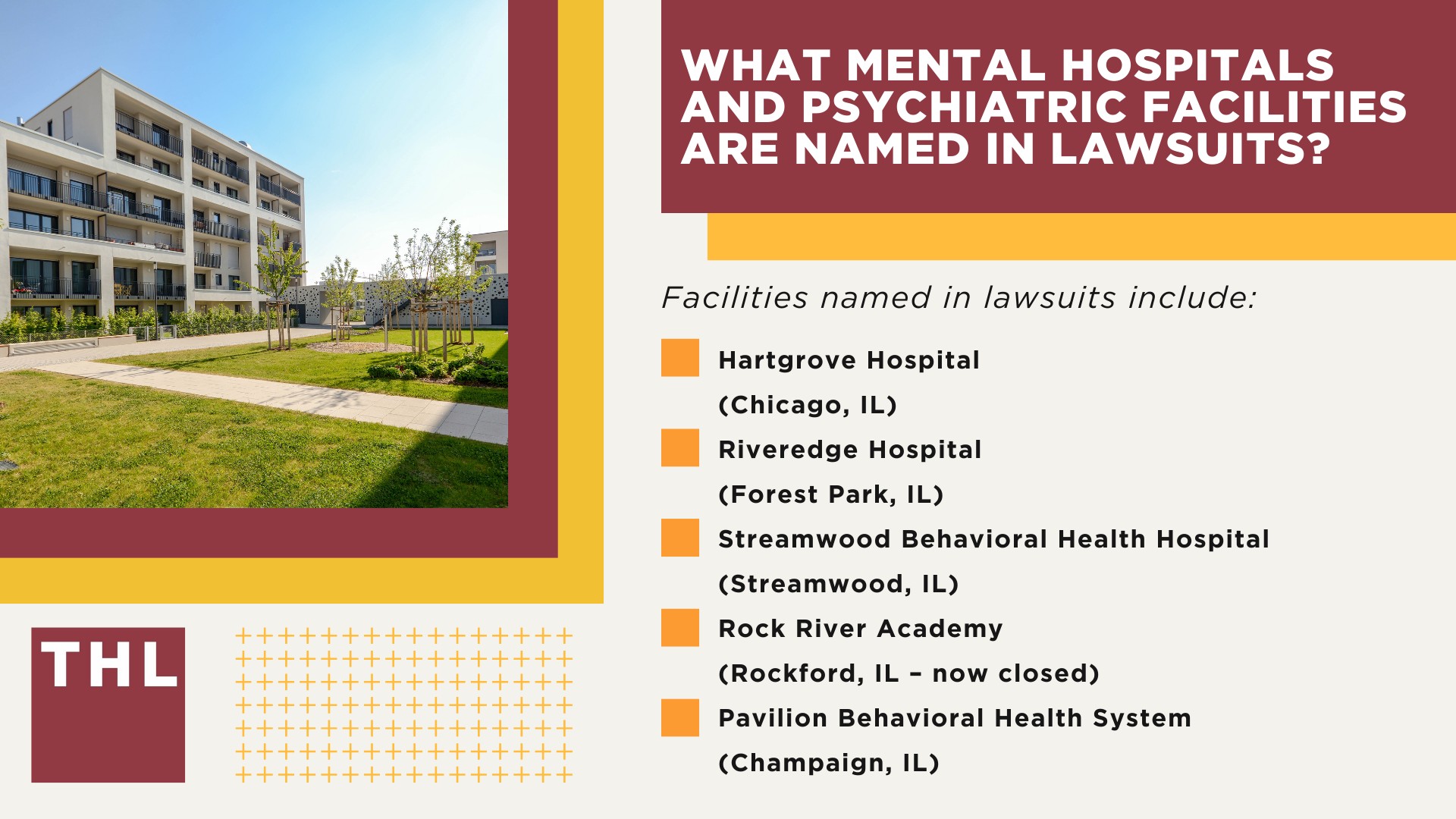
An Overview of the Universal Health Services Lawsuit Investigation; What Mental Hospitals and Psychiatric Facilities are Named in Lawsuits

Facilities named in lawsuits include:

What Types of Abuse are Claimed in These Lawsuits?

Lawsuits against Universal Health Services (UHS) claim that patients in its Illinois facilities endured multiple forms of abuse while seeking mental health services.

Survivors describe a dangerous environment in which children and adolescents with serious mental conditions were subjected to sexual assault, physical violence, and emotional trauma.

According to multiple complaints and news reports, psychiatric services at UHS facilities often included improper use of restraints, forced sedation, and extended time in a seclusion room—sometimes as punishment for reporting abuse.

Victims also allege that staff denied them access to basic care, safety, or outside communication during hospitalization.

In some cases, patients were so severely neglected that they attempted self harm or experienced lasting pain as a result of their treatment.

These allegations point to systemic failures in the mental health system designed to protect the most vulnerable.

An Overview of the Universal Health Services Lawsuit Investigation; What Mental Hospitals and Psychiatric Facilities are Named in Lawsuits; What Types of Abuse are Claimed in These Lawsuits

Types of abuse reported in UHS lawsuits include:

  • Sexual assault by staff members and other patients
  • Physical abuse and unnecessary restraints
  • Emotional abuse and intimidation
  • Prolonged isolation in seclusion rooms
  • Denial of mental health care and supervision
  • Retaliation for reporting mistreatment
  • Admission and extended stays for financial reasons, not medical necessity

How Were These Abuses Allowed to Continue?

The abuse reported at UHS-operated psychiatric facilities did not happen in isolation—it occurred within a system that repeatedly failed to protect vulnerable patients.

Many of the individuals involved were children and teens who had been involuntarily committed or placed in psychiatric care by guardians, schools, or state agencies.

These patients were supposed to receive therapeutic care and supervision, but instead faced environments where misconduct was ignored or covered up.

Despite clear state laws requiring mandatory reporting of abuse and strict standards around the use of restraints, seclusion, and treatment practices, numerous UHS facilities are accused of violating these protections.

Survivors allege that staff routinely failed to obtain informed consent for treatments or medications, particularly in cases involving chemical restraints or isolation.

In some instances, patients were kept for extended stays based on questionable diagnosis decisions that served the financial interests of the facility.

Lawsuits suggest that UHS staff ignored red flags, allowed abusive employees to remain on duty, and discouraged or punished patients who tried to report what they experienced.

A lack of transparency, poor oversight, and chronic understaffing created conditions where abuse could continue unchecked.

Instead of making structural changes, UHS allegedly protected its reputation and revenue at the expense of patient safety.

Recent UHS Verdicts and Ongoing Lawsuits in Illinois

Several recent lawsuits have brought national attention to the abuse allegations tied to UHS-operated psychiatric facilities in Illinois.

From record-breaking jury verdicts to sweeping new complaints involving dozens of survivors, the legal pressure on Universal Health Services continues to grow.

These cases reflect deeply rooted issues in how UHS facilities have treated vulnerable psychiatric patients.

Key legal developments include:

  • A $535 million jury verdict in 2024 against Pavilion Behavioral Health after the sexual assault of a 13-year-old patient.
  • A 2025 lawsuit filed in Cook County on behalf of over 100 children abused at Hartgrove Hospital.
  • Allegations of abuse, forced sedation, and unlawful isolation at Streamwood Behavioral Health and Riveredge Hospital.
  • Ongoing investigations into UHS’s hiring practices, reporting failures, and corporate oversight across its Illinois operations.

The Lasting Impact on Survivors and Their Families

The trauma endured at UHS psychiatric facilities continues to affect survivors long after their release from care.

For many, what was supposed to be a place of healing became the source of deep emotional, psychological, and physical harm.

Survivors of sexual and physical abuse—particularly children and adolescents—often struggle with ongoing mental health challenges, broken trust, and an inability to feel safe in medical or therapeutic environments.

Families, too, live with the guilt and devastation of having unknowingly placed loved ones in danger. These lasting effects are not just emotional—they can alter the course of a person’s life.

The ripple effects of this trauma touch every area of a survivor’s well-being. Abuse within psychiatric care settings often compounds existing mental health issues, making recovery more difficult and less accessible.

An Overview of the Universal Health Services Lawsuit Investigation; What Mental Hospitals and Psychiatric Facilities are Named in Lawsuits; What Types of Abuse are Claimed in These Lawsuits; The Lasting Impact on Survivors and Their Families

Many survivors report a worsening of their original diagnosis, difficulty forming stable relationships, or years of delayed education and development.

Parents and guardians may feel powerless or betrayed by a system that promised safety and treatment.

Lawsuits against UHS aim not only to obtain financial compensation but also to hold institutions accountable for these life-altering consequences.

Psychological and Emotional Trauma

Survivors of abuse at UHS psychiatric facilities often carry invisible wounds that can persist for years.

What began as a search for stability or recovery became a traumatic experience that left many with new or worsened mental health conditions.

The betrayal of trust by mental health professionals—especially in settings meant to provide safety—can profoundly damage a person’s sense of self, security, and ability to heal.

An Overview of the Universal Health Services Lawsuit Investigation; What Mental Hospitals and Psychiatric Facilities are Named in Lawsuits; What Types of Abuse are Claimed in These Lawsuits; The Lasting Impact on Survivors and Their Families; Psychological and Emotional Trauma

Common long-term effects include:

  • Post-traumatic stress disorder (PTSD)
  • Chronic anxiety and panic attacks
  • Depression and suicidal ideation
  • Dissociation or emotional numbness
  • Sleep disturbances and recurring nightmares
  • Distrust of therapists, psychiatrists, or other medical professionals
  • Difficulty forming or maintaining relationships

Disruption of Education and Development

Many survivors of abuse in UHS psychiatric facilities were children or adolescents at critical stages of growth.

Instead of receiving the support they needed to manage their mental health, they were subjected to environments that took away their control and exposed them to further trauma.

This not only delayed their emotional development but also derailed academic progress and long-term goals.

Families describe a deep sense of lost faith in the systems that were supposed to protect and educate their children, leaving them at greater risk of falling behind socially and academically.

An Overview of the Universal Health Services Lawsuit Investigation; What Mental Hospitals and Psychiatric Facilities are Named in Lawsuits; What Types of Abuse are Claimed in These Lawsuits; The Lasting Impact on Survivors and Their Families; Psychological and Emotional Trauma; Disruption of Education and Development

Common developmental consequences include:

  • Missed school during extended hospitalization or after traumatic incidents
  • Difficulty focusing or functioning in classroom settings
  • Regression in cognitive or behavioral skills
  • Withdrawal from peers and social isolation
  • Loss of motivation or confidence in educational abilities
  • Delayed transitions to higher education, employment, or independence

Family and Relationship Strain

The trauma suffered inside UHS facilities often extends far beyond the individual survivor, deeply affecting parents, siblings, and caregivers.

Families who trusted these psychiatric institutions with their loved ones’ care are left to cope with the emotional fallout, feelings of guilt, and fractured relationships.

In many cases, survivors withdraw from those closest to them, creating distance and emotional disconnect that can last for years.

The stress of ongoing treatment, legal action, and trying to rebuild trust can place an enormous burden on already overwhelmed families.

Do You Qualify for a UHS Lawsuit?

You may qualify for a UHS lawsuit if you or a loved one experienced abuse, neglect, or mistreatment while receiving care at a UHS-operated psychiatric facility.

This includes patients who were sexually assaulted, physically harmed, subjected to chemical restraints or isolation, or denied appropriate mental health treatment.

Both former patients and legal guardians of minors may be eligible to take legal action.

Even if the abuse happened years ago, you may still have a valid claim depending on the statute of limitations and the circumstances of your case.

An Overview of the Universal Health Services Lawsuit Investigation; What Mental Hospitals and Psychiatric Facilities are Named in Lawsuits; What Types of Abuse are Claimed in These Lawsuits; The Lasting Impact on Survivors and Their Families; Psychological and Emotional Trauma; Disruption of Education and Development; Do You Qualify for a UHS Lawsuit

Lawsuits are currently being filed against several UHS facilities, including Hartgrove Hospital, Riveredge Hospital, Pavilion Behavioral Health, and others.

An experienced attorney can review your case and help determine whether you qualify to file a claim for compensation and justice.

Gathering Evidence for Legal Action

If you believe you have a claim against a UHS psychiatric facility, collecting evidence is a critical step in building a strong case.

Documentation that supports your experience can help establish a pattern of abuse, neglect, or institutional failure.

Even if you no longer have access to all records, an attorney can help uncover additional evidence through investigation and legal discovery.

An Overview of the Universal Health Services Lawsuit Investigation; What Mental Hospitals and Psychiatric Facilities are Named in Lawsuits; What Types of Abuse are Claimed in These Lawsuits; The Lasting Impact on Survivors and Their Families; Psychological and Emotional Trauma; Disruption of Education and Development; Do You Qualify for a UHS Lawsuit; Gathering Evidence for Legal Action

Helpful evidence may include:

  • Medical records from your time at the facility
  • Photos of injuries or written records of abuse
  • Discharge summaries or treatment notes
  • Incident reports or complaints made to staff
  • Witness statements from other patients, staff, or family members
  • Emails, letters, or text messages referencing mistreatment
  • Documentation of prior complaints or investigations involving the facility

Damages in UHS Abuse Lawsuits

In a lawsuit, “damages” refer to the compensation a survivor may receive for the harm they’ve suffered.

These can cover both the financial costs of abuse and the emotional or psychological toll it has taken.

Victims of abuse in UHS psychiatric facilities may be eligible to recover damages for a wide range of losses tied to their trauma and recovery.

An Overview of the Universal Health Services Lawsuit Investigation; What Mental Hospitals and Psychiatric Facilities are Named in Lawsuits; What Types of Abuse are Claimed in These Lawsuits; The Lasting Impact on Survivors and Their Families; Psychological and Emotional Trauma; Disruption of Education and Development; Do You Qualify for a UHS Lawsuit; Gathering Evidence for Legal Action; Damages in UHS Abuse Lawsuits

Types of damages may include:

  • Medical expenses related to physical or psychological treatment
  • Ongoing therapy or psychiatric care
  • Pain and suffering caused by abuse or neglect
  • Emotional distress and trauma-related symptoms
  • Loss of educational or developmental opportunities
  • Loss of future earning capacity
  • Punitive damages in cases of extreme misconduct or corporate negligence

TorHoerman Law: Investigating the UHS Lawsuit for Abuse in Illinois Mental Health Facilities

TorHoerman Law is actively investigating claims of abuse, neglect, and misconduct at Universal Health Services (UHS) psychiatric facilities.

Our legal team understands the devastating impact that institutional abuse can have on survivors and their families—and we are committed to holding negligent facilities and parent corporations accountable.

If you or a loved one suffered harm at Hartgrove Hospital, Riveredge Hospital, Pavilion Behavioral Health, or another UHS-run facility, you may have grounds to file a lawsuit.

An Overview of the Universal Health Services Lawsuit Investigation; What Mental Hospitals and Psychiatric Facilities are Named in Lawsuits; What Types of Abuse are Claimed in These Lawsuits; The Lasting Impact on Survivors and Their Families; Psychological and Emotional Trauma; Disruption of Education and Development; Do You Qualify for a UHS Lawsuit; Gathering Evidence for Legal Action; Damages in UHS Abuse Lawsuits; TorHoerman Law_ Investigating the UHS Lawsuit for Abuse in Illinois Mental Health Facilities

We approach every case with care, confidentiality, and a deep understanding of the trauma involved in these claims.

Legal action can help you seek justice, financial compensation, and closure after years of pain and silence.

Contact TorHoerman Law today for a free and confidential consultation to discuss your eligibility for a UHS abuse lawsuit.

Frequently Asked Questions

Published by:
Share
Picture of Tor Hoerman
Tor Hoerman

Tor Hoerman has represented injured individuals for more than 30 years, with experience spanning individual personal injury cases and nationwide mass tort litigation. His work includes car accidents, catastrophic injuries, product liability claims, and other serious injury cases. Tor has served in court-appointed leadership roles in national litigation and tried cases involving major corporate defendants.

TorHoerman Law’s legal content is researched and written by our editorial team and attorneys for legal accuracy, clarity, and relevance. We rely on statutes, court records, government publications, medical research, and other authoritative sources when applicable. This page provides general legal information and does not constitute legal advice.

TorHoerman Law reviews its legal content for factual accuracy, current information, and relevant legal context before publication and as material developments occur. This article is provided for general informational purposes and does not constitute legal advice. For guidance about a specific case, contact TorHoerman Law.

Additional UHS Lawsuit resources on our website:
All
FAQs
Injuries & Conditions
Legal Help
Other Resources
Settlements & Compensation
News

You can learn more about this topic by visiting any of our UHS Lawsuit pages listed below:

Hartgrove Hospital Abuse Lawsuit
Lincoln Prairie Behavioral Health Center Abuse Lawsuit
Pavilion Behavioral Health Abuse Lawsuit
Riveredge Hospital Abuse Lawsuit
Rock River Academy Abuse Lawsuit
Streamwood Hospital Abuse Lawsuit
Two Rivers Behavioral Health Abuse Lawsuit
Have you or a loved one been injured?

A serious injury can change your life.

Speak with an experienced personal injury lawyer about your rights, your case, and the legal options available to you.
Google
677 reviews
4.9
★★★★★
Recovered damages
$4 Billion+

Table of Contents

Guides & Resources
About TorHoerman Law

TorHoerman Law represents people whose lives have been disrupted by serious injuries, unsafe products, and negligence. Our attorneys handle individual personal injury cases as well as national mass tort lawsuits involving major corporations.

Founded in 2009, our legal team brings more than 100 years of combined experience handling serious injury and complex civil litigation.

Do you believe you’re entitled to compensation?

Use our Instant Case Evaluator to find out in as little as 60 seconds!

$495 Million
Baby Formula NEC Lawsuit

In this case, we obtained a verdict of $495 Million for our client’s child who was diagnosed with Necrotizing Enterocolitis after consuming baby formula manufactured by Abbott Laboratories.

$20 Million
Toxic Tort Injury

In this case, we were able to successfully recover $20 Million for our client after they suffered a Toxic Tort Injury due to chemical exposure.

$103.8 Million
COX-2 Inhibitors Injury

In this case, we were able to successfully recover $103.8 Million for our client after they suffered a COX-2 Inhibitors Injury.

$4 Million
Traumatic Brain Injury

In this case, we were able to successfully recover $4 Million for our client after they suffered a Traumatic Brain Injury while at daycare.

$2.8 Million
Defective Heart Device

In this case, we were able to successfully recover $2.8 Million for our client after they suffered an injury due to a Defective Heart Device.

Other UHS Lawsuit Resources

All
FAQs
Injuries & Conditions
Legal Help
Other Resources
Settlements & Compensation
News