Youth psychiatric and behavioral health facilities are intended to provide treatment, monitoring, safety, and compassionate care for children and adolescents experiencing mental health crises.
When a facility accepts vulnerable patients for inpatient or residential treatment, it takes on a serious responsibility to protect them from sexual abuse, physical abuse, neglect, unsafe restraint practices, retaliation, and other forms of mistreatment.
Lincoln Prairie Behavioral Health Center in Springfield, Illinois describes itself as a behavioral health facility providing mental health services for children and adolescents, including inpatient and outpatient care.
Public listings also identify Lincoln Prairie as offering psychiatric beds and youth-focused behavioral health services for families in Central and Southern Illinois.
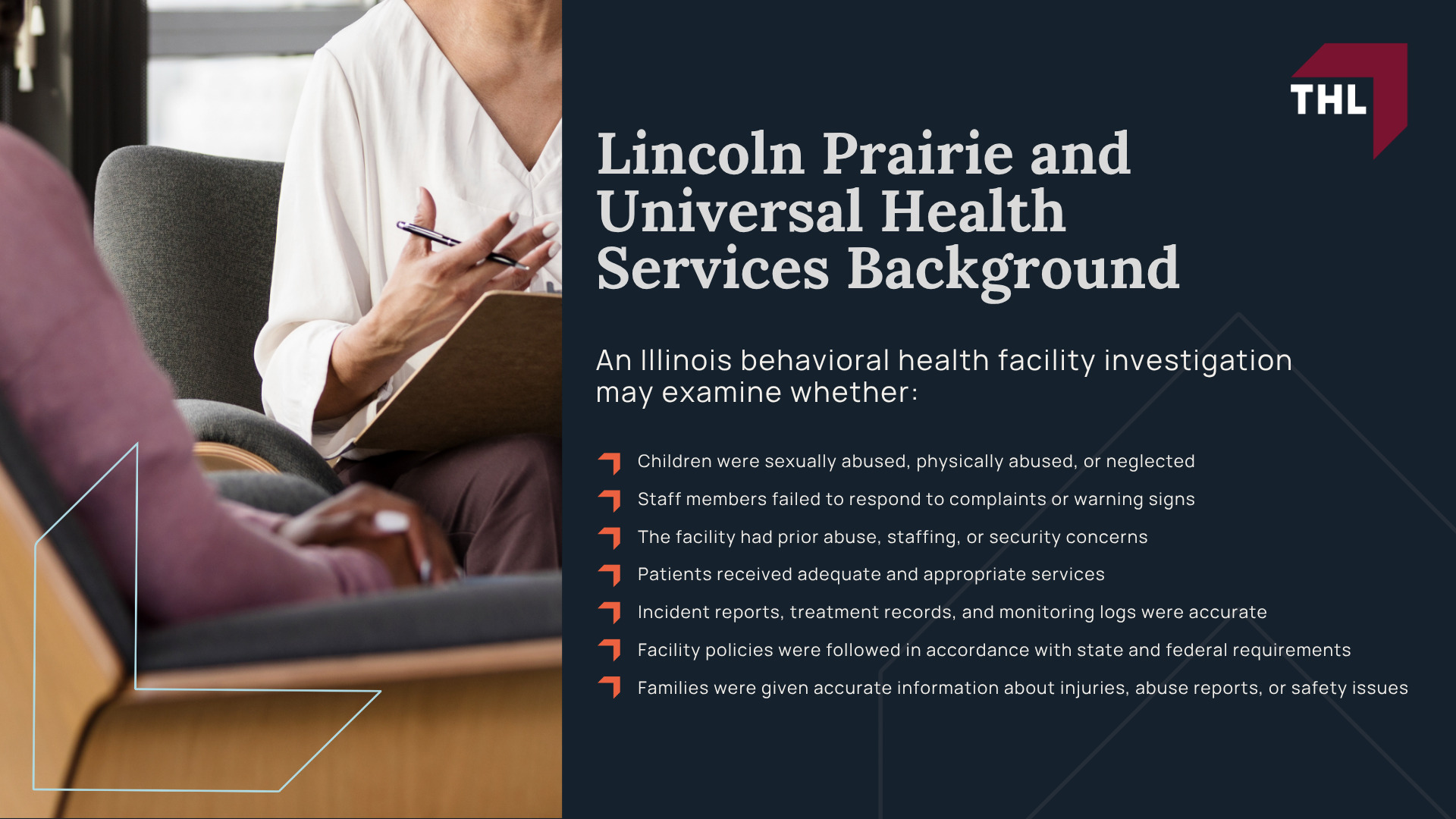
The investigation may involve alleged patient-rights violations, inadequate staffing, poor supervision, unsafe placement decisions, poor security, failures in monitoring, or failures to report and respond to abuse concerns.
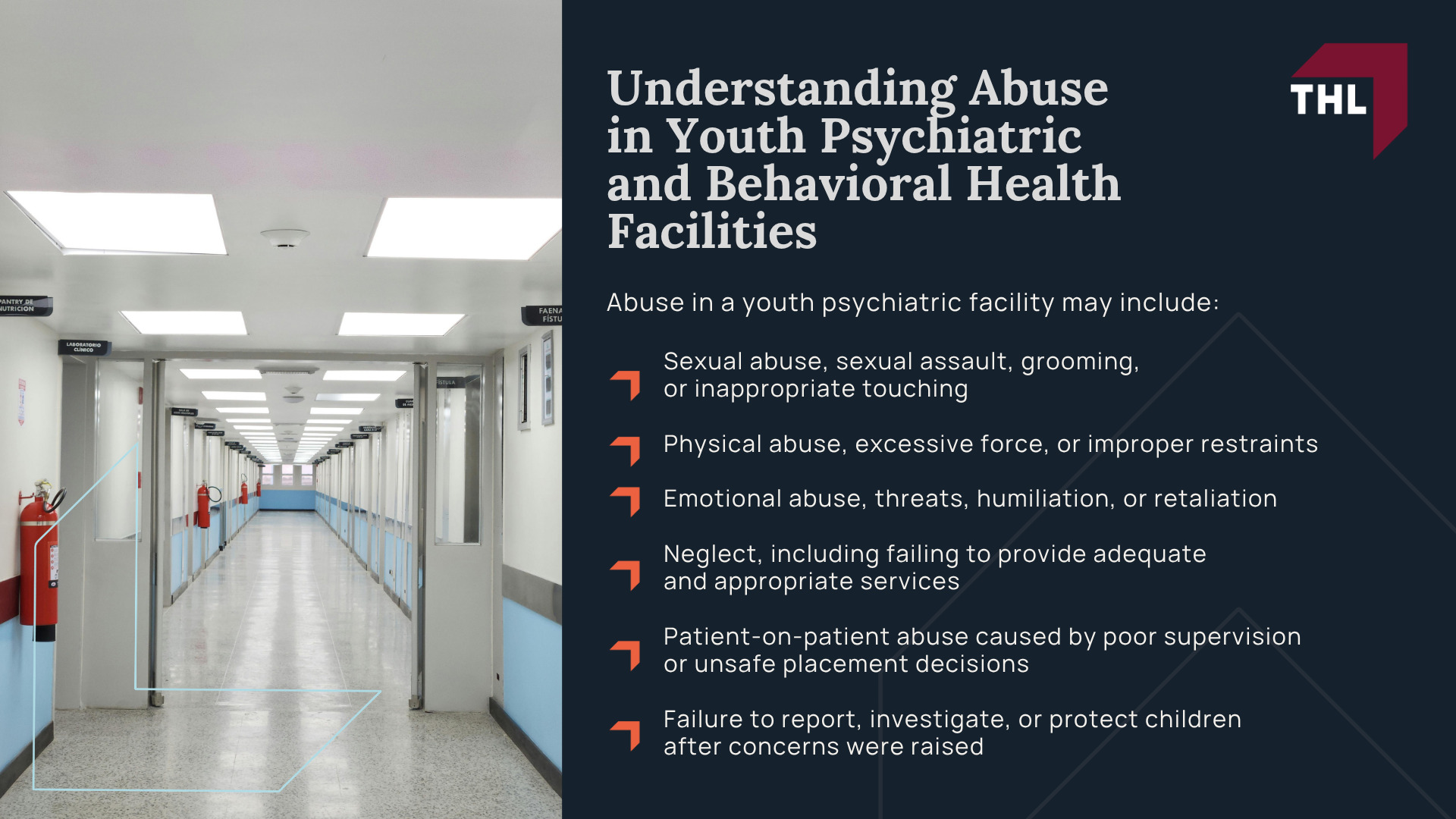
Abuse in a youth psychiatric facility may include:
- Sexual abuse, sexual assault, grooming, or inappropriate touching
- Physical abuse, excessive force, or improper restraints
- Emotional abuse, threats, humiliation, or retaliation
- Neglect, including failing to provide adequate and appropriate services
- Patient-on-patient abuse caused by poor supervision or unsafe placement decisions
- Failure to report, investigate, or protect children after concerns were raised
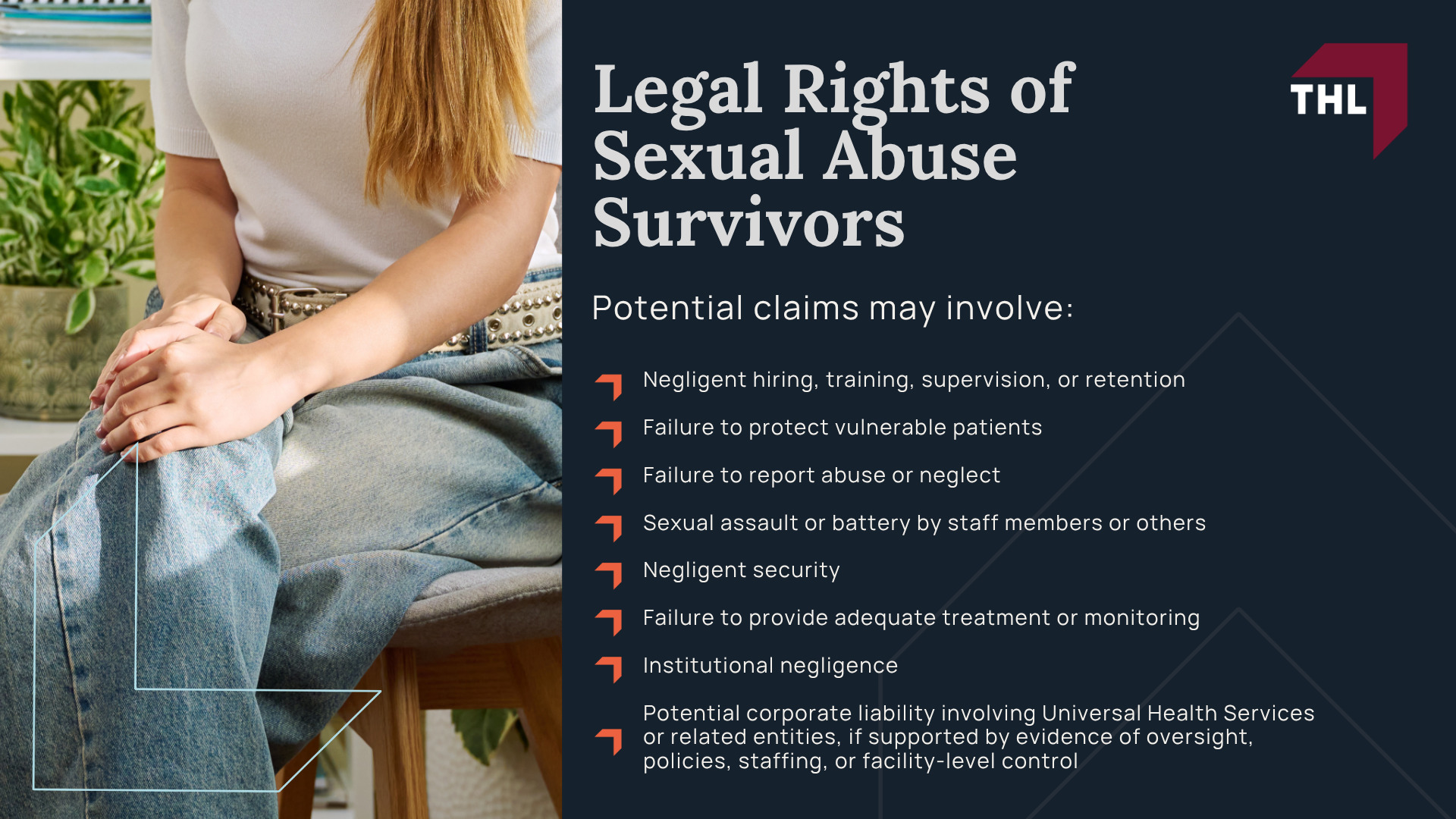
These cases are different from ordinary personal injury claims because the patients involved are often minors, may be in crisis, and may depend entirely on the facility’s system for care, safety, communication, and protection.
Why Children and Adolescents in Behavioral Health Facilities Are Especially Vulnerable
Children placed in psychiatric hospitals or behavioral health programs often enter care during a period of emotional distress, trauma, family crisis, suicidal ideation, behavioral instability, or serious mental health need.
They may be far from home, restricted from leaving, unable to communicate freely, and dependent on staff members for meals, medication, therapy, transportation, supervision, and safety.
In some cases, young patients may fear that staff will not believe them, that reporting abuse will affect their treatment, or that they will face retaliation from staff members or other patients.
Children with prior trauma, disabilities, mental health conditions, or limited family support may face even greater barriers to reporting sexual abuse or neglect.
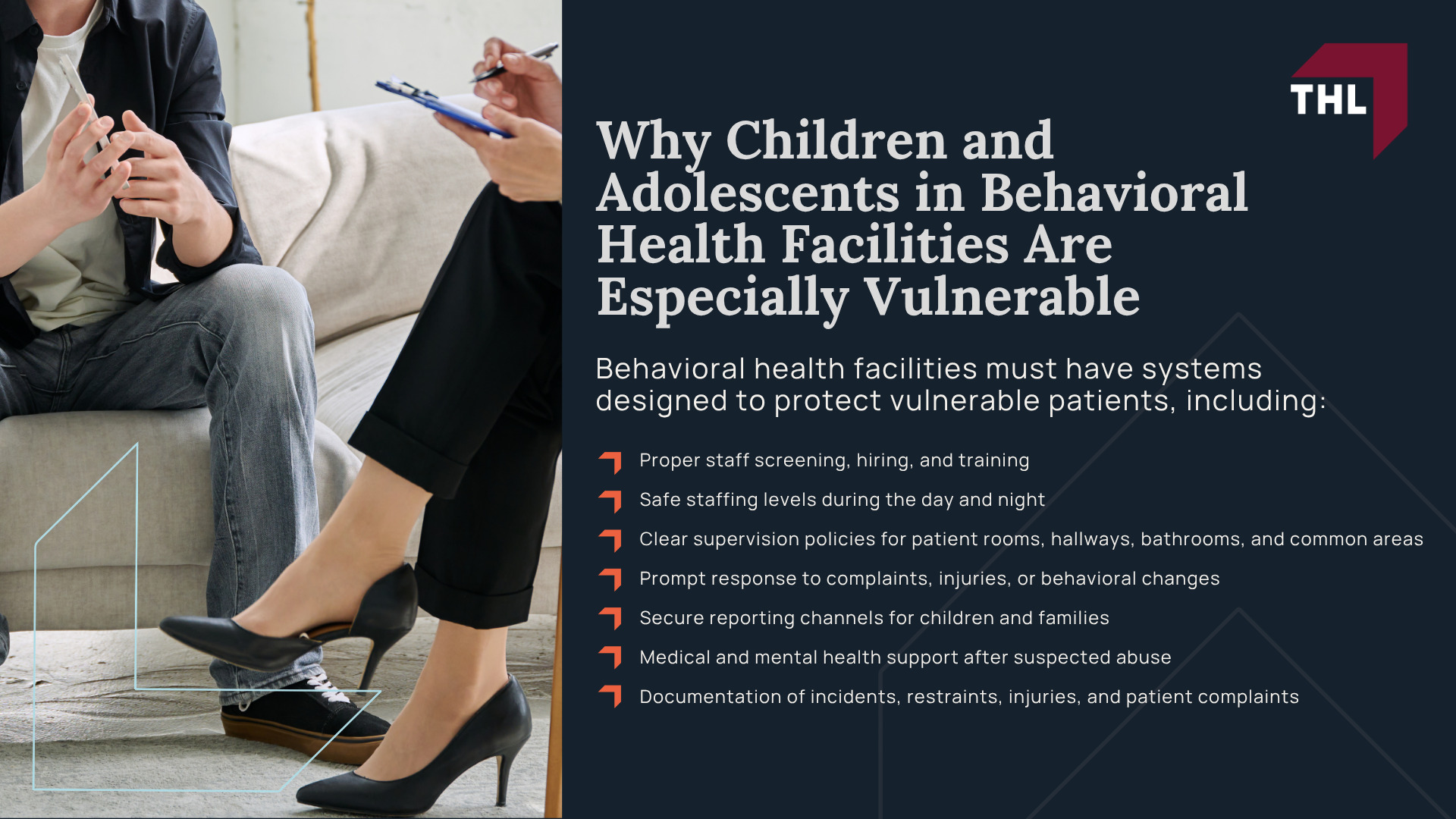
Behavioral health facilities must have systems designed to protect vulnerable patients, including:
- Proper staff screening, hiring, and training
- Safe staffing levels during the day and night
- Clear supervision policies for patient rooms, hallways, bathrooms, and common areas
- Prompt response to complaints, injuries, or behavioral changes
- Secure reporting channels for children and families
- Medical and mental health support after suspected abuse
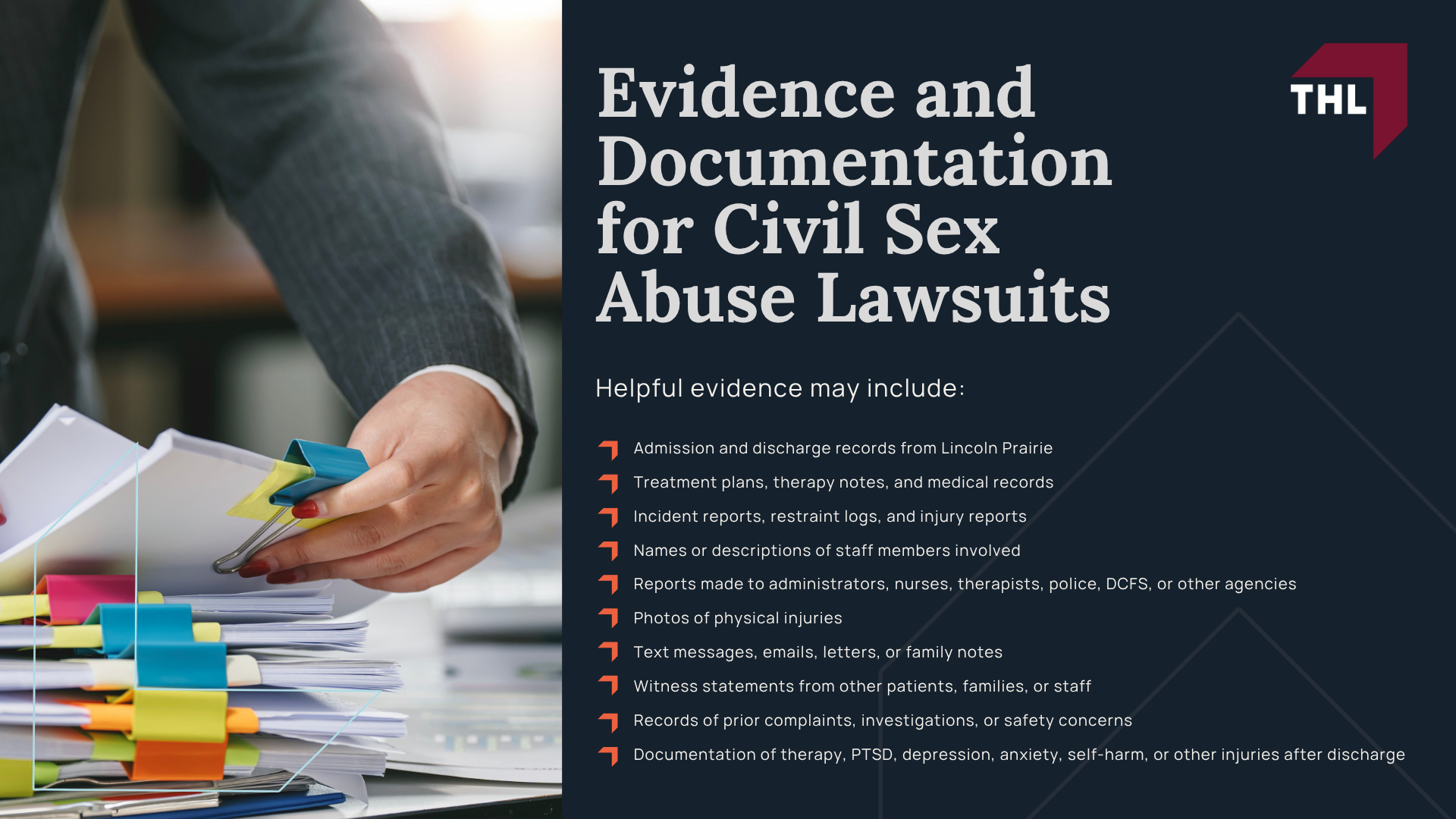
- Documentation of incidents, restraints, injuries, and patient complaints
When a facility fails to provide adequate protection, children may suffer physical injuries, psychological trauma, worsening mental health symptoms, loss of trust in medical care, and long-term emotional harm.