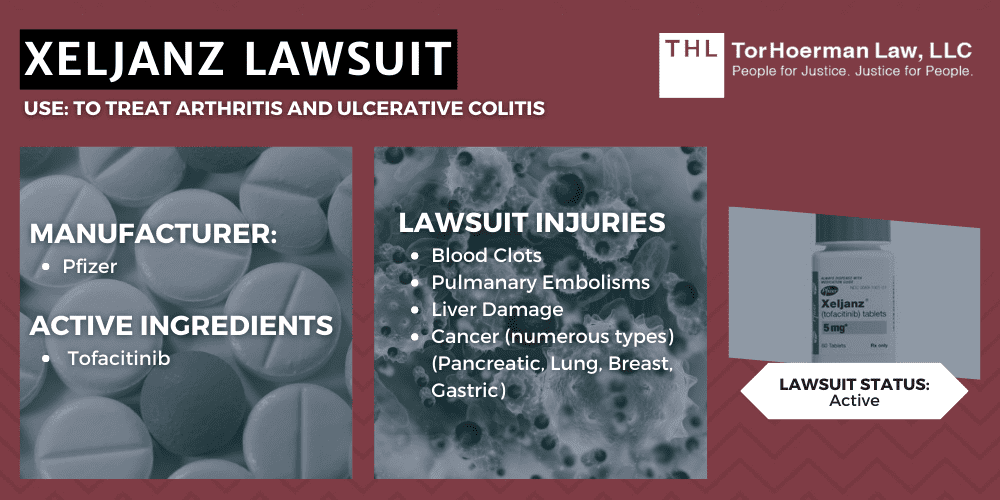
Xeljanz and Xeljanz XR have been linked to several different injuries, some more severe than others.
Some of the more significant adverse effects of the medication are listed below.
If you have suffered any injuries or worsened health conditions after taking the drug, seek medical attention and contact a Xeljanz lawyer.
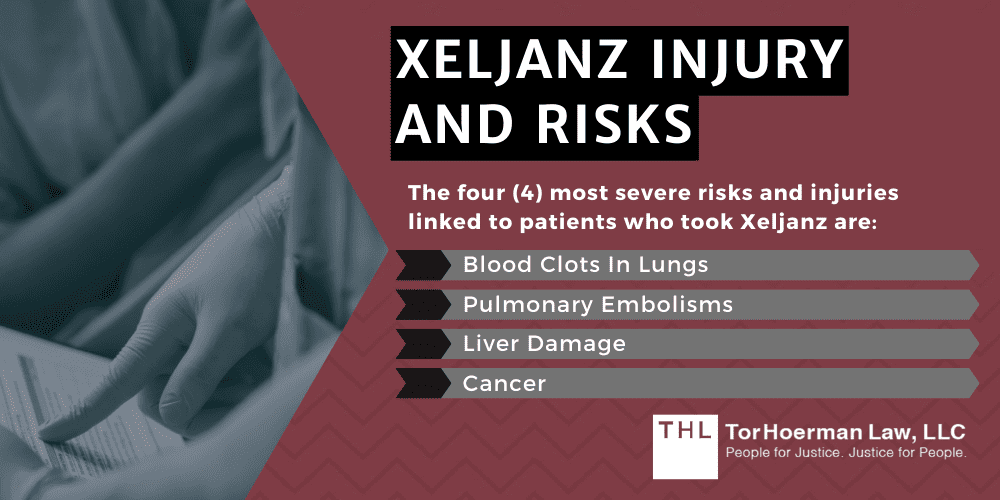
The four (4) most severe risks and injuries linked to patients who took Xeljanz are:
1. Blood Clots in Lungs
Blood clots in the lungs have happened more often in patients with rheumatoid arthritis who are 50 years of age and older with at least one heart disease risk factor taking a higher than the recommended dose of Xeljanz/Xeljanz XR.
Blood clots located in the lungs have also happened in patients with ulcerative colitis and some people have died from these clots.
2. Pulmonary Embolisms
Pulmonary embolisms are dangerous blood clots that travel to the lungs.
Similar to blood clots in the lungs, pulmonary embolisms have happened more often in patients with rheumatoid arthritis who are at least 50 years old who have an increased cardiovascular risk factor, and are taking a higher than the recommended dose.
3. Liver Damage
Liver damage has been linked as a side effect to Xeljanz through multiple clinical studies.
Research is providing insight into the risks of elevated liver enzyme levels and the development of non-alcoholic fatty liver disease.
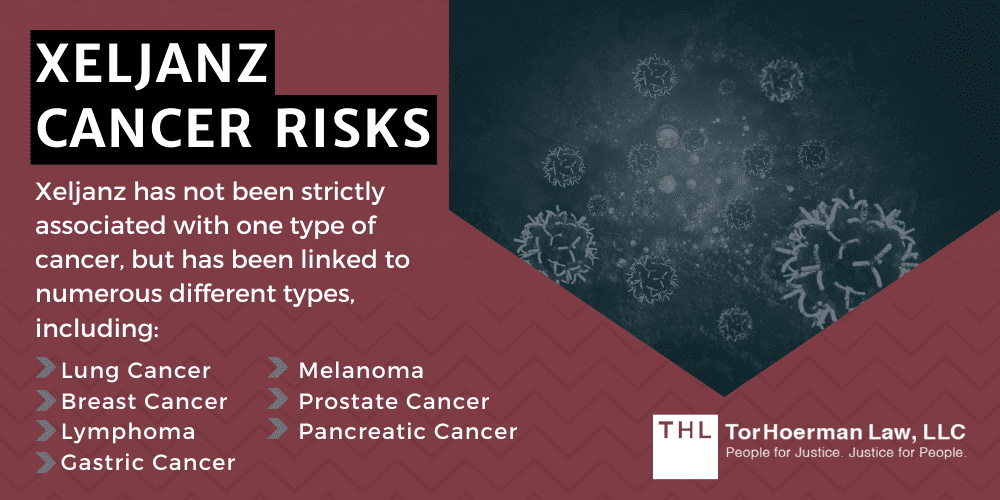
4. Cancer
Xeljanz/Xeljanz XR may increase your risk of certain cancer by changing the way your immune system works.
People who are taking the higher doses of Xeljanz (10 mg twice daily) or Xeljanz XR (22 mg once per day) have a higher risk of skin cancers.
The post-marketing FDA-mandated clinical trial’s initial results display an increase in occurrences of cancer in rheumatoid arthritis patients treated with both doses of Xeljanz compared to patients treated with a TNF inhibitor.