

Asbestos is a thread-like mineral that naturally occurs in the environment.
Its impressive heat resistance, insulating properties, and versatility made it popular in the industrial sector.
Manufacturers often weaved these fibrous minerals with other materials to enhance durability.

Despite its once widespread use in industries such as construction, automotive, and shipbuilding, asbestos has been recognized as a significant health hazard due to its association with severe respiratory diseases and cancers.
Exposure Routes of Asbestos
The risk factors for asbestos-induced illnesses vary depending on the environment and nature of asbestos use.
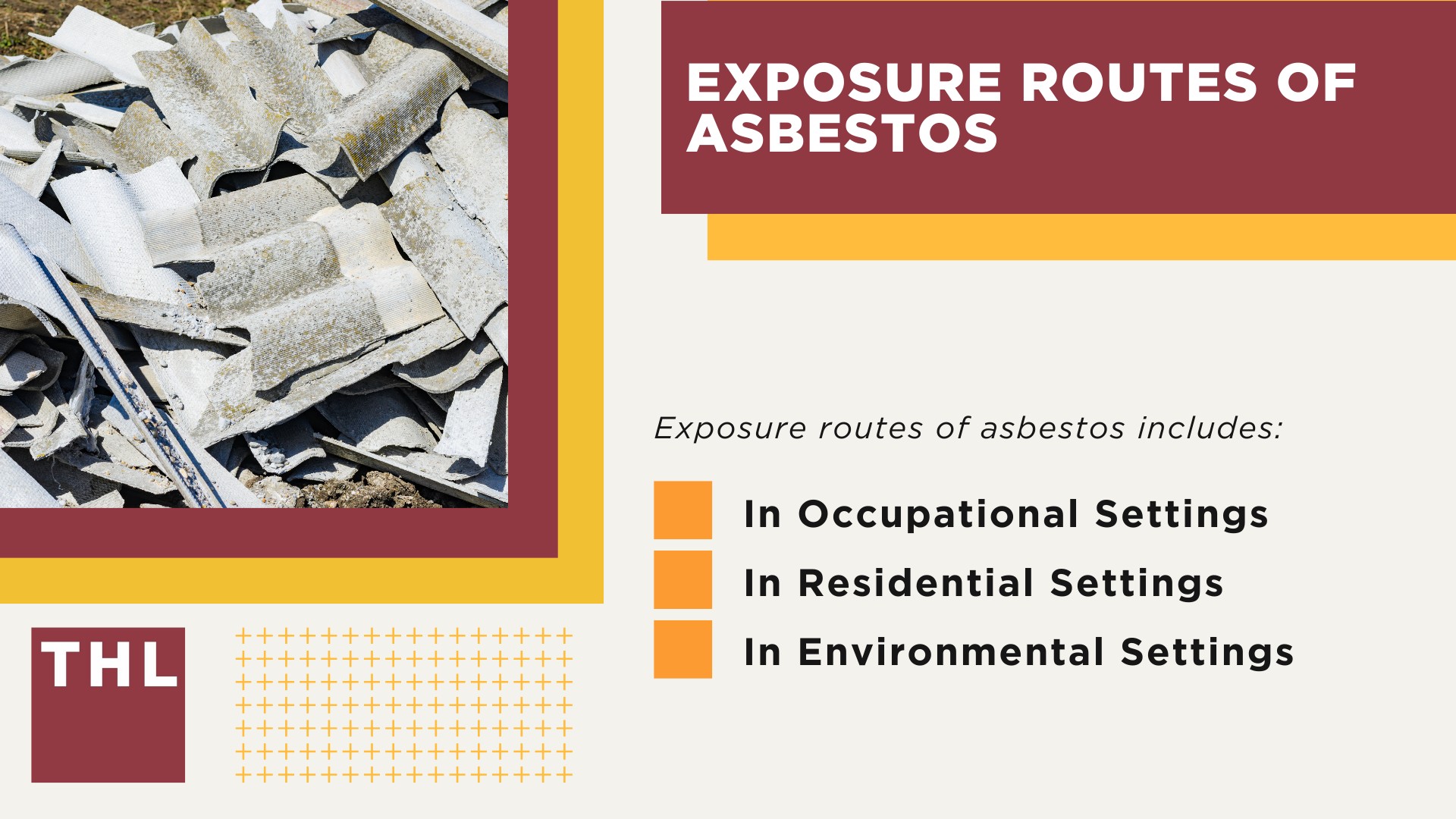
Exposure routes of asbestos includes:
- In Occupational Settings: Occupational asbestos exposure is one of the most common and dangerous ways individuals come into contact with this hazardous material. Workers in construction, shipbuilding, manufacturing, and asbestos mining are at higher risk than most.
- In Residential Settings: Residential exposure to asbestos often occurs through the presence of asbestos-containing materials in homes and buildings constructed or renovated before the 1980s. These materials may include insulation, floor tiles, ceiling tiles, roofing shingles, and siding.
- In Environmental Settings: Environmental asbestos exposure can occur in areas where asbestos is naturally present in the soil or rock formations. This route is prevalent in regions with naturally occurring asbestos deposits.


