Asbestos is a naturally occurring mineral that was widely used in construction and manufacturing industries due to its heat resistance, durability, and insulating properties.
It was commonly used in building materials such as insulation, ceiling tiles, roofing, and floor tiles.
Asbestos is highly toxic and poses significant health risks to those exposed to its fibers.
When asbestos-containing materials are disturbed or damaged, tiny asbestos fibers are released into the air, which, when inhaled, can become lodged in the lungs and other organs.
The inhalation of asbestos fibers can lead to serious health conditions, including lung cancer, mesothelioma (a rare and aggressive cancer that affects the lining of the lungs, abdomen, or heart), and asbestosis (a chronic lung disease characterized by scarring and difficulty breathing).
The latency period between exposure to asbestos and the development of related diseases can range from 10 to 40 years, making it difficult to detect and diagnose early.
Even low-level or brief exposure to asbestos can be harmful, and there is no safe threshold for asbestos exposure.
In the past few decades on the back of legal action and governmental intervention, strict regulations and guidelines have been implemented to control and limit the use of asbestos-containing materials, with asbestos removal and abatement procedures being necessary to ensure the safety of workers and the general public.
What Are the Different Types of Asbestos?
Asbestos is a naturally occurring mineral fiber comprising six different types of minerals belonging to the silicate family.
The six types of minerals that form asbestos are:
- Chrysotile: Also known as white asbestos, this is the most common form of asbestos. It consists of long, curly fibers and is the only type of commercially used asbestos.
- Amosite: Also known as brown asbestos, this type has straight, brittle fibers. It was commonly used in thermal insulation products.
- Crocidolite: Also known as blue asbestos, crocidolite has thin, needle-like fibers. It is considered the most dangerous form of asbestos due to its high fragility.
- Tremolite: This is a non-commercial form of asbestos that can occur in various colors, including white, green, or gray.
- Anthophyllite: This is another non-commercial form of asbestos that can occur in various colors, such as gray, green, or brown.
- Actinolite: Similar to tremolite and anthophyllite, actinolite is a non-commercial form of asbestos and can occur in colors like green or gray.
How Does Asbestos Affect the Body?
Regardless of its type, asbestos fibers or dust can have harmful effects on the body when they are inhaled or ingested.
When released into the air, the microscopic asbestos dust can be easily inhaled and lodged in the lung tissue or other parts of the respiratory system.
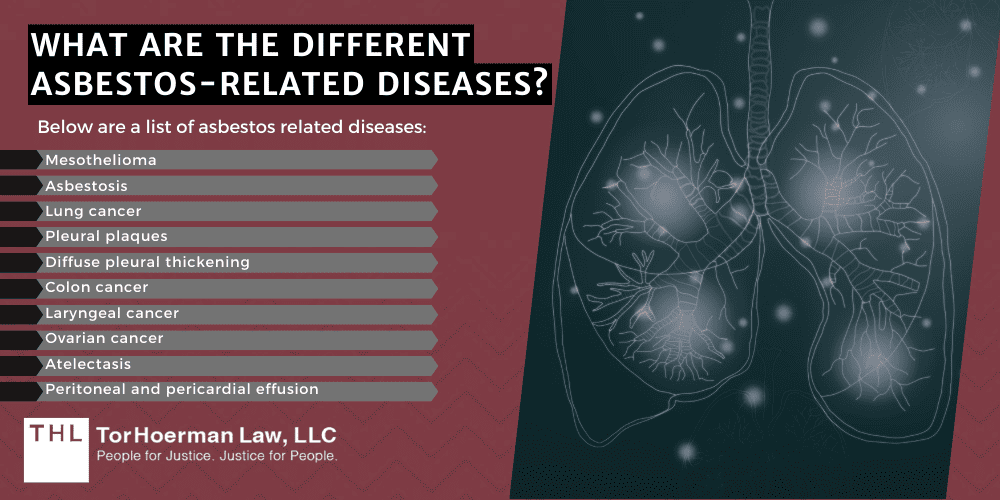
Some of the most common diseases associated with asbestos exposure are asbestosis and mesothelioma.
Asbestosis is a severe, long-term lung disease caused by prolonged inhalation of asbestos dust.
It causes lung scarring, leading to difficulty breathing and other respiratory complications.
Mesothelioma is a rare, aggressive cancer that affects the chest cavity or abdominal lining.
Where Can You Get Exposed to Asbestos?
Asbestos can be found in various materials and environments, and exposure can occur in different settings.
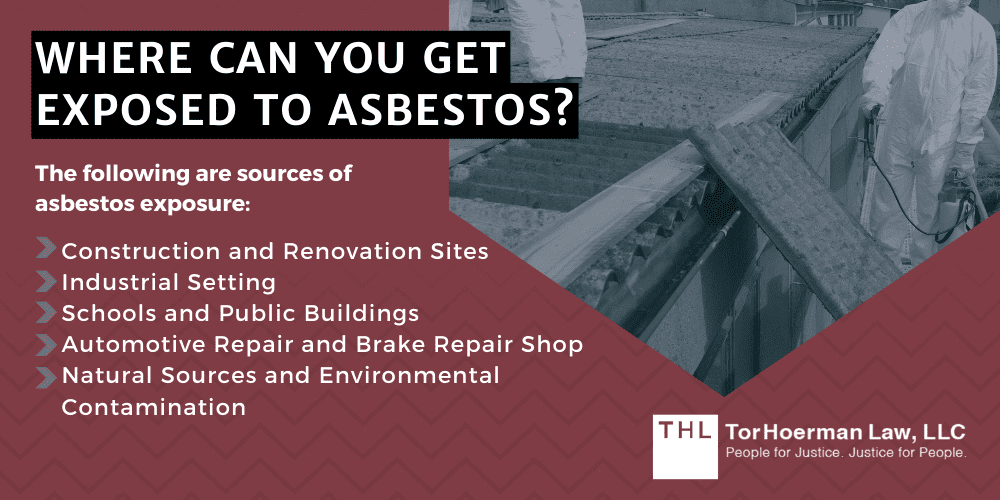
The following are sources of asbestos exposure:
- Construction and Renovation Sites: Asbestos was widely used in the construction industry due to its fire-resistant and insulating properties. Buildings constructed before the 1980s are more likely to contain asbestos in various materials such as insulation, roofing, flooring, pipes, and cement.
- Industrial Settings: Certain industries, such as mining, automotive manufacturing, and construction, have historically used asbestos materials extensively in their operations. Workers in these industries have a higher risk of exposure if safety measures are breached.
- Schools and Public Buildings: Many older schools, government buildings, hospitals, and public facilities may contain asbestos products. Disturbing these materials during maintenance or renovation work can release asbestos fibers.
- Automotive Repair and Brake Repair Shops: Asbestos was commonly used in vehicle components such as brake pads, linings, and clutch facings.
- Natural Sources and Environmental Contamination: Asbestos is a naturally occurring mineral in certain rock formations and soil. Natural weathering and erosion can release asbestos fibers into the air in areas with rich asbestos deposits.