

Popcorn lung is a serious lung disease that damages the small airways in the lungs.
The medical name for popcorn lung is bronchiolitis obliterans, though doctors may also describe the condition as constrictive bronchiolitis or, in some contexts, bronchiolitis obliterans syndrome.
The disease became widely known after factory workers at a microwave popcorn factory developed severe lung disease after breathing butter flavoring vapors that contained the chemical diacetyl.

Since then, popcorn lung has been linked to flavorings related lung disease in workers exposed to diacetyl and other harmful chemicals used in food, flavoring, and other industries.
Popcorn lung can cause breathing problems that may seem mild at first but become more serious over time.
Common popcorn lung symptoms include coughing, wheezing, shortness of breath, fatigue, and chest tightness.
Bronchiolitis Obliterans and Small-Airway Scarring
Bronchiolitis obliterans affects the small airways in the lungs, called bronchioles.
These tiny air passages help move air toward the tiny air sacs where oxygen enters the bloodstream.
When a person develops bronchiolitis obliterans, the bronchioles can become inflamed, irritated, and scarred.
Over time, scar tissue may narrow or block these small airways, making it harder for air to move through the lungs.
This damage can affect basic breathing because the lungs cannot move oxygen as efficiently.
People with popcorn lung may feel short of breath during ordinary activities, including walking, climbing stairs, working, or exercising.
Popcorn lung is not the same as lung cancer, and it is not simply a temporary cough.
It is a chronic obstructive lung disease that can cause lasting lung damage.
Why Popcorn Lung Can Be Permanent
Popcorn lung can be permanent because scar tissue in the bronchioles does not function like healthy lung tissue.
Once the small airways are narrowed or blocked, treatment options may help manage symptoms, slow progression, or reduce inflammation, but they may not restore normal lung function.
People diagnosed with popcorn lung may continue to experience symptoms even after exposure stops.
Some patients need long-term medical monitoring, inhaled medications, oxygen, pulmonary rehabilitation, or advanced respiratory care.
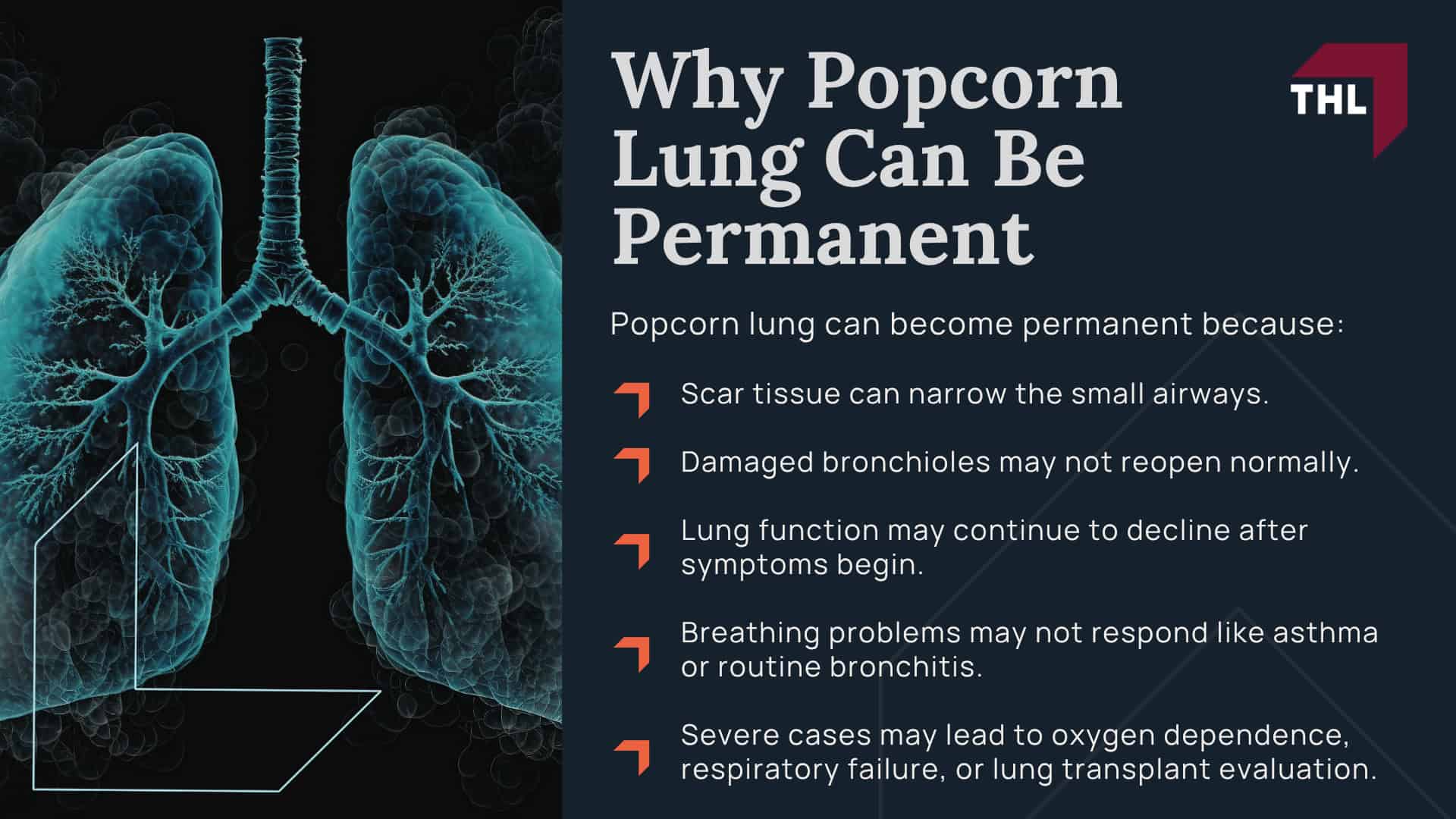
Popcorn lung can become permanent because:
- Scar tissue can narrow the small airways.
- Damaged bronchioles may not reopen normally.
- Lung function may continue to decline after symptoms begin.
- Breathing problems may not respond like asthma or routine bronchitis.
- Severe cases may lead to oxygen dependence, respiratory failure, or lung transplant evaluation.


