Active Litigation
Nitrous Oxide Lawsuit Facts
TorHoerman Law is actively accepting claims for the Nitrous Oxide Lawsuit.


Nitrous oxide is a colorless gas with legitimate applications in dental procedures and medical procedures, where it is carefully administered alongside oxygen by trained professionals.
Outside these settings, products like Galaxy Gas are misused for their short-lived euphoric effects, often inhaled through balloons or nozzles purchased with the canisters.
People who inhale repeatedly or engage in chronic use place themselves at significant risk of both immediate and long-term harm.
When inhaling directly from canisters or balloons, users deprive their brains and bodies of oxygen, which can impair brain activity and trigger sudden collapse.
These episodes of misusing nitrous oxide have been linked to accidents, overdoses, and in severe cases, cardiac arrest or death.
Medical research also documents that repeated use damages the body’s ability to process vitamin B12, leading to progressive injury to the spinal cord and nervous system.
The result is a growing record of harmful effects that extend far beyond the brief high sought by recreational users.
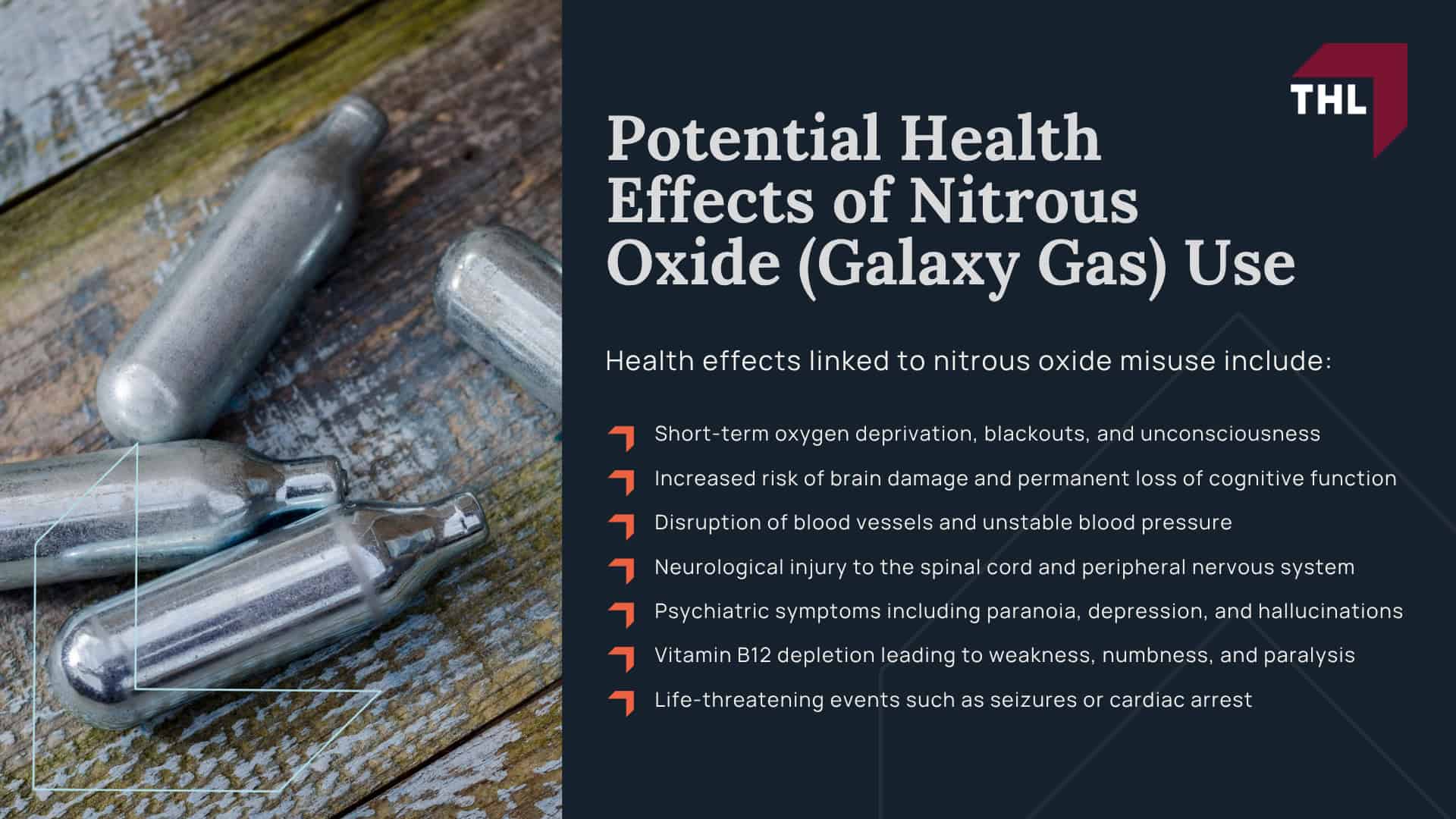
Health effects linked to nitrous oxide misuse include:
These health risks illustrate why recreational use of Galaxy Gas is so dangerous, especially for people who underestimate the long-term impact.
Victims who inhale repeatedly may not realize how quickly chronic exposure accumulates, leading to irreversible damage.
The nervous system injuries caused by nitrous oxide abuse can rob victims of mobility, coordination, and independence.
Unlike supervised use in hospitals or dental clinics, recreational exposure involves no safeguards against oxygen deprivation or overexposure.
The combination of social availability, youth-targeted packaging, and rising popularity makes the dangers of Galaxy Gas an urgent public health concern.
Recreational misusing of Galaxy Gas or similar nitrous oxide products can lead to serious health risks beyond temporary euphoria.
Although in medical and dental settings nitrous oxide is safely administered with enough oxygen and under close supervision, people who purposely inhale large amounts of it for fun often do not get sufficient oxygen reaching their brain and spinal cord.
Over time, this misuse causes vitamin B12 deficiency, because nitrous oxide inactivates the enzyme pathways that rely on active B12.
Numerous scientific studies document that young people who abuse nitrous oxide can develop neurological injuries including paresthesia, gait disturbance, myeloneuropathy, and even irreversible damage to the spinal cord and nervous system.
For example, a 2025 study of recreational nitrous oxide users found that most had motor deficits and sensory disturbances, with no improvement in many cases despite treatment.

Chronic exposure also carries risk of psychiatric symptoms, including mood changes, hallucinations, and cognitive impairment.
Some affected individuals have reported weakness or numbness in hands and feet, difficulty walking, imbalance, and even paralysis in imaging studies.
And while early detection and vitamin B12 supplementation can reverse some effects, delayed or heavy misuse often results in permanent deficits.
Studies have found that once brain and nervous tissue are injured, and oxygen deprivation or recurrent hypoxia is involved, recovery is incomplete, especially for damage to myelin sheaths in the spinal cord.
That makes prevention and early medical evaluation critical for anyone abusing garden-variety nitrous oxide systems like Galaxy Gas.
Galaxy Gas is sold as a “culinary” nitrous-oxide product for whipped cream dispensers, but complaints and advisories describe a very different real-world use: flavored canisters paired with balloons/nozzles that facilitate inhalation for a quick high.
Plaintiffs allege the branding, flavors, and accessories are designed to cue recreational use, with pleadings stating that users “place [tanks] in their mouths with nozzles and balloons” to access the gas: conduct that has nothing to do with food preparation.
The FDA’s March 14, 2025 consumer advisory warns consumers not to inhale nitrous oxide from any canister, tank, or charger and links misuse to serious harms, including unconsciousness, paralysis, psychiatric disorders, blood clots, and death: context that plaintiffs argue makes recreational misuse plainly foreseeable.
National coverage amplified the warning and explicitly referenced Galaxy Gas among the brands commonly sold at gas stations, vape shops, and online, often in colorful, flavored formats that appeal to youth.
Civil filings connect those marketing cues to specific retail channels.
Instead of being limited to restaurant suppliers or kitchen stores, these canisters are routinely found in smoke shops, gas stations, vape stores, and online marketplaces, where their flavored packaging and accessories make them appealing to casual users.

Social media has also played a role in fueling this trend, with videos and posts glamorizing nitrous oxide inhalation and encouraging teens and young adults to try it.
This combination of easy access and targeted marketing creates a dangerous environment where people view nitrous oxide as harmless, despite the severe and well-documented health risks.
When companies place products like Galaxy Gas in settings associated with recreational drug use and design them with features that suggest inhalation, it becomes difficult to argue they are intended only for culinary purposes.
The result is a growing body of evidence that Galaxy Gas and similar brands are being marketed in ways that normalize inhalant abuse and expose vulnerable populations to serious injury or death.
Families harmed by these products are now coming forward to hold companies accountable for the choices that contributed to their loved one’s suffering.
Galaxy Gas has been sold through youth-accessible retail channels (smoke/vape shops, gas stations) as well as major online marketplaces and specialty e-commerce sites.
The FDA’s 2025 advisory also notes these nitrous-oxide products are sold online (including Amazon, eBay, and Walmart) and at smoke/vape shops and gas stations.
News and retailer listings specifically show Galaxy Gas offered in head shops and on wholesale/retail web stores that sell accessories like balloons/nozzles.
Galaxy Gas and other nitrous oxide products are not considered addictive in the same way as opioids or stimulants, but they can create patterns of compulsive use that resemble addiction.
People often inhale repeatedly to maintain the short-lived euphoric effects, which can quickly escalate into frequent sessions and heavy consumption.
Over time, this cycle of nitrous oxide abuse can lead to tolerance, where users need more gas to achieve the same effect.
Medical research shows that chronic use depletes vitamin B12, causing nerve damage, paralysis, and other long-term harms that reinforce dependence by trapping people in ongoing physical decline.
Social settings and social media trends encourage teens and young adults to misuse products like Galaxy Gas more often, normalizing repeated use.
While not chemically addictive in the classic sense, the psychological pull, ease of access, and escalating health risks make Galaxy Gas misuse highly habit-forming and dangerous.
Galaxy Gas has become one of the most recognizable brand names associated with recreational nitrous oxide use, and the company now faces a growing number of lawsuits across the United States.
Current claims generally allege that Galaxy Gas marketed flavored nitrous oxide products in ways that made recreational inhalation foreseeable, despite well-documented risks associated with the use of nitrous oxide.
Plaintiffs claim that repeated exposure can lead to severe neurological complications, including brain and nerve damage, spinal cord injury, paralysis, psychiatric symptoms, blood clots, and death.
Several lawsuits also focus on allegations that Galaxy Gas products were marketed to young consumers through colorful branding, flavoring, social media promotion, and retail channels commonly associated with nicotine and other recreational products.
One of the most closely watched cases is Iannotti v. Galaxy Gas, LLC, a proposed class action first filed in federal court in February 2025, which alleges deceptive marketing and inadequate warnings regarding the dangers of recreational nitrous oxide use.

Other lawsuits involve wrongful death claims and personal injury allegations brought by individuals and families who contend that Galaxy Gas functioned as a widely available party drug despite mounting evidence of serious health consequences.
As litigation continues to develop, courts are being asked to examine what manufacturers, distributors, and retailers knew about the risks of misuse and whether adequate steps were taken to prevent foreseeable harm.
Galaxy Gas products have become the focus of litigation because plaintiffs allege the company marketed nitrous oxide products in ways that made recreational inhalation foreseeable.
Although sold as culinary products, Galaxy Gas nitrous oxide cannisters are commonly sold in flavors, bright packaging, and retail environments that critics argue have little connection to traditional food-service use.
Lawsuits also point to the widespread availability of these products through smoke shops, gas stations, vape stores, and online marketplaces.
Plaintiffs contend that these marketing and distribution practices contributed to a growing pattern of misuse despite well-documented risks of neurological injury, paralysis, blood clots, psychiatric symptoms, and death.

Factors commonly cited in Galaxy Gas lawsuits include:
Individuals who suffered serious medical complications after using Galaxy Gas may be eligible to pursue legal action.
Although these products are marketed for culinary purposes, lawsuits allege that largely unregulated sales and widespread recreational misuse exposed consumers to significant health risks.
Medical literature has linked repeated nitrous oxide exposure to neurological, cardiovascular, psychiatric, and respiratory injuries that may require extensive treatment and rehabilitation.

Potential injuries in a Galaxy Gas lawsuit may include:
Some Galaxy Gas lawsuits involve allegations that nitrous oxide misuse contributed to fatal injuries, overdoses, or accidents resulting in death.
Families who lost loved ones may pursue wrongful death claims when evidence suggests nitrous oxide exposure played a role in the incident.
These cases can involve oxygen deprivation, loss of consciousness, impaired judgment, or severe neurological complications associated with recreational inhalation.
In some situations, legal claims may also be brought by passengers, pedestrians, cyclists, or other drivers injured by a person allegedly impaired by nitrous oxide.

Plaintiffs argue that the foreseeable misuse of Galaxy Gas products extended far beyond their stated or intended use as culinary supplies.
Depending on the circumstances, lawsuits may seek compensation for medical expenses, lost financial support, funeral costs, and other losses resulting from a fatal or catastrophic accident.
People who misuse nitrous oxide face many of the same dangers seen in substance abuse cases, where a product causes severe harm outside its intended purpose.
Recreational inhalation directly impacts the central nervous system, leading to nerve damage, paralysis, psychiatric symptoms, and even death in some cases.
Those injured after using nitrous oxide may not have realized the associated risks, especially since these canisters are often marketed as harmless culinary supplies.
Families who have lost loved ones are also potential claimants, as wrongful death lawsuits can be brought when injuries result in fatal outcomes.
The spread of nitrous oxide misuse on social media platforms has contributed to a rise in young people experimenting with the gas, making them particularly vulnerable to harm.

Victims may also include individuals who combined nitrous oxide with other inhalants or substances, which can intensify the risks of hypoxia and neurological injury.
A lawsuit may be appropriate if your injuries required hospitalization, long-term treatment, or resulted in permanent disabilities.
Documentation of medical care, evidence of purchase, and testimony about how the gas was used can all strengthen a potential claim.
If you or a loved one suffered harm tied to recreational nitrous oxide, you may qualify to participate in a lawsuit against the companies profiting from these dangerous sales.
Strong evidence is essential in proving that injuries or deaths were caused by misusing Galaxy Gas and that the product was sold or marketed in ways that encouraged recreational use.
Evidence helps establish a clear link between the act of inhalation, the resulting medical condition, and the company’s role in manufacturing or distributing the product.
An experienced law firm can help victims and families preserve, organize, and present this evidence effectively in court.
The stronger the evidence, the more likely victims are to secure compensation for medical costs, lost wages, and suffering.

Examples of evidence in a Galaxy Gas lawsuit include:
Damages represent the losses a victim suffers as a result of an injury or wrongful death caused by abusing Galaxy Gas and similar nitrous oxide products.
A lawyer can carefully review medical bills, treatment needs, employment records, and personal impact to determine the full scope of these losses.
Attorneys also work with medical and financial experts to project future costs and quantify non-economic harm like pain, suffering, and loss of companionship.
By presenting this information clearly, a lawyer can advocate for fair compensation on behalf of injured individuals or grieving families.

Examples of potential damages include:
The rise of Galaxy Gas highlights the dangers of nitrous oxide products marketed and sold in ways that encourage recreational use.
From teens and young adults drawn in by flavored packaging and social media trends to families devastated by permanent injuries or sudden deaths, the impact has been widespread and severe.
Lawsuits now allege that Galaxy Gas and its distributors placed profit over safety by selling a product they knew would be misused as an inhalant with life-altering consequences.
Victims and their loved ones deserve answers, accountability, and the opportunity to pursue justice through the legal system.

TorHoerman Law is actively investigating Galaxy Gas lawsuits on behalf of individuals and families harmed by nitrous oxide misuse.
If you or a loved one suffered injuries or death after using Galaxy Gas, contact us today to learn about your legal options and how we can help you pursue compensation.


