Paraquat is a highly toxic herbicide first introduced in the 1960s and widely adopted in U.S. agriculture for weed control and crop management.
Over time, concerns about pesticide exposure mounted as researchers and regulators examined its acute toxicity and long-term health effects.
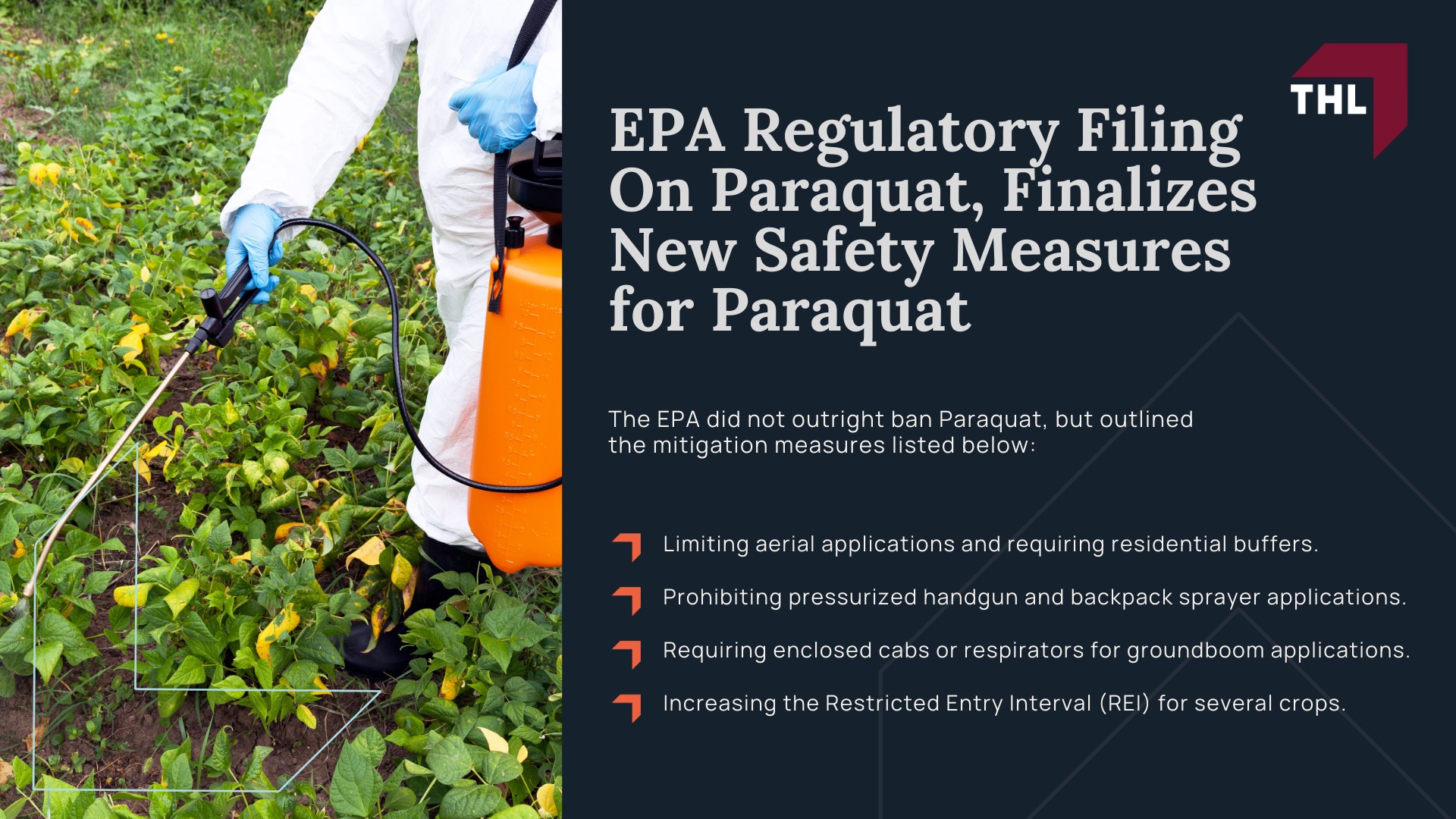
While Paraquat remains approved for restricted use in the United States, it has been banned in more than 70 countries due to risks associated with accidental ingestion, occupational exposure, and neurological harm.
Scientific studies published over the past two decades have reported an association between Paraquat exposure and a significantly higher risk of developing Parkinson’s disease, particularly among individuals with repeated or occupational contact.
A widely cited National Institutes of Health study found that individuals exposed to Paraquat had a 2.5-times greater risk of Parkinson’s disease compared to those without exposure.
Additional research from the Parkinson’s Institute and Clinical Center has supported these findings, linking Paraquat’s neurotoxic properties to the type of dopaminergic neuron damage seen in Parkinson’s patients.
These findings have fueled nationwide Paraquat litigation, with agricultural workers, applicators, and others filing claims after being diagnosed with Parkinson’s disease.
Paraquat lawsuits allege that manufacturers knew or should have known about these risks but failed to take adequate steps to protect human health.
Plaintiffs argue that the product’s labeling and warnings did not accurately reflect the neurological dangers associated with long-term exposure.
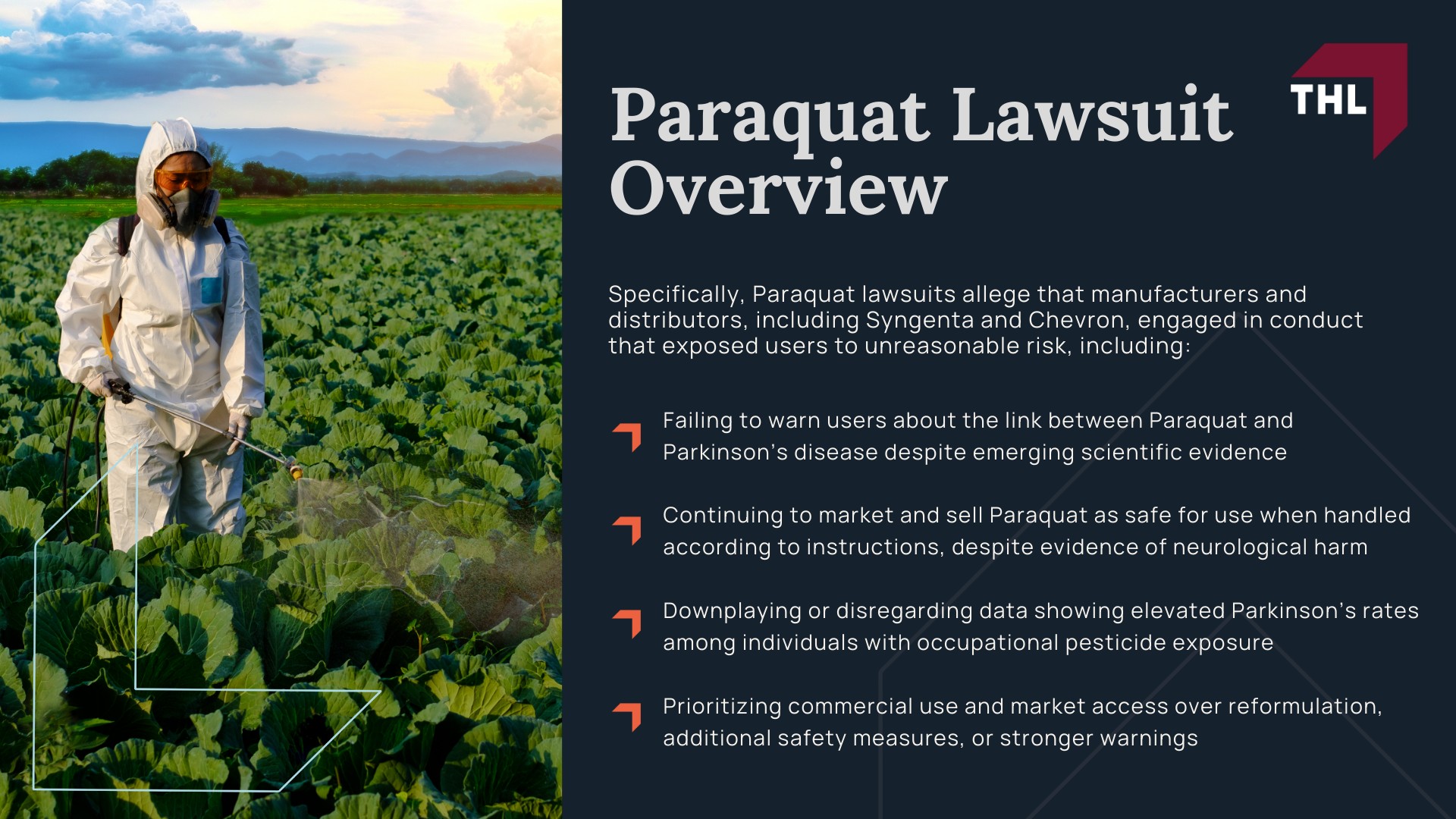
Specifically, Paraquat lawsuits allege that manufacturers and distributors, including Syngenta and Chevron, engaged in conduct that exposed users to unreasonable risk, including:
- Failing to warn users about the link between Paraquat and Parkinson’s disease despite emerging scientific evidence
- Continuing to market and sell Paraquat as safe for use when handled according to instructions, despite evidence of neurological harm
- Downplaying or disregarding data showing elevated Parkinson’s rates among individuals with occupational pesticide exposure
- Prioritizing commercial use and market access over reformulation, additional safety measures, or stronger warnings
Because of the volume of claims and shared factual questions, federal Paraquat cases have been consolidated into multidistrict litigation to coordinate discovery, expert rulings, and pretrial proceedings.
This structure allows the court to address common issues while preserving each plaintiff’s right to pursue an individual claim.
If you have been exposed to Paraquat and were subsequently diagnosed with Parkinson’s disease, you may be eligible to file a Paraquat Lawsuit and pursue compensation for the losses that you incurred from your injuries.
Contact TorHoerman Law to speak with our Paraquat Lawyers and to get a free consultation.
TorHoerman Law’s Paraquat Lawyers are currently presiding in leadership roles for the Paraquat Litigation.
How Many Paraquat Lawsuits Have Been Filed? Current Status of the Paraquat Parkinson’s Disease MDL
The Paraquat Parkinson’s Disease MDL continues to grow, with more than 6,000 pending Paraquat Lawsuits filed.
New Paraquat Lawsuits are currently being filed by lawyers across the country.
Paraquat Lawsuit Updates and Status
The Paraquat litigation continues to develop through both the federal MDL and state court actions, reflecting a dynamic phase in the broader effort to resolve thousands of personal injury claims alleging a link between pesticide exposure and Parkinson’s disease.
The federal multidistrict litigation initially set its first Paraquat bellwether trial for October 2025, but that schedule was delayed as settlement discussions and procedural stays took precedence, pushing active trial timing into early 2026.
In parallel, a Paraquat trial in the Philadelphia state court system was scheduled for January 26, 2026, marking a highly anticipated step toward public examination of key evidence in this mass tort program.
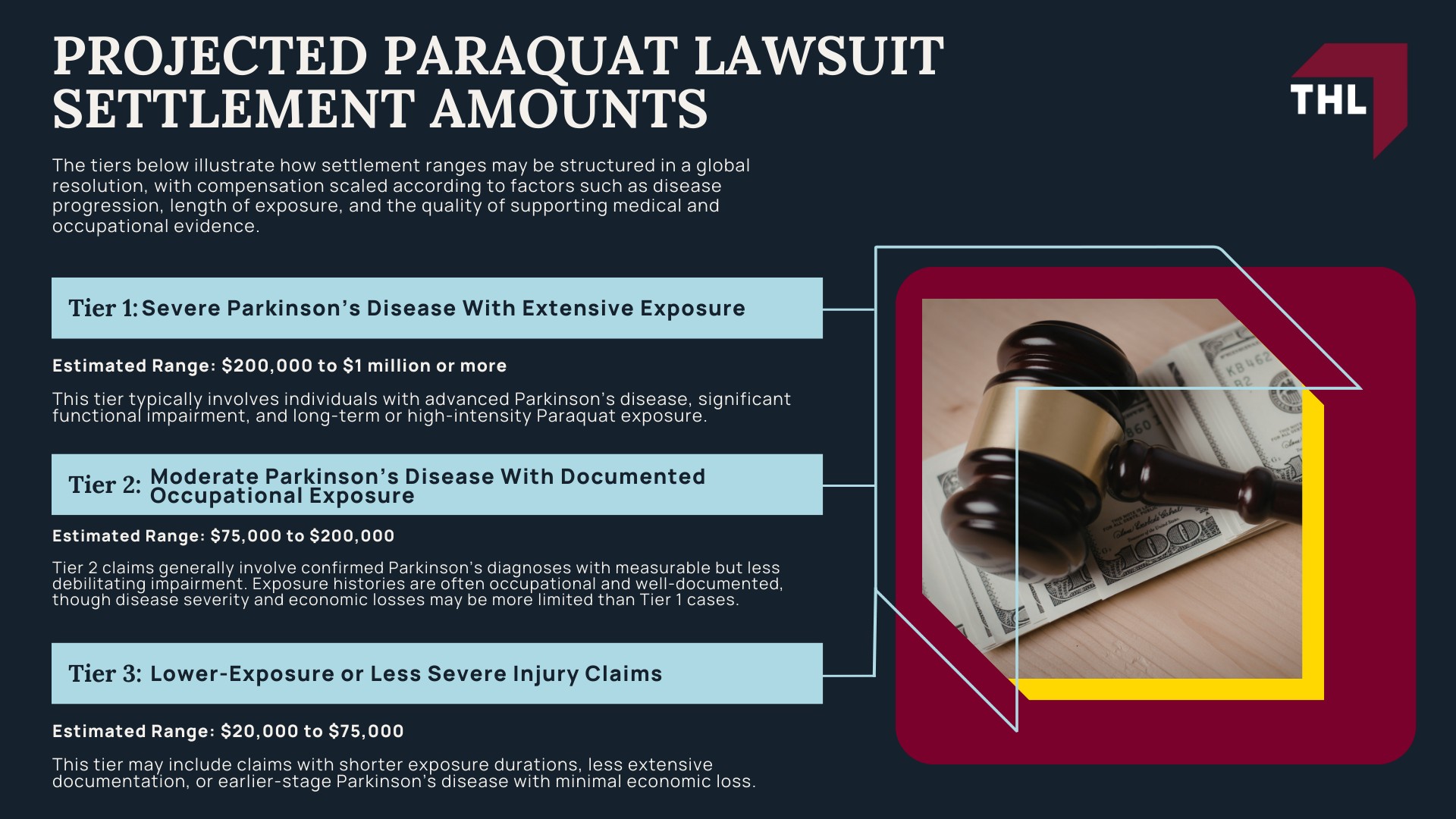
On January 29, 2026, Syngenta and Chevron reached a pre-trial settlement in the first Paraquat case slated to go to trial in Philadelphia court, resolving the matter just before opening statements were to begin; the specific amount of that settlement remains confidential but commentators describe it as significant given the timing.
This pre-trial resolution signals defendants’ willingness to avoid presenting contested causation and warning evidence before a jury, a strategy that may influence settlement negotiations in both federal and state venues.
In another key procedural development, a Pennsylvania appeals court agreed to hear an appeal by Paraquat manufacturers challenging whether certain cases should remain in Philadelphia, an issue that could affect venue and case processing in the statewide docket.
Additionally, the U.S. Supreme Court declined to review a challenge to Pennsylvania’s consent-by-registration statute, leaving in place a law that permits Paraquat cases to proceed in that state rather than be dismissed on jurisdictional grounds.
Though the first federal MDL bellwether was postponed, the litigation has not slowed, with discovery, expert disputes, and settlement dialogues ongoing.
As 2026 progresses, future bellwether trial dates and appellate outcomes (including venue challenges and dispositive motions) will continue to shape how product liability lawsuits in this mass tort context move toward resolution, potentially informing global settlement frameworks for plaintiffs alleging Paraquat-related harm.