No Longer Accepting Claims
FreeStyle Libre 3 Lawsuit Facts
TorHoerman Law is no longer accepting claims for the FreeStyle Libre 3 Lawsuit.
Intake Closed

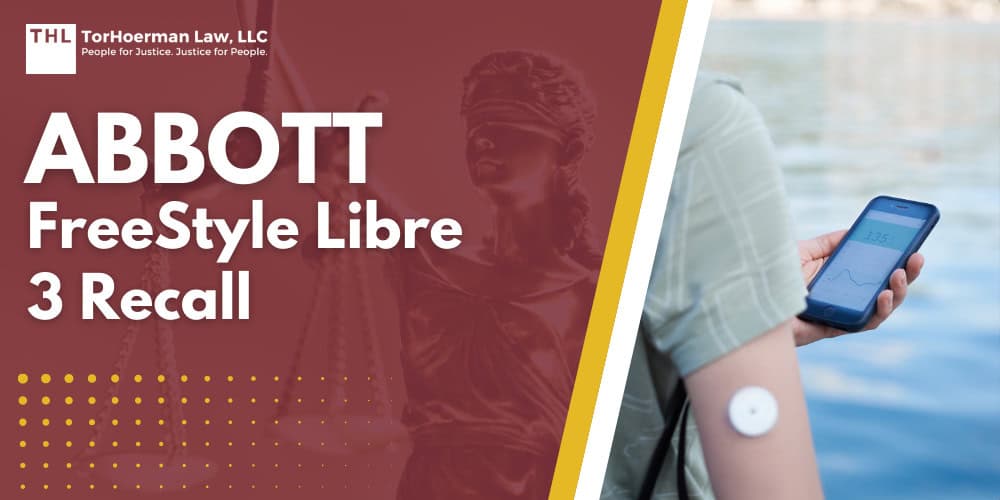
The FreeStyle Libre 3 and FreeStyle Libre 3 Plus Continuous Glucose Monitoring Systems are real-time continuous glucose monitoring devices indicated for the management of diabetes in patients age four and older.
These systems are intended to replace routine blood glucose testing for many diabetes treatment decisions, unless a clinician or product labeling indicates that fingerstick checks are needed to confirm actual blood glucose levels.
Each system uses a small sensor worn on the arm to collect glucose data and transmit it to a smartphone app or reader, and the reader includes a built-in meter that can be used with test strips when users or doctors want to double-check a reading.
The FreeStyle Libre 3 and FreeStyle Libre 3 Plus systems are designed to detect trends and track patterns over time, helping with the detection of episodes of hyperglycemia and hypoglycemia and guiding patients as they adjust food, activity, and medications.
These devices can autonomously communicate with digitally connected devices, such as phones, insulin delivery systems, or other apps, and can be used alone or in conjunction with these tools for therapy decisions.

Even as a recall and reported quality problems affect certain sensors, Abbott continues to produce FreeStyle Libre 3 and FreeStyle Libre 3 Plus sensors to fulfill replacement and new orders and does not expect significant supply disruptions.
For people who rely heavily on sensor data, inaccurate readings can contribute to patients skipping or delaying insulin or taking unnecessary carbohydrates, which may expose them to serious health risks.
These safety concerns are central to ongoing FDA oversight and legal investigations into how the FreeStyle Libre 3 system functions in real-world diabetes care.
The FreeStyle Libre 3 and FreeStyle Libre 3 Plus sensors are part of Abbott’s line of Libre products, designed to provide continuous glucose data for people living with diabetes.
Each sensor is applied to the back of the upper arm, where a tiny filament beneath the skin measures glucose in interstitial fluid and regularly transmits this information to compatible mobile apps or a reader.
The system then displays current glucose numbers, trends, and alerts, helping users and clinicians determine how food, activity, and medications are affecting blood sugar throughout the day.
In normal use, these sensors are worn for a set wear period, then replaced to maintain continuous monitoring.

Functions of the FreeStyle Libre 3 and FreeStyle Libre 3 Plus sensors include:
Accurate sensor readings are critical for people with diabetes because they rely on these numbers to decide when to take insulin, eat, or seek emergency care, and mistakes can result in potential injury or death.
When values on a continuous glucose monitor do not match symptoms, a person may still trust the device and delay checking their actual blood glucose level with a meter or lab test.
In particular, incorrect low glucose readings can cause someone to take unnecessary corrective steps, such as excessive carbohydrate intake or skipping an insulin dose, even when their blood sugar is already high or rising.
If these incorrect readings over an extended period may lead to repeated overcorrections or missed insulin, the result can be severe hyperglycemia, diabetic ketoacidosis, hospitalization, or worse.
Because of these risks, accuracy problems with a glucose sensor are treated as serious safety issues, especially in products that are marketed as a primary tool for treatment decisions.
The Abbott FreeStyle Libre 3 recall began in July 2024, when Abbott issued a voluntary medical device correction for a small subset of FreeStyle Libre 3 sensors that could provide falsely high glucose readings, warning users not to use sensors from three specific lots.
On November 24, 2025, Abbott launched a broader medical device correction for certain glucose monitor sensors in the FreeStyle Libre 3 and FreeStyle Libre 3 Plus lines, after internal testing determined that some sensors could give incorrect low glucose readings that might prompt excessive carbohydrate intake or skipping or delaying insulin doses.
This 2025 action involved approximately 3 million impacted sensors in the United States alone, and both Abbott and the FDA warned that the defect could lead to dangerous treatment choices and serious adverse events for people with diabetes.
In December 2025, the FDA issued an Early Alert about these Abbott biowearables, describing the risk that incorrect low readings could cause wrong treatment decisions and serious health outcomes.
By early 2026, the FDA had reclassified the problem as a Class I recall for certain FreeStyle Libre 3 and 3 Plus sensors, noting 860 serious injuries and seven deaths worldwide linked to the quality problems experienced with these devices.
Throughout these actions, regulators have emphasized that only defined lots of FreeStyle Libre 3 and 3 Plus sensors are affected, while the FreeStyle Libre 3 reader, app, and other Libre products are not part of the recall.
Abbott continues to produce replacement sensors for these Abbott biowearables and has stated that it does not expect significant supply disruptions, even as recalled units are removed from use.

Key points about the Abbott FreeStyle Libre 3 recall:
Together, the 2024, 2025, and 2026 actions show a progression from a small subset of FreeStyle Libre 3 devices with high-reading issues to a large-scale recall of certain glucose monitor sensors producing incorrect low readings.
Regulators and Abbott emphasize that the defect involves only specific lots of FreeStyle Libre 3 and FreeStyle Libre 3 Plus sensors, even though the number of impacted sensors is substantial.
For patients who rely on these systems for day-to-day diabetes management, incorrect readings can translate into repeated wrong treatment decisions and increased risk of serious complications.
The ongoing recall and FDA oversight focus on removing affected sensors from circulation, tracking adverse events, and ensuring that users understand the safety steps they should take if their device is potentially impacted.
Affected FreeStyle Libre 3 sensors and models are limited to specific lots of Libre 3 and FreeStyle Libre 3 Plus sensors that Abbott and the FDA have identified as recalled or subject to a medical device correction.
The affected product group includes certain glucose monitor sensors, while the FreeStyle Libre 3 app and reader hardware are not part of the recall.
Abbott advises users to check their sensor box or label and, if they have questions, to contact Abbott Diabetes Care so an Abbott customer service representative can confirm whether their device is included.
The company continues to replace affected product at no charge for eligible users and can help arrange safe disposal and replacement options.

Examples of affected FreeStyle Libre 3 sensors and models include:
If your sensor packaging, serial number, or lot code is unclear, Abbott recommends that you contact Abbott Diabetes Care directly so a customer service representative can walk you through checking whether your device is affected.
Users whose sensors are confirmed as part of the affected product group should stop using those sensors, follow disposal instructions, and work with Abbott and their health care team to obtain appropriate replacements and alternative monitoring.
Defective Libre 3 sensors can give incorrect low or high glucose readings, which can mislead users about their actual blood sugar status at critical moments.
When a person acts on these inaccurate values, they may take extra carbohydrates, skip or reduce insulin, or delay emergency care, and those decisions may pose serious health risks including potential injury.
False low readings can drive repeated excessive carbohydrate intake or skipped insulin doses, pushing blood sugar into sustained hyperglycemia and, in severe cases, diabetic ketoacidosis (DKA).
False high readings can lead to unnecessary insulin doses and sudden drops in blood sugar, increasing the risk of severe hypoglycemia, confusion, and loss of consciousness.
Over time, repeated extreme highs and lows can contribute to long-term complications affecting the heart, brain, kidneys, and nerves.
In the most serious situations, families have reported catastrophic events and suspected wrongful deaths following episodes where Libre 3 sensor data did not match later blood tests or clinical findings.

Injuries and health problems linked to inaccurate Libre 3 sensor readings may include:
These risks are particularly concerning because Libre 3 systems are promoted as tools that can replace many fingerstick checks for treatment decisions.
When sensors do not perform as expected, a device intended to protect people with diabetes can instead undermine their safety and become the focus of recalls, FDA warnings, and legal claims.
Long-term complications from inaccurate FreeStyle Libre 3 readings can arise when extreme highs and lows are repeated over months or years, stressing the heart, brain, kidneys, eyes, and nerves.
People who repeatedly skip or delay insulin, or overtreat with extra insulin because of faulty readings, may face accelerated progression of diabetes-related disease and permanent disability.
In the most serious cases, unrecognized or untreated severe hypoglycemia, diabetic ketoacidosis, or other metabolic crises can contribute to a fatal event and form the basis of a wrongful death investigation.
Families who lose a loved one under these circumstances often learn only later that the person’s sensor was subject to recall or suspected accuracy problems.

Long-term health complications and wrongful death risks potentially linked to defective Libre 3 sensors may include:
If you believe your FreeStyle Libre 3 or FreeStyle Libre 3 Plus sensor may be part of the recall, the first step is to confirm whether it is actually included in the affected lots.
You should locate the box or label for your current sensor and any unused sensor you have on hand, then carefully check the numbers printed on the packaging.
Abbott instructs users to visit its verification site and confirm sensor serial number details against the official recall information.
If your device is listed as potentially affected, you should stop relying on that sensor for treatment decisions and talk with your health care provider about safe monitoring options.
It is also important to document what you were using, what happened medically, and any communications you receive from Abbott, your pharmacy, or your insurance provider.

Steps to take if you have a potentially affected sensor:
If you experienced a serious blood sugar event while using a FreeStyle Libre 3 or FreeStyle Libre 3 Plus sensor, it is important to report what happened and preserve your records.
You can submit a report to the FDA through the MedWatch system and notify Abbott about the problem, including dates, sensor serial numbers, and any hospital treatment you received.
These reports help regulators track device safety issues and may support broader investigations into whether certain sensors are linked to injuries or deaths.
You also have the right to speak with a lawyer about your options, including potential claims for medical costs, lost income, and the impact of a serious injury or wrongful death.
Keeping copies of medical records, device packaging, recall notices, and any communications with Abbott or your pharmacy can help your legal team evaluate whether a FreeStyle Libre 3 sensor played a role in your case.
If you suspect a FreeStyle Libre 3 or Libre 3 Plus sensor contributed to a severe blood sugar event, immediate medical follow-up is the first priority.
You should talk with your treating doctor or endocrinologist about what happened, share any concerns about sensor readings, and ask whether additional testing or monitoring is recommended.
Once the medical emergency is addressed, it can be helpful to gather records related to the incident, including hospital notes, lab results, and the sensor packaging with the serial number and lot code.
You may also choose to report the event to the FDA through MedWatch and notify Abbott so there is a formal record of the suspected device problem.
From a legal perspective, speaking with an attorney experienced in drug and medical device litigation can help you understand whether your situation may qualify for a FreeStyle Libre 3 claim.
A lawyer can review the timeline, medical records, and device details to assess whether the sensor may have contributed to the injury and what types of compensation might be available.

Medical and legal steps to consider after a suspected Libre 3-related injury include:
These steps can protect your health, build a clearer record of what happened, and help you make informed decisions about whether to pursue legal action.
Even if you are unsure whether the sensor was defective, early documentation and legal advice can be important if new recall information or FDA findings emerge later.
TorHoerman Law is closely tracking the Abbott FreeStyle Libre 3 recall, FDA findings, and reports of injuries and deaths linked to inaccurate sensor readings.
Our team evaluates medical records, device information, recall documentation, and timelines to determine whether a potentially defective sensor may have contributed to a serious health event or wrongful death.
We approach each case individually, focusing on the person’s medical history, the specific sensor used, and the documented quality problems associated with that product lot.

If you or a loved one experienced severe hypoglycemia, diabetic ketoacidosis, hospitalization, or a suspected Libre 3-related death, you can contact TorHoerman Law to discuss your options.
Reach out today for a free, no-obligation case evaluation so our team can review your situation, answer your questions, and explain whether a FreeStyle Libre 3 recall lawsuit may be appropriate in your case.


