Tor Hoerman has represented injured individuals for more than 30 years, with experience spanning individual personal injury cases and nationwide mass tort litigation. His work includes car accidents, catastrophic injuries, product liability claims, and other serious injury cases. Tor has served in court-appointed leadership roles in national litigation and tried cases involving major corporate defendants.
Legally Reviewed
TorHoerman Law’s legal content is researched and written by our editorial team and attorneys for legal accuracy, clarity, and relevance. We rely on statutes, court records, government publications, medical research, and other authoritative sources when applicable. This page provides general legal information and does not constitute legal advice.
Fact-Checked
TorHoerman Law reviews its legal content for factual accuracy, current information, and relevant legal context before publication and as material developments occur. This article is provided for general informational purposes and does not constitute legal advice. For guidance about a specific case, contact TorHoerman Law.
Children Are Among the Most Vulnerable Pedestrian Accident Victims
Child pedestrian accident claims may be filed when a negligent driver, unsafe property condition, defective vehicle, or dangerous roadway condition causes a child’s injuries.
These cases may involve traumatic brain injuries, fractures, internal injuries, emotional trauma, permanent disability, or wrongful death, along with questions about liability insurance, uninsured motorist coverage, future care, and court approval of a minor’s settlement.
TorHoerman Law is reviewing child pedestrian accident claims involving crosswalks, school zones, residential streets, parking lots, driveways, and hit-and-run collisions.
Was Your Child Injured in a Pedestrian Accident? Contact Us Today
When a child is hit by a car, the family’s immediate concern is obtaining medical care and making sure the child is safe.
Some injuries are obvious at the scene, but the absence of visible injuries does not rule out a concussion, internal bleeding, abdominal trauma, or another condition that may develop or become apparent later.
Once the child’s immediate medical needs are addressed, parents may face questions about how the accident occurred, who may be held liable, which insurance policies apply, and how medical bills and future treatment will be covered.
These issues can become especially difficult when the driver disputes fault, claims the child entered the road unexpectedly, leaves the scene, or does not have enough insurance to cover the injuries.
A child pedestrian accident caused by someone else’s negligence can affect far more than the first emergency room visit.
The child may require surgery, rehabilitation, psychological treatment, educational accommodations, or ongoing medical monitoring.
The injuries may also affect school performance, physical activity, emotional health, independence, and other parts of daily life.
Child pedestrian claims are evaluated differently from many adult accident cases.
State law may apply child-specific standards when determining whether the child could be considered partially at fault, and settlements involving minors often require court approval or special arrangements to protect the child’s recovery.
A personal injury lawyer can investigate the collision, preserve video and other evidence, identify responsible parties, review liability and uninsured motorist coverage, document future damages, and communicate with insurance companies.
Legal representation can also help parents understand their legal rights and options before they accept a settlement or sign documents affecting the child’s claim.
This guide explains the common causes of child pedestrian accidents, the injuries that may result, how liability and comparative negligence are evaluated, which insurance policies may provide compensation, what damages may be available, and how the legal process works when the injured person is a minor.
Child pedestrian accidents remain a serious public safety concern.
Motor vehicle crashes are a leading cause of death among children, although pedestrian crashes represent only one category within that broader total.
The frequency and severity of these accidents are affected by many factors, including vehicle speed, roadway design, visibility, traffic volume, driver attention, and whether safe sidewalks and crossings are available.
The National Highway Traffic Safety Administration defines children as age 14 or younger for its national traffic statistics.
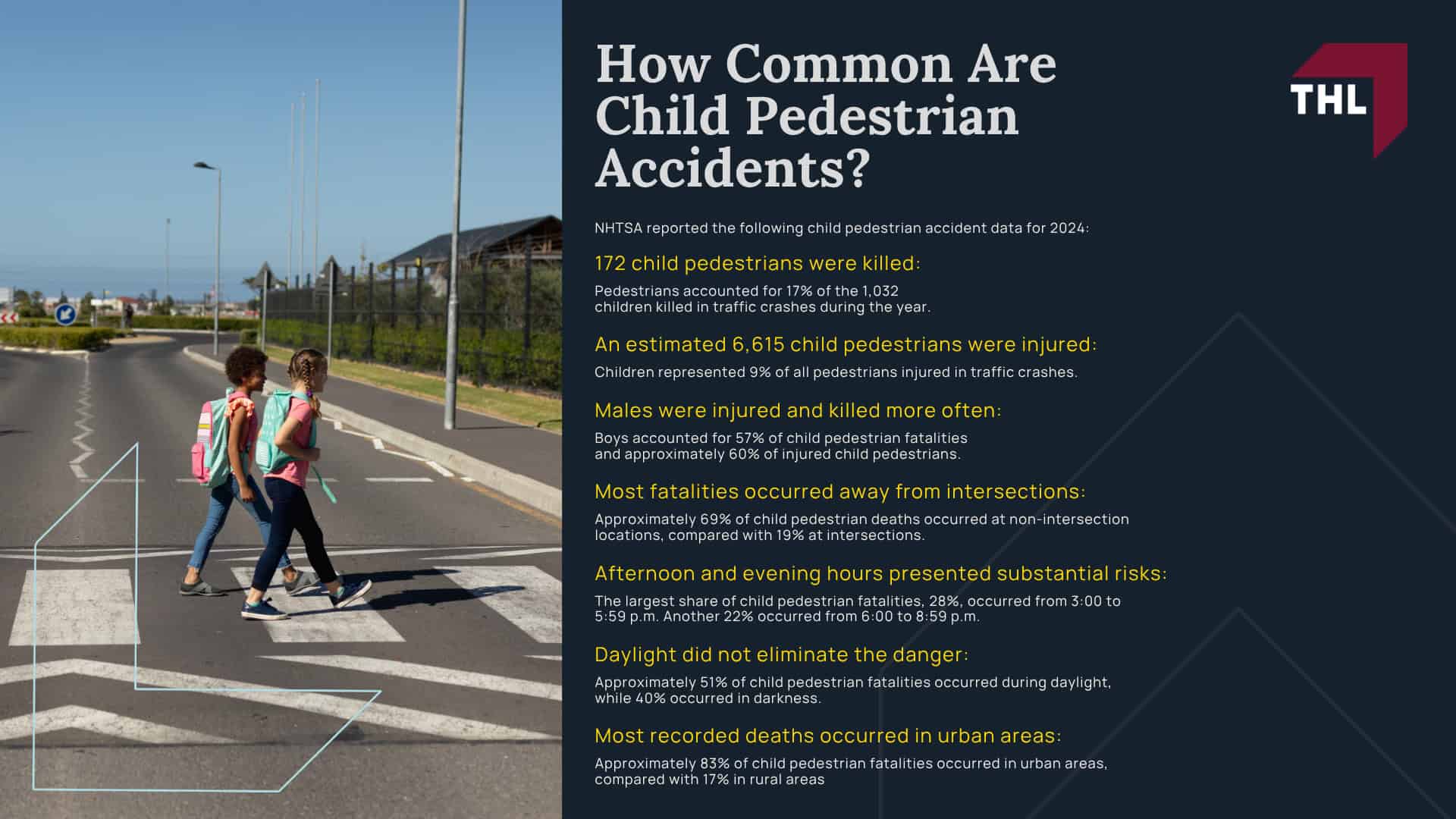
NHTSA reported the following child pedestrian accident data for 2024:
172 child pedestrians were killed: Pedestrians accounted for 17% of the 1,032 children killed in traffic crashes during the year.
An estimated 6,615 child pedestrians were injured: Children represented 9% of all pedestrians injured in traffic crashes.
Males were injured and killed more often: Boys accounted for 57% of child pedestrian fatalities and approximately 60% of injured child pedestrians.
Most fatalities occurred away from intersections: Approximately 69% of child pedestrian deaths occurred at non-intersection locations, compared with 19% at intersections.
Afternoon and evening hours presented substantial risks: The largest share of child pedestrian fatalities, 28%, occurred from 3:00 to 5:59 p.m. Another 22% occurred from 6:00 to 8:59 p.m.
Daylight did not eliminate the danger: Approximately 51% of child pedestrian fatalities occurred during daylight, while 40% occurred in darkness.
Most recorded deaths occurred in urban areas: Approximately 83% of child pedestrian fatalities occurred in urban areas, compared with 17% in rural areas
However, the continued occurrence of hundreds of deaths and thousands of injuries shows that children remain vulnerable when walking near motor vehicles.
The federal figures also do not capture every incident involving a child near a vehicle.
NHTSA’s traffic-crash data generally covers incidents originating on public trafficways and excludes crashes on private property not regularly used for public transportation, including some driveway and parking lot accidents.
Backover accidents and other low-speed incidents may therefore be underrepresented in the national traffic totals.
Traffic danger can also affect how children travel through their communities.
CDC research indicates that concerns about traffic may limit safe opportunities for children to walk or bike, even when homes are located near routes, schools, parks, or playgrounds.
Safer crossings, lower vehicle speeds, sidewalks, lighting, and separation from traffic can reduce injury risks while making walking and biking more practical for families.
Why Pedestrian Accidents Are Especially Dangerous for Children
Child pedestrian accidents can produce different injury patterns than collisions involving adults.
Because children are shorter and have proportionally larger heads, the front of a vehicle may strike the torso, chest, abdomen, neck, or head rather than first contacting the lower legs.
The exact injuries depend on the child’s height, the vehicle’s size and front-end design, the speed of impact, braking, and the child’s position when the collision occurs.
SUVs, pickup trucks, and other vehicles with taller front ends may create particularly serious risks because the initial impact may occur higher on the child’s body.
Head trauma, internal bleeding, spinal injuries, chest injuries, and abdominal damage may require emergency treatment, diagnostic imaging, surgery, neurological care, rehabilitation, or long-term monitoring.
Some injuries may also affect the child’s physical growth, cognitive development, school performance, emotional health, or future independence.
These medical consequences are central to a personal injury claim.
Medical records, specialist opinions, life-care plans, educational evaluations, and expert testimony may be needed to explain the child’s prognosis, future treatment needs, and the full effect of the injuries over time.
Most child pedestrian accidents involve a failure to recognize foreseeable risk.
Drivers are expected to operate with reasonable care under the circumstances.
In areas where children are likely to be present, such as school zones, residential streets, parks, apartment complexes, and parking lots, reasonable care may require slower speeds, heightened attention, and readiness to stop.
Distracted driving: Phone use, texting, navigation screens, food, passengers, or general inattention can prevent a driver from seeing a child in time to stop. Distraction is especially dangerous near crosswalks, school zones, and residential streets where children may enter the roadway unexpectedly.
Speeding: Higher speed increases both stopping distance and injury severity. In neighborhoods and school zones, even modest speeding can materially reduce the time a driver has to react to a child stepping into the road.
Failure to yield: Drivers may violate traffic laws by failing to yield at marked crosswalks, unmarked crosswalks, intersections, or school crossings. Liability often turns on whether the child had the right of way and whether the driver could have avoided the collision with reasonable attention.
Backover accidents: A driver reversing from a driveway or parking space may fail to check mirrors, cameras, blind spots, and the area behind the vehicle. Young children are particularly vulnerable because they may be below the driver’s line of sight.
Obstructed visibility: Parked cars, landscaping, delivery trucks, poor lighting, and roadway design can hide a child from view. These facts do not automatically excuse a driver, but they are important in reconstructing whether the driver was traveling too fast for conditions.
Failure to stop for a school bus: Drivers who pass a stopped school bus while children are loading or unloading create an obvious and highly foreseeable risk. These cases may involve statutory violations that support a negligence claim.
Poor road design or maintenance: Missing sidewalks, faded crosswalks, inadequate signage, malfunctioning signals, lack of traffic calming, or unsafe school-zone design may contribute to a collision. When a government entity may be responsible, special notice deadlines and immunity rules can apply.
Younger children often cannot accurately judge vehicle speed, distance, or stopping time.
They may also act impulsively, such as chasing a ball, following a sibling, or stepping between parked cars.
The law recognizes that children do not always behave like adults.
That is one reason drivers are expected to use greater caution when children are foreseeable.
The Role of Community Infrastructure
Safe streets reduce both crash risk and injury severity.
Lower school-zone speed limits, marked crosswalks, raised crosswalks, pedestrian islands, sidewalks, lighting, traffic-calming measures, and clear school-bus loading procedures can all reduce the likelihood of a child pedestrian accident.
Infrastructure matters legally because a serious collision may have more than one cause.
A negligent driver may be primarily responsible, but a municipality, school district, property owner, contractor, or other entity may also share responsibility if unsafe design, inadequate maintenance, or poor traffic control contributed to the crash.
Traumatic brain injury and concussion: Head trauma may cause headaches, confusion, vomiting, dizziness, memory problems, behavioral changes, sleep disruption, or school difficulties. Symptoms may develop over time, making early evaluation and follow-up important.
Skull fractures and facial injuries: These injuries may require imaging, surgical consultation, dental treatment, vision evaluation, or scar management.
Spinal cord injury: Spinal trauma can cause pain, weakness, numbness, mobility limitations, or paralysis. Even incomplete spinal injuries may require long-term rehabilitation.
Broken bones: Fractures of the legs, pelvis, arms, ribs, or collarbone may require casting, surgery, hardware placement, physical therapy, or future procedures as the child grows.
Internal injuries: Damage to organs, internal bleeding, abdominal trauma, or chest injuries may not be obvious at the scene and can become life-threatening without prompt care.
Permanent disability or catastrophic injury: Severe brain, spine, orthopedic, or internal injuries may require lifelong care, assistive devices, home modifications, educational accommodations, or future surgeries.
Emotional trauma: Children may develop anxiety, nightmares, fear of streets or vehicles, depression, post-traumatic stress symptoms, or behavioral changes. Parents who witnessed the collision may also experience significant emotional distress, although recoverable damages for parental emotional harm vary by state.
Wrongful death: In fatal cases, surviving family members may have a wrongful death claim for funeral expenses, loss of companionship, and other damages allowed under state law.
Not every serious injury is visible immediately.
A child may appear alert at the scene and still have a concussion, internal bleeding, abdominal trauma, or orthopedic injury that becomes clearer hours or days later.
Early medical treatment protects the child’s health and creates a contemporaneous medical record connecting the injury to the collision.
That record can become important if an insurance adjuster later argues that delayed symptoms were unrelated or less serious.
Long-Term and Catastrophic Injuries
Some injuries require legal planning beyond current medical bills.
A traumatic brain injury may affect learning, attention, mood, and behavior as academic demands increase.
A spinal injury may affect mobility and independence.
A severe orthopedic injury may require future procedures because the child is still growing.
For that reason, settlement should not be evaluated only by the bills already received.
A complete damages analysis may include future medical expenses, rehabilitation, assistive devices, educational support, loss of future earning capacity, diminished quality of life, and the cost of long-term care.
In serious cases, attorneys may work with treating physicians, life-care planners, economists, vocational experts, and accident reconstruction professionals to document the full extent of loss.
Determining Liability: Who Is at Fault When a Child Is Hit by a Car?
Liability in a child pedestrian accident usually depends on negligence.
A person or company may be negligent when they fail to use reasonable care and that failure causes or contributes to the child’s injuries.
For drivers, reasonable care may include obeying traffic laws, maintaining a proper lookout, controlling speed, yielding to pedestrians, avoiding distraction, and using additional caution in areas where children are likely to be present.
Police reports, witness statements, vehicle data, photographs, surveillance footage, and accident reconstruction evidence may help determine whether the driver had enough time and distance to avoid the collision.
In most cases, the driver’s bodily injury liability policy is one of the first potential sources of compensation investigated.
Bodily injury coverage is third-party insurance, meaning injured pedestrians seek payment from the insurer for the person or business alleged to have caused the accident.
The insurer may investigate fault, causation, injuries, policy limits, and possible defenses before accepting liability or offering compensation.
The driver is not always the only potentially responsible party.
Depending on the circumstances, liability may involve:
The driver: A driver may be liable for speeding, distracted or impaired driving, failure to yield, unsafe backing, passing a stopped school bus, or traveling too fast for traffic, weather, or visibility conditions.
The vehicle owner: The owner’s insurance may apply when another person was driving the vehicle with permission, depending on the policy and state law. A separate negligent entrustment claim may also arise if the owner knowingly allowed an unsafe, impaired, inexperienced, or unlicensed person to drive.
The driver’s employer: A business may be responsible when the driver caused the collision while acting within the course and scope of employment, such as making deliveries or traveling between assigned work locations. The employer may also face direct claims involving negligent hiring, supervision, retention, training, or vehicle maintenance when supported by the evidence.
A municipality or public entity: A government entity may share responsibility when a dangerous roadway design, malfunctioning signal, missing sign, obstructed sight line, or poorly maintained crosswalk contributed to the collision. These claims may be limited by governmental immunity and often require formal notice within a short period.
A private property owner or operator: Liability may arise in parking lots, apartment complexes, schools, or retail properties when the owner or operator controlled an unsafe pedestrian route, inadequate lighting, obstructed visibility, or dangerous traffic pattern and failed to address a foreseeable hazard.
A vehicle or component manufacturer: A product liability claim may be available if defective brakes, sensors, cameras, steering components, visibility features, or another vehicle defect caused the crash or increased the severity of the child’s injuries.
More than one party may share responsibility for the same accident.
A complete investigation should examine not only the driver’s conduct but also vehicle ownership, employment status, insurance coverage, roadway conditions, property control, and possible mechanical defects.
Can a Child Be Found at Fault?
A child may be assigned some responsibility for a pedestrian accident, but children are not always judged by the same standard of care applied to adults.
The applicable rule depends on state law, the child’s age and capacity, and the circumstances surrounding the collision.
Some states presume that children below a specified age are incapable of negligence.
Other states apply a child-specific standard that considers what a reasonably careful child of similar age, intelligence, maturity, knowledge, training, and experience would have done under comparable circumstances.
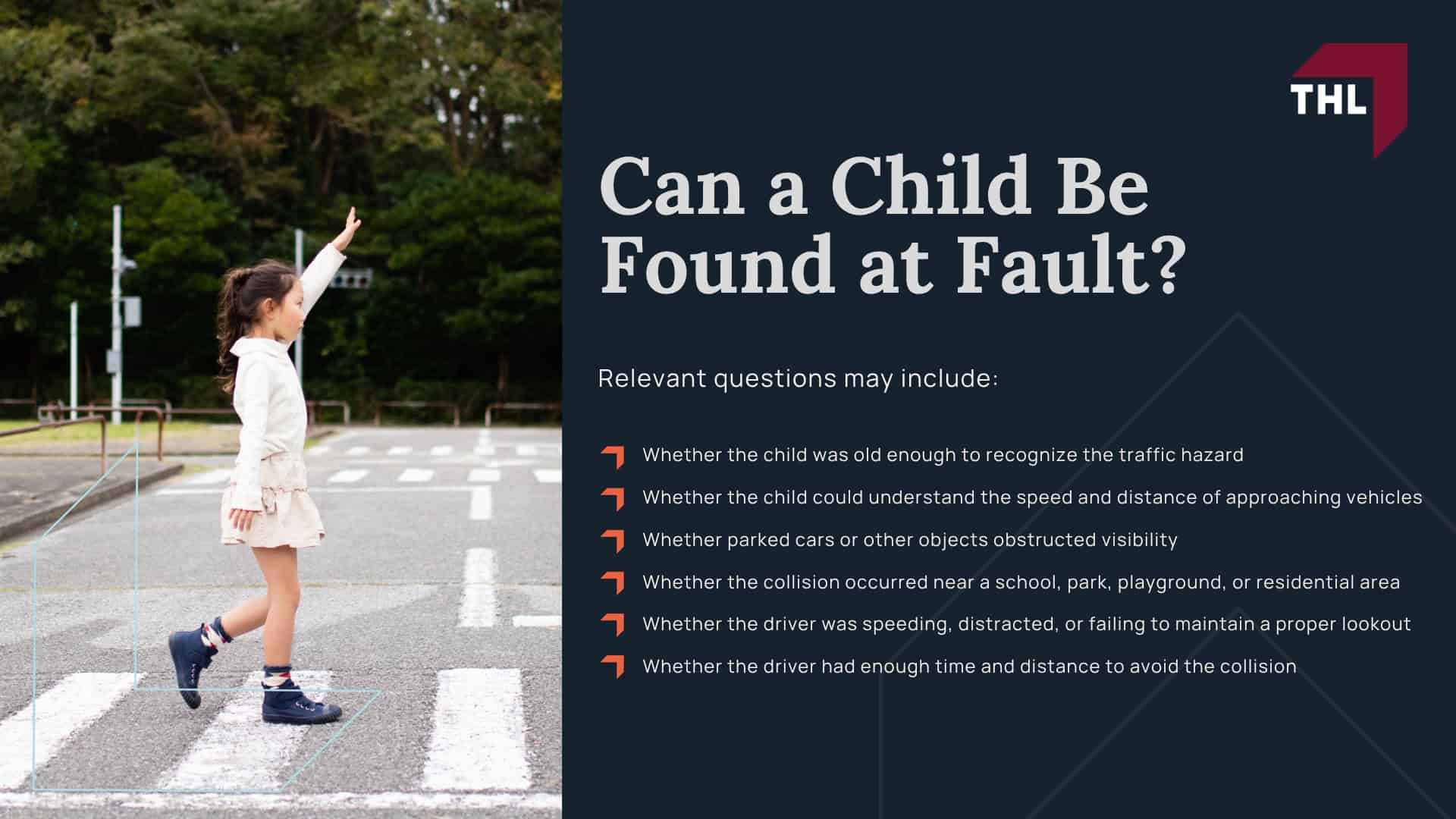
Relevant questions may include:
Whether the child was old enough to recognize the traffic hazard
Whether the child could understand the speed and distance of approaching vehicles
Whether parked cars or other objects obstructed visibility
Whether the collision occurred near a school, park, playground, or residential area
Whether the driver was speeding, distracted, or failing to maintain a proper lookout
Whether the driver had enough time and distance to avoid the collision
Crossing outside a marked crosswalk, entering the street unexpectedly, or failing to look both ways does not automatically make a child legally responsible.
Drivers must still use reasonable care and may be expected to take additional precautions when children are present or reasonably foreseeable.
Even when the child’s conduct is considered, the driver may remain fully or primarily liable if slower speed, proper attention, yielding, or timely braking could have prevented the accident.
Any percentage of fault assigned to the child and its effect on compensation depend on the state’s comparative negligence law.
Comparative Negligence and Why It Matters in Child Pedestrian Accident Cases
Comparative negligence is the legal rule used to divide fault when more than one person contributed to an accident.
In a case involving a child pedestrian hit by a vehicle, an insurance company may argue that the child entered the road unexpectedly, crossed outside a marked crosswalk, or failed to watch for traffic.
A child’s conduct is not always evaluated under the same standard applied to an adult.
Depending on state law, a young child may be presumed incapable of negligence, while an older child may be compared with a reasonably careful child of similar age, intelligence, maturity, knowledge, and experience.
The driver’s conduct must still be examined independently.
Speeding, distraction, poor visibility, failure to yield, and failure to use greater caution near schools, parks, residential streets, or other areas where children are foreseeable may place most or all responsibility on the driver.
Comparative negligence laws vary by state. Some states reduce compensation by the child’s assigned percentage of fault, while others bar recovery when the child’s fault reaches a specified threshold.
An insurer’s allegation that the child contributed to the accident does not establish fault and should be tested against witness statements, surveillance footage, vehicle data, roadway conditions, and accident reconstruction evidence.
Insurance Coverage After a Child Pedestrian Accident
Identifying every applicable insurance policy is an important part of a child pedestrian accident claim.
Serious injuries may exceed the at-fault driver’s liability limits, particularly when the driver carries only the minimum coverage required by state law.
The availability of coverage depends on the state, policy language, household relationships, vehicle ownership, and circumstances of the collision.
Potential sources of compensation may include:
Bodily injury liability coverage: The responsible driver’s liability insurance may provide compensation for the child’s medical expenses, pain and suffering, emotional harm, permanent impairment, future care, and other legally recoverable damages. Coverage is limited by the policy terms and available limits, and the insurer may dispute fault, causation, or damages before making an offer.
Property damage liability coverage: This coverage may pay for personal property damaged in the collision, such as clothing, a stroller, backpack, bicycle, or other belongings. Property damage coverage is separate from bodily injury coverage.
Medical payments coverage: MedPay may cover accident-related medical or funeral expenses regardless of fault. Depending on the policy and state law, coverage may extend to an insured child who was struck while walking rather than occupying a vehicle.
Personal injury protection: In some no-fault states, PIP may pay medical expenses and other covered losses regardless of who caused the accident. Whether pedestrian injuries are covered and which policy pays first depend on the applicable no-fault law and policy terms.
Uninsured motorist coverage: UM coverage may apply when the responsible driver has no liability insurance or cannot be identified after a hit-and-run. The family may seek benefits through its own policy if the child qualifies as an insured, although reporting requirements, physical-contact rules, and other conditions vary by jurisdiction and policy.
Underinsured motorist coverage: UIM coverage may provide additional compensation when the responsible driver has insurance but the available liability limits are insufficient to cover the child’s losses. Families should not finalize a liability settlement without first reviewing any notice, consent, exhaustion, or subrogation requirements in the UIM policy.
Commercial automobile coverage: If the driver was working, making deliveries, operating a company vehicle, or performing another assigned task, a commercial policy may apply. The driver’s employer or vehicle owner may also have separate primary, umbrella, or excess coverage.
Personal umbrella or excess coverage: A separate personal or commercial umbrella policy may provide additional liability limits after the underlying automobile policy is exhausted. Whether it applies depends on the covered insureds, vehicles, exclusions, and underlying-policy requirements.
Health insurance: Health insurance may initially pay the child’s medical expenses. The plan may later assert contractual or statutory reimbursement rights against a settlement, depending on the type of coverage and governing law.
Medicare, Medicaid, or other benefit programs: Government programs may seek repayment for accident-related medical expenses paid on the child’s behalf. Medicare, for example, may make conditional payments and later pursue reimbursement after a liability, no-fault, or workers’ compensation recovery.
The declarations page is an appropriate starting point because it generally identifies the named insureds, covered vehicles, coverage types, limits, deductibles, and policy period.
It does not provide the complete coverage analysis.
The full policy, definitions, insuring agreements, conditions, endorsements, exclusions, and applicable state insurance laws must also be reviewed.
A family seeking fair compensation should investigate more than the driver’s basic liability policy.
Household policies, commercial coverage, MedPay, PIP, UM/UIM benefits, umbrella insurance, and other responsible parties may provide additional sources of recovery.
Uninsured and Underinsured Drivers
Uninsured motorist coverage may protect a child when the responsible driver has no liability insurance or cannot be identified after a hit-and-run accident.
The family may be able to seek compensation through an auto policy under which the child qualifies as an insured, such as a policy issued to a parent or another household member.
Coverage is not automatic merely because an uninsured driver caused the collision.
The insurer may examine whether the child meets the policy’s definition of an insured, whether the accident was reported promptly, whether the driver was legally responsible, and whether any hit-and-run requirements were satisfied.
Applicable conditions vary by state and policy.
Underinsured motorist coverage may apply when the responsible driver has liability insurance but the available limits are insufficient to cover the child’s legally recoverable damages.
For example, a minimum liability policy may be exhausted by emergency treatment, hospitalization, surgery, rehabilitation, and future medical care.
UM and UIM bodily injury claims may provide compensation for losses such as:
Medical expenses
Future treatment and rehabilitation
Pain and suffering
Emotional harm
Permanent disability or disfigurement
Loss of enjoyment of life
Diminished future earning capacity
Whether damaged personal property is covered depends on the policy and state law.
Property losses may require separate uninsured motorist property damage, collision, or other applicable coverage.
A UM or UIM claim is made against an insurer that has contractual obligations to the family, but the claim can still be disputed.
The insurer may challenge the other driver’s fault, argue that the child contributed to the accident, question whether the injuries were caused by the collision, or dispute the amount of damages.
Families should also review the policy before settling with the responsible driver.
A liability settlement may affect UIM benefits when the policy requires advance notice, insurer consent, exhaustion of the driver’s limits, or protection of the UM/UIM insurer’s subrogation rights.
The amount available through UM or UIM coverage depends on the applicable policies, coverage limits, household relationships, state law, and whether multiple policies or vehicles may be considered.
Minimum insurance limits may provide only a small portion of the compensation needed after a serious child pedestrian injury.
Once immediate safety concerns are addressed, documentation becomes important because evidence can disappear quickly.
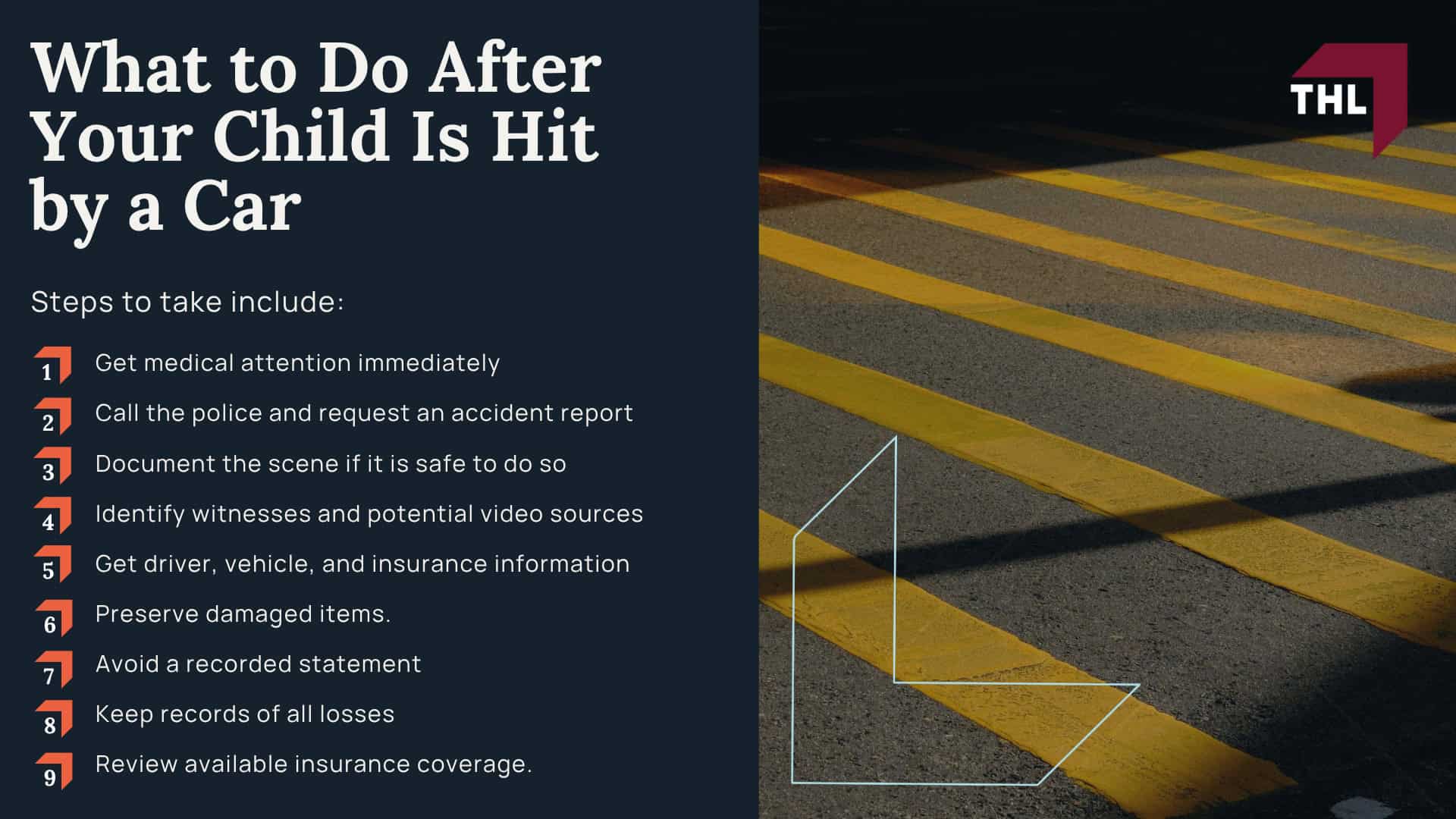
Steps to take include:
Get medical attention immediately. A prompt medical evaluation can identify head injuries, internal injuries, fractures, or other trauma that may not be obvious at the scene. It also creates a medical record linking the injury to the collision.
Call the police and request an accident report. Police reports often document the location, driver information, witness names, roadway conditions, citations, statements, and preliminary fault observations. The report is not always conclusive, but it is a central piece of evidence.
Document the scene if it is safe to do so. Photographs or video of the vehicle, roadway, crosswalk, signs, signals, skid marks, lighting, parked cars, debris, and sight lines may become important in liability analysis.
Identify witnesses and potential video sources. Nearby homes, businesses, buses, schools, dash cameras, traffic cameras, and doorbell cameras may have footage. Video is often overwritten quickly, so preservation requests should be made promptly.
Get driver, vehicle, and insurance information. Record the driver’s name, contact information, license plate, insurance company, policy number, and vehicle owner information if available.
Preserve damaged items. Clothing, shoes, backpacks, bicycles, scooters, helmets, strollers, car seats, and other items can help show impact direction, force, and severity. Do not repair or discard them until the claim is evaluated.
Avoid a recorded statement to the driver’s insurance company before legal review. Adjusters may request statements early, before the family understands the injury or legal issues. Inaccurate or incomplete statements can later be used to dispute liability or damages.
Keep records of all losses. Save medical bills, explanation-of-benefits forms, prescriptions, therapy records, mileage to appointments, school absence records, photographs of injuries, and documentation of missed work by parents who provided care.
Review available insurance coverage. The at-fault driver’s liability policy is only one possible source. The family’s own auto policy may include MedPay, UM, or UIM coverage, and health insurance liens may need to be addressed.
Why Early Legal Guidance Matters
Insurance companies often contact families shortly after a crash.
An early settlement offer may seem helpful, especially when medical bills and missed work create immediate financial pressure.
The risk is that the offer may not account for injuries that have not fully developed, future treatment, permanent impairment, or the effect of liens and attorney’s fees on net recovery.
Early legal review can help preserve evidence, send notice letters, identify insurance coverage, prevent missed deadlines, and ensure that settlement discussions do not begin before the child’s medical condition is reasonably understood.
In serious cases, settling before maximum medical improvement or before the long-term prognosis is known can substantially undervalue the claim.
Initial investigation: The law firm gathers the police report, photographs, witness statements, medical records, insurance information, video footage, and physical evidence. In serious or disputed cases, accident reconstruction may be necessary.
Coverage analysis: The lawyer reviews the at-fault driver’s liability limits, possible commercial coverage, owner policies, household auto policies, UM or UIM coverage, MedPay, health insurance liens, and any umbrella or excess insurance.
Medical development: The child’s condition is monitored through treatment, follow-up visits, therapy, imaging, specialist evaluations, and prognosis opinions. This stage is critical because damages cannot be accurately valued until the injury picture is sufficiently developed.
Demand and negotiation: A settlement demand typically presents liability evidence, medical records, bills, future care needs, pain and suffering, and other damages. The insurance adjuster responds by accepting, rejecting, or making a counteroffer.
Filing a lawsuit: If settlement negotiations do not produce a fair resolution, litigation may be filed against the responsible parties. A lawsuit may also be necessary to preserve deadlines, compel evidence, or address disputed liability.
Discovery: During discovery, the parties exchange documents, answer written questions, take depositions, obtain expert opinions, and test the factual and legal basis of each side’s position.
Mediation, settlement, or trial: Many pedestrian accident cases settle before trial, often through negotiation or mediation. If the parties cannot agree, the case may proceed to a judge or jury for a verdict.
What is the Statute of Limitations for a Minor Injured in a Pedestrian Accident?
The statute of limitations is the legal deadline for filing a lawsuit.
In many states, the limitations period for a child’s personal injury claim is tolled, meaning delayed, until the child reaches adulthood.
That rule exists because minors cannot ordinarily bring lawsuits on their own behalf.
This does not mean families should wait.
Claims involving government entities may require notice within a much shorter period.
Evidence can disappear, witnesses can become harder to locate, and insurance issues can become more difficult to resolve over time.
In addition, parents may have separate claims, such as medical expenses or lost wages related to caring for the child, and those claims may have different deadlines than the child’s claim.
Working With Insurance Adjusters
Insurance adjusters evaluate claims for the insurance company.
Their role is to investigate coverage, liability, causation, damages, and settlement authority.
They may request medical records, recorded statements, school records, photographs, wage documentation, or authorizations.
The practical issue is that the adjuster’s obligation is to the insurer, not to the injured child.
An adjuster may question whether the driver was at fault, argue that the child darted into the road, dispute the severity of the injury, point to gaps in treatment, or rely on policy limits to restrict settlement.
A lawyer’s role is to respond with evidence, legal analysis, medical documentation, and a damages presentation that accounts for the child’s actual losses.
There is no reliable average settlement amount that applies to every child pedestrian accident.
Settlement value depends on liability, damages, coverage, venue, medical proof, future needs, and the risk each side faces if the case proceeds to trial.
Key factors include:
Severity and permanence of injuries: Minor soft-tissue injuries typically resolve for less than traumatic brain injury, spinal injury, surgery, permanent scarring, orthopedic hardware, or lifelong disability.
Medical expenses and future treatment: Emergency care, hospitalization, surgery, therapy, follow-up care, medications, rehabilitation, future procedures, and life-care needs can materially affect value.
Liability evidence: Strong evidence such as video, independent witnesses, traffic citations, school-zone violations, skid marks, vehicle data, or reconstruction opinions can strengthen negotiations.
Comparative fault arguments: If the insurer argues that the child unexpectedly entered the street, crossed outside a crosswalk, or failed to look, settlement value may depend on how state law treats the child’s capacity for negligence.
Insurance policy limits: A strong case may still be limited by available coverage if the driver has minimal bodily injury liability limits and no collectible assets. UM, UIM, commercial, umbrella, or excess coverage may become critical.
Collectability: A lawsuit can establish liability, but recovery often depends on insurance coverage, defendant assets, and whether a judgment can realistically be collected.
Quality of medical documentation: Consistent treatment records, specialist opinions, imaging, therapy notes, and school-impact evidence help connect the injury to the collision and show the full extent of damages.
Liens and reimbursement claims: Health insurers, government benefit programs, medical providers, or hospitals may assert liens against settlement proceeds. Resolving those liens affects the net amount available to the child or family.
Published settlement summaries sometimes report pedestrian accident payouts ranging from tens of thousands of dollars in less severe cases to seven figures in catastrophic injury cases.
Those numbers can be misleading without context.
A child with a severe brain injury, high medical expenses, clear liability, and substantial insurance coverage is not comparable to a child with a short recovery period and limited medical treatment.
If a family is evaluating a specific settlement offer, the practical question is not only the gross settlement amount.
The family also needs to understand attorney’s fees, case expenses, medical liens, health insurance reimbursement, court approval requirements, and how much money will be protected for the child.
How Long Does a Pedestrian Accident Settlement Take?
Resolution timing depends on the injury and the dispute.
A clear-liability case involving minor injuries may resolve within months.
A catastrophic injury case may take a year or longer because the child’s prognosis, future care needs, and long-term limitations must be understood before settlement.
Delay is not always bad.
In serious injury cases, time may be necessary to determine whether symptoms resolve, whether surgery is needed, whether cognitive deficits persist, or whether the child will require educational accommodations.
Settling too early can permanently release claims before the family knows the full cost of the injury.
Past medical expenses: Ambulance transport, emergency room care, hospitalization, surgery, imaging, medication, physician visits, therapy, and rehabilitation already incurred.
Future medical expenses: Follow-up care, future surgeries, therapy, neurological care, orthopedic treatment, psychological counseling, assistive devices, and long-term care needs supported by medical evidence.
Pain and suffering: Physical pain, discomfort, limitations, fear, and disruption caused by the injury and treatment.
Emotional distress and psychological harm: Anxiety, post-traumatic stress symptoms, sleep disruption, behavioral changes, or fear associated with the accident and recovery.
Loss of enjoyment of life: Reduced ability to play, participate in sports, attend school normally, socialize, or engage in activities that were important to the child before the accident.
Lost wages for parents: Parents may be able to recover income lost while taking time off work for emergency care, appointments, surgery, therapy, or caregiving, depending on state law.
Loss of future earning capacity: If the injury is expected to affect the child’s ability to work as an adult, damages may include diminished earning capacity. This usually requires expert analysis.
Property damage: Repair or replacement of damaged bicycles, scooters, helmets, backpacks, strollers, car seats, clothing, or other personal property.
Wrongful death damages: In fatal cases, recoverable damages may include funeral and burial expenses, loss of companionship, loss of society, and other damages allowed under the state’s wrongful death statute.
Legal representation matters most when the case requires investigation, insurance analysis, medical proof, or negotiation with an insurer that disputes fault or damages.
A lawyer’s work is practical and evidence-driven.
In a child pedestrian accident case, an attorney may:
Investigate liability: Review the police report, interview witnesses, inspect the scene, obtain video, analyze traffic controls, and determine whether the driver violated traffic laws.
Preserve evidence: Send preservation letters to drivers, businesses, schools, municipalities, property owners, and insurers before video or vehicle data is lost.
Review insurance coverage: Examine liability policies, UM and UIM coverage, MedPay, health insurance, commercial policies, excess coverage, and household policies.
Identify additional defendants: Determine whether an employer, vehicle owner, public entity, property owner, contractor, or manufacturer may share responsibility.
Document damages: Collect medical records, bills, therapy notes, school records, photographs, expert opinions, and evidence of future care needs.
Address liens: Evaluate and negotiate health insurance reimbursement claims, hospital liens, government benefit liens, and provider balances.
Evaluate settlement offers: Compare a settlement offer against liability risk, policy limits, future medical needs, liens, litigation costs, and likely net recovery.
File litigation when necessary: Use discovery, depositions, subpoenas, expert testimony, mediation, and trial preparation to pursue a fair result when negotiation is insufficient.
Handle minor settlement approval: Prepare court filings, settlement petitions, guardianship materials, structured settlement documents, or restricted account arrangements required to protect the child’s recovery.
Child pedestrian accident claims may involve disputed liability, serious injuries, future medical needs, uninsured or underinsured motorist coverage, and court approval of a minor’s settlement.
TorHoerman Law can investigate how the collision occurred, gather evidence before it is lost, identify every potentially responsible party, and review the insurance policies that may provide compensation.
Our legal team can work with medical providers, accident reconstruction professionals, and other qualified experts to document the child’s injuries, long-term prognosis, and future care needs.
We can also handle communications with insurers and pursue a fair settlement that reflects the full effect of the accident on the child and family.
If your child was injured after being hit by a vehicle, contact TorHoerman Law for a free consultation.
You pay no attorney fees unless compensation is recovered for your family.
Medical bills may initially be paid through several sources while the family’s personal injury claim is being investigated.
The party that caused the accident does not always pay the bills directly as treatment occurs, and reimbursement may be addressed later through a settlement or verdict.
Potential payment sources may include:
Health insurance: The child’s health insurance may pay covered medical expenses, subject to deductibles, copays, and policy terms. The insurer may later seek reimbursement from any accident recovery.
Medical payments coverage: MedPay under a parent’s or household auto policy may cover qualifying medical expenses regardless of fault, depending on the policy and state law.
Personal injury protection: In some states, PIP coverage may pay medical expenses and other covered losses after a pedestrian accident.
The at-fault driver’s liability insurance: A settlement may include compensation for past and future medical expenses when the driver is legally responsible for the collision.
Uninsured or underinsured motorist coverage: UM or UIM benefits may apply when the responsible driver has no insurance or insufficient limits.
Medicaid, Medicare, or other benefit programs: Government programs may pay qualifying expenses but may have reimbursement rights against a later recovery.
The family or medical provider: Families may temporarily pay expenses directly, while some providers may agree to defer collection or assert a lien against a future settlement.
Any liens, reimbursement claims, unpaid balances, and future medical needs should be identified before settlement funds are distributed.
A complete damages claim should seek compensation for both the bills already incurred and reasonably anticipated future treatment.
A straightforward claim with clear liability and a short recovery may resolve within months.
A serious injury case can take a year or longer, particularly if the child’s long-term prognosis is uncertain or litigation is required.
Settlement should not be rushed when future medical care, cognitive effects, growth-related orthopedic issues, or permanent limitations remain unclear.
Fault depends on state law, the child’s age, the location of the collision, the driver’s speed, visibility, traffic controls, and whether the driver should have anticipated children nearby.
Many states evaluate a child’s conduct differently from an adult’s because children have limited ability to appreciate danger.
Even if the child crossed outside a crosswalk, the driver may still be primarily liable if the collision could have been avoided with reasonable care.
Not seeing a child does not automatically excuse the driver.
The legal question is often whether the driver should have seen the child by keeping a proper lookout, driving at a safe speed, and paying attention to foreseeable pedestrian hazards.
Scene evidence, witness statements, sight-line analysis, vehicle damage, and video footage can help answer that question.
If the at-fault driver was uninsured, the family may be able to seek compensation through uninsured motorist coverage under a parent’s or household member’s auto policy.
Coverage depends on whether the child qualifies as an insured under the policy, the policy limits, state law, and whether all reporting and notice requirements were satisfied.
Uninsured motorist benefits may cover medical expenses, future treatment, pain and suffering, emotional harm, permanent disability, and diminished future earning capacity.
The family should also investigate whether another source of recovery exists, such as coverage held by the vehicle owner, the driver’s employer, a commercial policy, or another responsible party.
A claim against the family’s own insurer can still be disputed.
The insurer may challenge fault, causation, damages, or whether the policy applies, so the full policy should be reviewed before the family accepts a settlement or signs a release.
Courts often review settlements involving minors to ensure the amount is fair, liens and fees are appropriate, and the child’s funds are protected.
Settlement proceeds may be placed in a restricted account, trust, guardianship account, annuity, or structured settlement until the child reaches adulthood.
It may be worthwhile when injuries are significant, medical bills are substantial, liability evidence supports the claim, and there is a realistic source of recovery through insurance coverage or collectible assets.
A legal evaluation should consider not only whether negligence occurred, but also policy limits, UM or UIM coverage, liens, litigation risk, and the child’s future needs.
There is no reliable average payout for a child pedestrian accident because the value of each claim depends on the child’s injuries, available insurance, liability evidence, future treatment needs, and long-term prognosis.
A personal injury settlement involving a temporary injury and complete recovery cannot reasonably be compared with a case involving brain damage, permanent disability, disfigurement, or lifelong medical care.
Factors that may affect compensation include:
Past and future medical expenses
Pain and suffering
Emotional and psychological harm
Permanent impairment or scarring
Educational accommodations
Diminished future earning capacity
Available liability, UM/UIM, commercial, or umbrella coverage
Comparative negligence arguments
Medical liens and reimbursement claims
Whether the settlement requires court approval
The family should evaluate the amount that will remain for the child after attorney fees, case expenses, medical liens, and other deductions rather than considering only the gross settlement figure.
Depending on state law, parents may be able to recover certain financial losses resulting from a child pedestrian accident.
The child’s claim and the parents’ separate claims may cover different categories of damages and may also be governed by different filing deadlines.
Potentially recoverable losses may include:
Medical expenses: Parents may have a separate claim for medical bills they were legally responsible for paying.
Necessary caregiving expenses: Compensation may be available for professional care or the reasonable value of required services provided during the child’s recovery.
Lost income: A parent’s wages lost while attending appointments or caring for the child are not automatically recoverable in every state. The availability of these damages depends on state law and the circumstances.
Personal items: Property damage coverage may pay to repair or replace clothing, backpacks, phones, glasses, or other belongings damaged in the accident.
Bicycles or related equipment: A separate property claim may cover a damaged bicycle, helmet, or other equipment, although bicyclists are classified separately from pedestrians in federal crash data.
Families should document these losses through receipts, photographs, wage records, employer statements, medical instructions, and proof of replacement costs.
Child pedestrian accidents can occur at intersections, crosswalks, school zones, residential streets, driveways, and parking lots.
However, NHTSA reported that 69% of child pedestrian traffic fatalities in 2024 occurred at non-intersection locations, compared with 19% at intersections.
The highest share occurred from 3:00 to 5:59 p.m., followed by 6:00 to 8:59 p.m.
Federal data also shows that male children are injured more frequently as pedestrians.
In 2024, boys accounted for 57% of child pedestrian fatalities and approximately 60% of estimated injuries.
That year, 172 child pedestrians were killed and an estimated 6,615 were injured in traffic crashes.
Parents and children can reduce risk by using sidewalks, crossing at designated intersections when available, watching for reversing vehicles, and avoiding distractions.
Wearing bright or reflective clothing can improve visibility, particularly during low-light conditions.
These precautions do not relieve drivers of their responsibility to maintain a proper lookout, control their speed, and exercise additional care where children may be present.
TorHoerman Law represents people whose lives have been disrupted by serious injuries, unsafe products, and negligence. Our attorneys handle individual personal injury cases as well as national mass tort lawsuits involving major corporations.
Founded in 2009, our legal team brings more than 100 years of combined experience handling serious injury and complex civil litigation.
Do you believe you’re entitled to compensation?
Use our Instant Case Evaluator to find out in as little as 60 seconds!
They helped my elderly uncle receive compensation for the loss of his wife who was administered a dangerous drug. He consulted with this firm because of my personal recommendation and was very pleased with the compassion, attention to detail and response he received. Definitely recommend this firm for their 5 star service.
★★★★★Rated 5 out of 5
Philip Storey
When I wanted to join the Xarelto class action lawsuit, I chose TorrHoerman Law from a search of a dozen or so law firm websites. I was impressed with the clarity of the information they presented. I gave them a call, and was again impressed, this time with the quality of our interactions.
★★★★★Rated 5 out of 5
Krista Miller
TorHoerman Law is an awesome firm to represent anyone that has been involved in a case that someone has stated that it's too difficult to win. The entire firm makes you feel like you’re part of the family, Tor, Eric, Jake, Kristie, Chad, Tyler, Kathy and Steven are the best at what they do.
★★★★★Rated 5 out of 5
Joe Smith
TorHorman Law is awesome
★★★★★Rated 5 out of 5
Karen Levy
I can’t say enough how grateful I was to have TorHoerman Law help with my case. Jacob Plattenberger is very knowledgeable and an amazing lawyer. Jillian Pileczka was so patient and kind, helping me with questions that would come up. Even making sure my special needs were taken care of for meetings.
★★★★★Rated 5 out of 5
Lauren B
TorHoerman Law fights for justice with their hardworking and dedicated staff. Not only do they help their clients achieve positive outcomes, but they are also generous and important pillars of the community with their outreach and local support. Thank you THL!
★★★★★Rated 5 out of 5
Joey
Hands down one of the greatest group of people I had the pleasure of dealing with!
★★★★★Rated 5 out of 5
Nickie Shewmake
A very kind and professional staff.
★★★★★Rated 5 out of 5
Jeannette Johnson
Very positive experience. Would recommend them to anyone.