The CPSC has not released detailed diagnoses or treatment outcomes for the three consumers who sought medical care after swallowing Cuisinart bristles.
Medical literature involving wire grill brush bristles generally documents injuries ranging from punctures of the mouth and throat to gastrointestinal perforations requiring surgery.

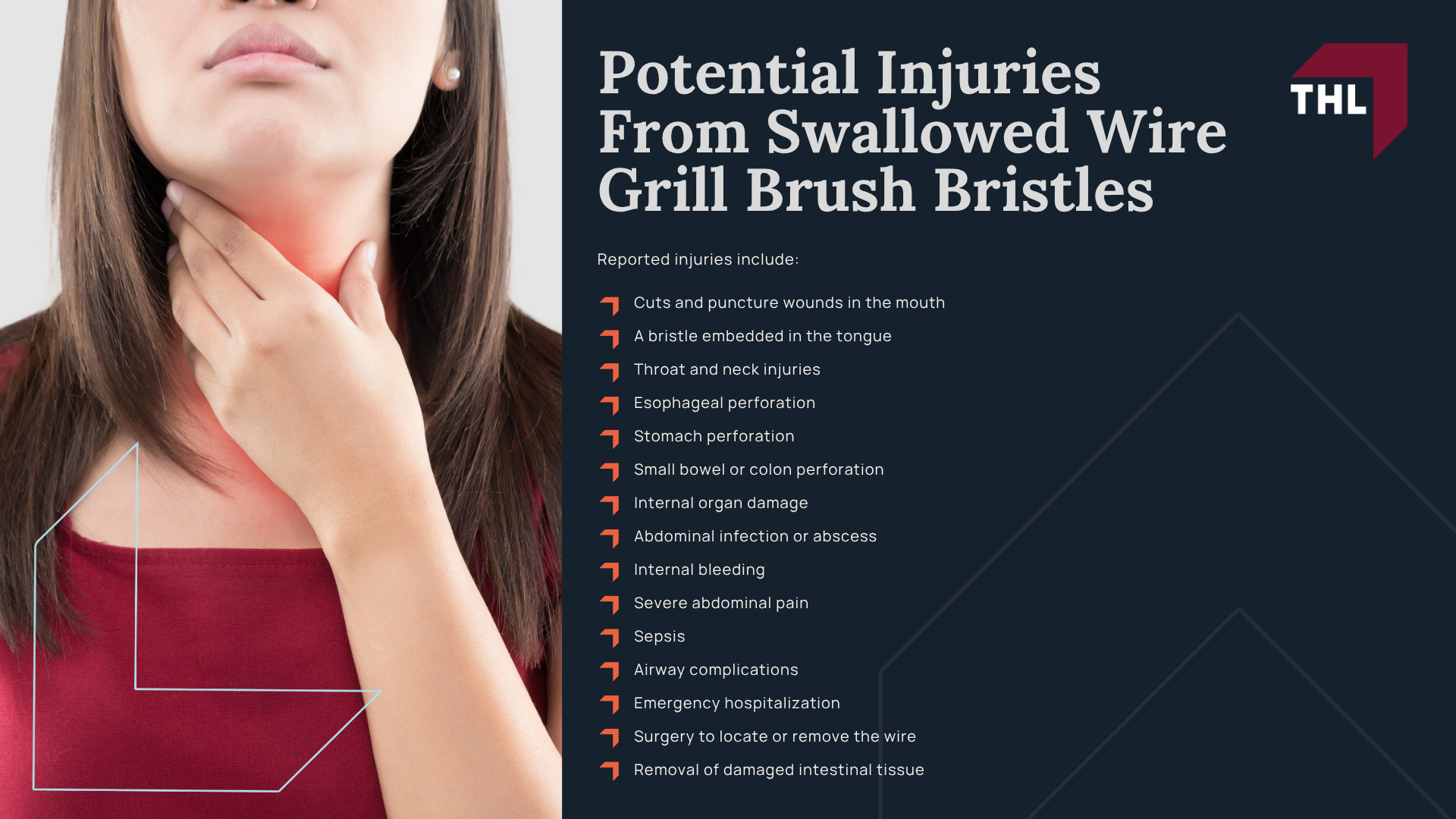
Reported injuries include:
- Cuts and puncture wounds in the mouth
- A bristle embedded in the tongue
- Throat and neck injuries
- Esophageal perforation
- Stomach perforation
- Small bowel or colon perforation
- Internal organ damage
- Abdominal infection or abscess
- Internal bleeding
- Severe abdominal pain
- Sepsis
- Airway complications
- Emergency hospitalization
- Surgery to locate or remove the wire
- Removal of damaged intestinal tissue
The type of injury depends on where the metal becomes lodged and whether it migrates.
A brush bristle lodged in the throat may require a different procedure than a wire that punctures the abdomen or intestines.
Throat, Esophageal, and Gastrointestinal Injuries
A detached bristle may pierce the tongue, tonsil, throat, or esophagus soon after the consumer eats contaminated food.
Symptoms may include sharp mouth pain, difficulty swallowing, coughing, neck pain, or a persistent feeling that something is stuck.
Medical literature describes penetrating esophageal injuries in children and adults.
One published report from a children’s hospital in Toronto, Canada, involved a 14-year-old boy who suffered a penetrating esophageal injury after accidentally swallowing a grill brush bristle.
Children may not be able to explain exactly what they are feeling.
A pediatric emergency medicine physician may work with radiologists, ear, nose, and throat specialists, or surgeons when a child develops unexplained pain after eating grilled food.
If the wire reaches the abdomen, it may puncture the stomach, small bowel, colon, or other part of the gastrointestinal tract.
A 2024 case report described a patient whose CT scan showed inflammation and a suspected foreign body.
Surgery revealed a wire bristle perforating the small intestine, requiring bowel resection.
Infections, Internal Bleeding, and Surgical Removal
A bristle that punctures tissue may carry bacteria into the wound or allow digestive material to escape from the stomach or intestines.
This can cause inflammation, an abscess, infection, or sepsis.
Internal bleeding may happen when the sharp wire damages a blood vessel or nearby organ.
Warning signs may include increasing pain, weakness, dizziness, abdominal swelling, vomiting blood, or blood in the stool.
Treatment depends on where the wire is found and the damage it caused.
Medical care may include:
- X ray imaging
- CT scan testing
- Laryngoscopy
- Endoscopy
- Colonoscopy
- Antibiotics
- Laparoscopic surgery
- Open abdominal surgery
- Repair of a perforation
- Removal of damaged bowel tissue
In a CDC series of six patients, treatment ranged from laryngoscopic removal to emergency abdominal surgery.
All six patients made a complete recovery after definitive treatment, but recovery in any individual case depends on the injury, timing of diagnosis, and medical complications.
Symptoms of Wire Bristle Ingestion
Symptoms may begin while the person is eating, shortly after the meal, or days later.
The signs vary depending on where the bristle is lodged.
Possible symptoms include:
- Sharp pain in the mouth, tongue, or throat
- Pain or difficulty swallowing
- A feeling that something is stuck
- Coughing, gagging, or choking
- Neck or chest pain
- Abdominal pain or tenderness
- Nausea or vomiting
- Fever or chills
- Abdominal swelling
- Blood in vomit or stool
- Weakness or dizziness
- Difficulty breathing
- New or worsening pain after eating grilled food
If something feels wrong after a summer cookout, tell the medical provider whether anyone used a metal grill cleaning brush.
The patient should also describe the food consumed, such as a hamburger, steak, chicken, or vegetables.
Medical attention should not be delayed while a family tries to identify the exact brush model.
Severe pain, breathing problems, bleeding, or signs of infection require prompt evaluation.