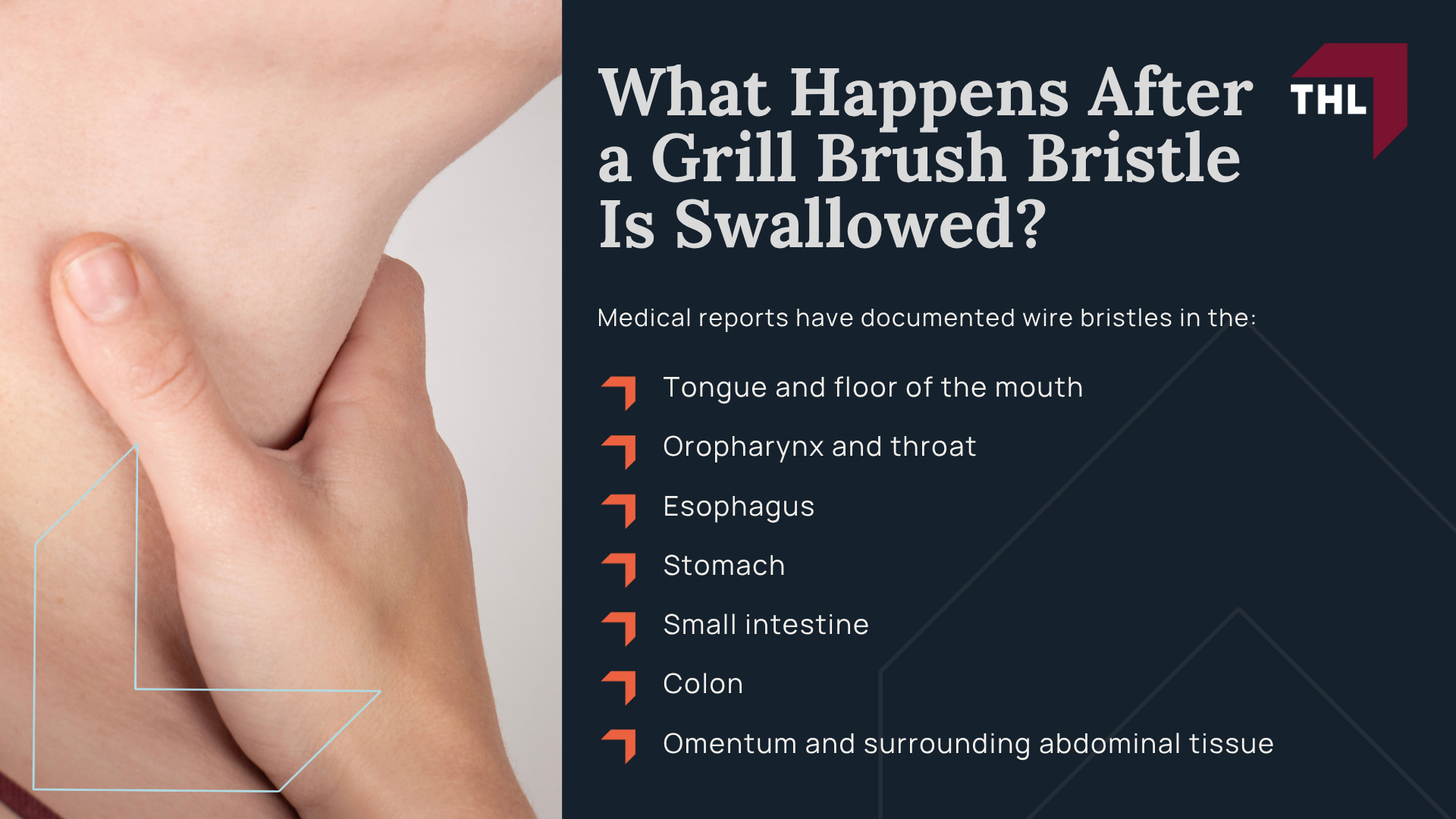
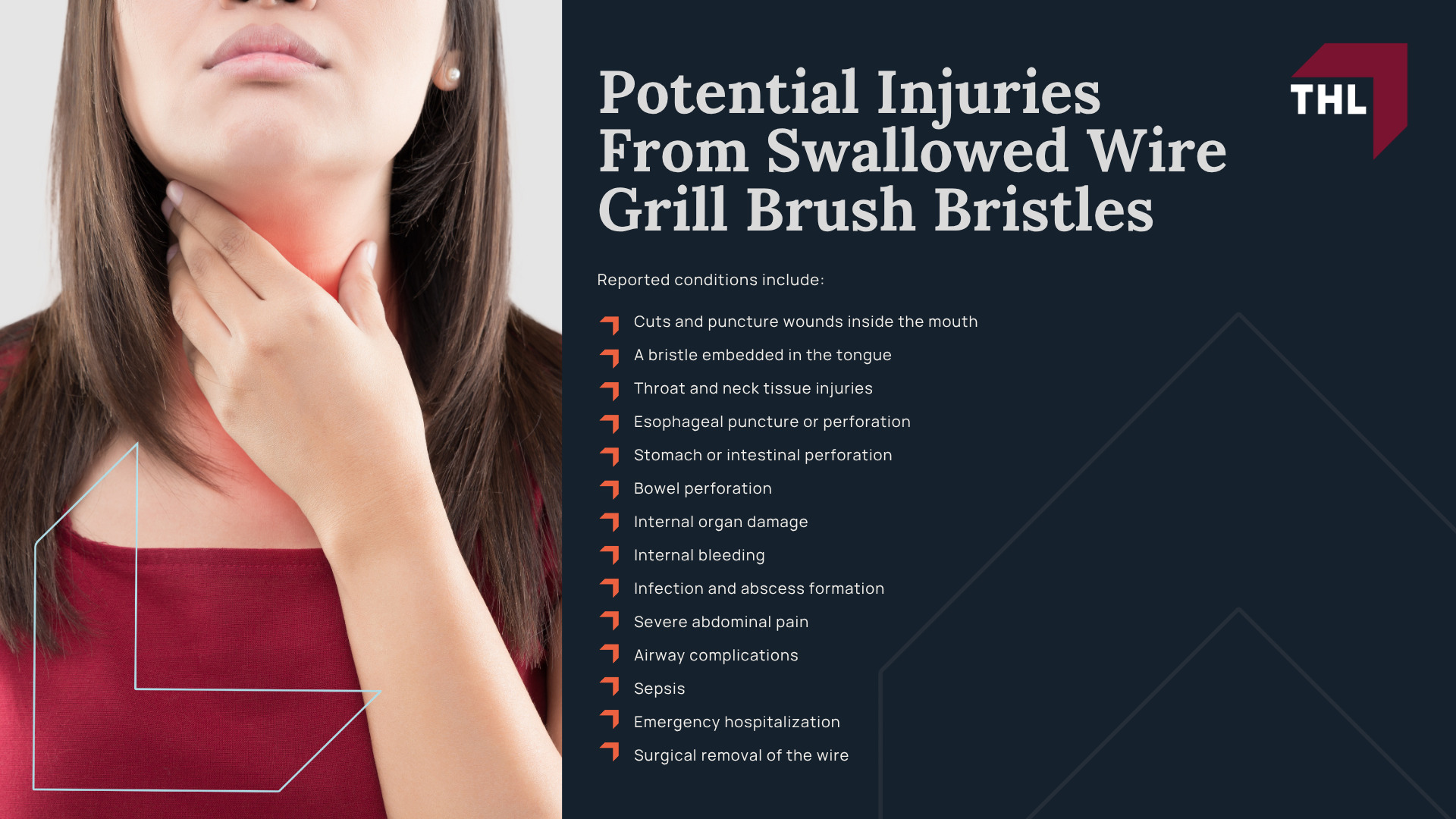
Although the CPSC recall notice provides limited details about the five treated Nexgrill ingestion incidents, medical literature involving similar wire grill brushes documents a range of possible injuries.

Reported conditions include:
- Cuts and puncture wounds inside the mouth
- A bristle embedded in the tongue
- Throat and neck tissue injuries
- Esophageal puncture or perforation
- Stomach or intestinal perforation
- Bowel perforation
- Internal organ damage
- Internal bleeding
- Infection and abscess formation
- Severe abdominal pain
- Airway complications
- Sepsis
- Emergency hospitalization
- Surgical removal of the wire
Not every ingestion causes the same outcome.
Some patients undergo a relatively limited removal procedure, while others require surgery to repair damaged tissue or remove part of the affected bowel.
Throat, Mouth, and Esophageal Injuries
A metal bristle may become lodged in the tongue, tonsil, throat, or esophagus shortly after a person swallows it.
Common symptoms include localized pain, difficulty swallowing, neck tenderness, coughing, and the feeling that a foreign object is present.
Medical reports have described tongue abscesses and penetrating esophageal injuries caused by grill brush bristles.
A retained bristle in the mouth or neck may also migrate, making its exact location difficult to determine.
Children can suffer these injuries as well.
A pediatric emergency medicine physician may need to coordinate imaging and removal with an ear, nose, and throat specialist or pediatric surgeon when a child swallows a wire fragment.
Gastrointestinal Perforations and Internal Organ Damage
A bristle that passes beyond the esophagus may puncture the stomach, small intestine, colon, or another part of the gastrointestinal tract.
Even a very small piece of metal can penetrate the bowel wall because the wire is rigid and has a sharp point.
The CDC documented a patient whose CT scan showed a wire extending through the wall of the small intestine and into the omentum.
The patient underwent surgery to remove the foreign object and made a complete recovery.
Other medical reports describe stomach and bowel perforation requiring laparoscopy, open abdominal surgery, suturing, or bowel resection.
These cases show why severe or worsening abdominal pain after eating grilled food should not be ignored.
Infections, Abscesses, and Internal Bleeding
A wire bristle can carry bacteria into deeper tissue or create an opening through which bacteria can spread.
An untreated puncture may lead to inflammation, infection, or an abscess in the mouth, neck, abdomen, or tissue surrounding the digestive tract.
A tongue or neck abscess may threaten the airway.
A gastrointestinal perforation may allow intestinal contents to enter the abdomen, creating a risk of serious infection or sepsis.
Internal bleeding may also occur when the bristle damages a blood vessel or organ.
Fever, swelling, increasing pain, weakness, vomiting blood, or blood in the stool may indicate a serious complication requiring immediate hospital evaluation.
Endoscopy, Hospitalization, and Surgical Removal
The procedure used to remove a grill brush bristle depends on where the metal is lodged.
A bristle in the mouth or throat may be removed through laryngoscopy, while a bristle in the esophagus or stomach may be accessible through endoscopy.
Treatment may include:
- X ray or CT scan imaging
- Laryngoscopy
- Upper endoscopy
- Colonoscopy
- Antibiotics
- Laparoscopy
- Open abdominal surgery
- Repair of a perforation
- Removal of damaged intestinal tissue
A patient may require hospitalization when the bristle has migrated, caused an infection, or punctured the stomach or intestines.
In the CDC case series, all six patients achieved a complete recovery after receiving definitive treatment, but the procedures ranged from laryngoscopy to emergency abdominal surgery.
Symptoms That May Indicate Wire Bristle Ingestion
Symptoms depend on the location of the bristle and the type of injury it causes.
They may begin while eating, shortly after a meal, or after a delay.
Warning signs may include:
- Sharp pain in the tongue, mouth, or throat
- Pain or difficulty when swallowing
- A feeling that something is lodged in the throat
- Persistent coughing, gagging, or choking
- Neck or chest pain
- Abdominal pain or tenderness
- Nausea or vomiting
- Fever or chills
- Abdominal swelling
- Blood in vomit or stool
- Weakness, dizziness, or signs of internal bleeding
- New pain after eating grilled meat or vegetables
When something feels wrong after a barbecue, consumers should tell the medical provider that food was prepared on a grill and that a wire bristle grill brush may have been used.
This information can be important because the metal fragment may be difficult to locate on imaging.