Active Litigation
Nitrous Oxide Lawsuit Facts
TorHoerman Law is actively accepting claims for the Nitrous Oxide Lawsuit.

Active Litigation
TorHoerman Law is actively accepting claims for the Nitrous Oxide Lawsuit.
A HOTWHIP nitrous oxide lawsuit may involve serious injuries allegedly caused by recreational inhalation of nitrous oxide sold under the HOTWHIP brand.
HOTWHIP sells whipped cream chargers and large flavored nitrous oxide products, including cylinders advertised in blueberry, watermelon, strawberry, and Bomb Pop varieties.
The FDA specifically named HOTWHIP in its March 2025 warning about the dangers of inhaling nitrous oxide products.
TorHoerman Law is reviewing potential claims involving neurological damage, paralysis, blood clots, and other serious injuries or deaths associated with recreational nitrous oxide use.
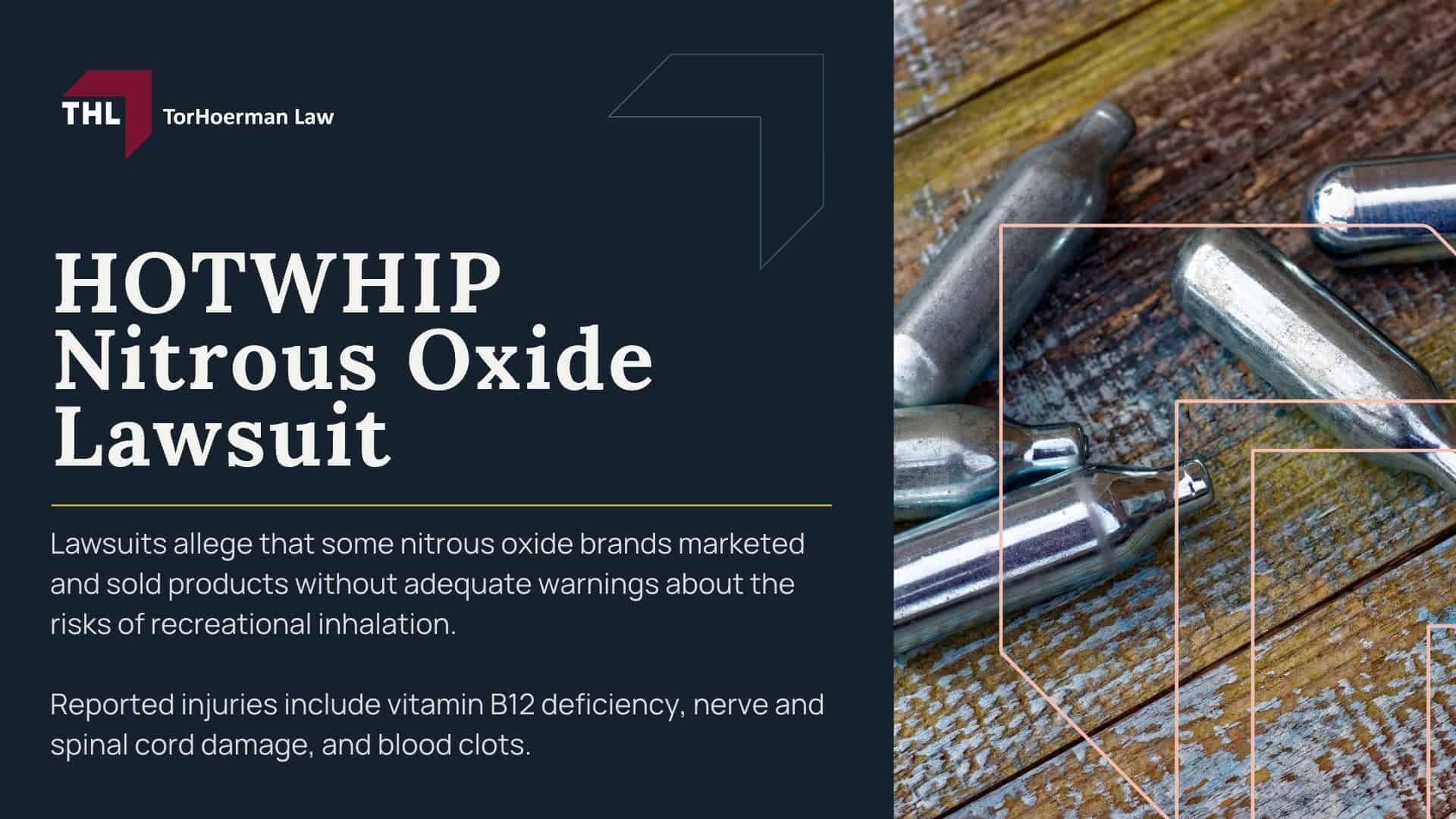
People who developed serious health problems after inhaling HOTWHIP nitrous oxide may have a potential claim against a manufacturer or seller, depending on how the product was marketed, sold, and used.
Potential claims may involve nerve damage, spinal cord injury, loss of mobility, paralysis, or other serious complications that required hospital treatment.
Families may also have legal options when a loved one died after inhaling nitrous oxide.
The product size, purchase location, packaging, and warnings may all affect whether a claim can be brought.
Medical records can help establish the injury and exposure history, while receipts, packaging, and sales information may show which businesses were involved.
Our attorneys review these records in potential nitrous oxide lawsuits, including cases involving more than one brand.
Call TorHoerman Law today for a free consultation, or use the chat feature on this page to discuss a potential claim.
HOTWHIP markets its nitrous oxide products as whipped cream chargers for home and commercial kitchens.
Its official product listings and wholesale catalog identify small cartridges, larger cylinders, flavored options, and accessories used with cream dispensers.
Examples of products advertised by HOTWHIP include:
A 2,112-gram tank holds as much nitrous oxide as 264 conventional 8-gram cream chargers.
HOTWHIP advertises its flavored tanks with colorful product imagery and names such as Bomb Pop and watermelon.
Although HOTWHIP describes its products as culinary supplies, the large tank sizes and flavor branding may be relevant to claims that sellers should have anticipated recreational inhalation.
A HOTWHIP watermelon-flavor product photograph shows a “DO NOT INHALE” warning on the box.
The packaging and warnings that accompanied the product actually purchased may differ from the current website images.
The tank size, flavor, packaging, and purchase date can help distinguish one HOTWHIP product from another.
HOTWHIP advertises individual purchases and wholesale orders, making the seller and route of distribution important when identifying the companies involved in a sale.
The HOTWHIP contact page identifies Hunan Huiteng Gas Co., Ltd., based in Changsha, China, and states that the website is jointly operated by that company and Spain-based Cherrycom Worldwide SL.
Those companies are associated with the website, although the manufacturer, importer, and seller of an individual tank may differ.
Packaging, receipts, shipment records, and retailer information may identify additional companies in the supply chain.
On March 14, 2025, the FDA warned consumers not to inhale nitrous oxide from canisters, tanks, or chargers of any size or flavor.
HOTWHIP was one of the brands named in the FDA warning.
The agency identified serious health risks including loss of consciousness, numbness, paralysis, blood clots, spinal cord damage, oxygen deprivation, and death.
The FDA also named brands including Galaxy Gas and Cosmic Gas and warned that the risks apply to both flavored and unflavored nitrous oxide products.
The advisory was not a HOTWHIP product recall and did not determine that a particular cylinder was defective.
Nitrous oxide is a colorless gas known as laughing gas, with established medical uses for sedation and pain relief and a separate culinary use in whipped cream preparation.
Outside those settings, people sometimes inhale the gas as a recreational drug to experience brief intoxication.
Large flavored tanks raise particular concerns because they contain enough gas for repeated use, while their flavors and presentation may appeal to young adults who do not recognize the risks of nitrous oxide abuse.
The CDC reported that 69% of nitrous oxide poison-center cases identified in Michigan from 2019 through 2023 involved people aged 20–39.
The figures concern nitrous oxide generally, not HOTWHIP-specific exposure.
The FDA also identifies online marketplaces, gas stations, smoke shops, and vape shops as sellers of nitrous oxide products, although the stores carrying an individual brand may vary.
A 2025 Florida enforcement operation targeted retailers accused of unlawfully selling nitrous oxide for recreational use, while South Carolina adopted restrictions in 2026 covering sales to minors and flavored nitrous oxide products.
Neither action establishes that HOTWHIP violated the laws of either state.
A January 28, 2026 complaint filed in Washington’s King County Superior Court names Hunan Huiteng Gas Company Limited, doing business as HOTWHIP and MassGass, alongside Amazon and several other nitrous oxide companies.
In the case, Lira et al. v. Amazon.com Services LLC et al. (No. 26-2-03961-5 SEA), the plaintiffs allege that the companies marketed or sold products despite foreseeable recreational inhalation and inadequate warnings.
The complaint involves multiple brands and contains allegations rather than established findings of wrongdoing.
Identifying which product a person used remains essential to evaluating a HOTWHIP claim.
The filing can be located through King County’s court records portal.
HOTWHIP’s published terms of service say its cream chargers are intended for culinary use and warn against inhaling their contents.
The terms state that buyers must be at least 21, that HOTWHIP requires age confirmation when an account is created, and that the company may refuse a sale if misuse is suspected.
Those are the company’s published policies; they do not establish what age checks or warnings were provided by a particular third-party seller.
A disputed warning or marketing claim may therefore depend on the actual product label, the retailer’s listing, and the information the purchaser received before the sale.
Recreational nitrous oxide misuse can cause immediate problems, including loss of consciousness and oxygen deprivation, as well as injuries that develop when people regularly inhale nitrous oxide.
The medical risks described below are associated with nitrous oxide inhalation generally, rather than a toxic ingredient shown to be unique to HOTWHIP.
Serious injuries associated with recreational nitrous oxide use include:
Repeated nitrous oxide exposure can interfere with the body’s ability to use vitamin B12, which is essential for normal nerve function.
This can damage peripheral nerves and the spinal cord, sometimes causing subacute combined degeneration, a condition associated with difficulty walking, loss of balance, and changes in sensation.
People who inhale repeatedly may develop prolonged neurological effects even after stopping nitrous oxide use.
In a 2025 study of 41 patients with nitrous oxide-related neurological injuries, researchers found evidence of impaired vitamin B12 function even though most patients had normal serum B12 levels.
Doctors may consider neurological examinations, MRI findings, nerve conduction studies, and blood tests involving methylmalonic acid or homocysteine when evaluating possible nitrous oxide toxicity.
People having difficulty stopping nitrous oxide use may also need substance use treatment and follow-up care to reduce the risk of further neurological harm.
Anyone experiencing weakness, numbness, problems walking, chest pain, or breathing difficulties after using nitrous oxide should seek prompt medical attention and tell the treating clinician about the exposure.
A HOTWHIP claim may depend on three sets of records: what product was used, how it was marketed or sold, and what medical harm followed.
A product label or receipt may establish a connection to HOTWHIP, while medical records help document the diagnosis and exposure history.
Useful records may include:
Keep the original packaging and purchase records when possible, and preserve digital records before product listings or order histories change.
When several nitrous oxide brands were used, a timeline of purchases and symptoms becomes especially important.
In a personal injury claim, medical records document the harm, while packaging and purchase records help establish which product and seller were involved.
Depending on the facts, a claim may involve a manufacturer, importer, distributor, or retailer associated with the HOTWHIP product that was actually purchased.
Possible claims could concern inadequate warnings, misleading product marketing, or sales practices that allegedly contributed to a foreseeable injury.
Packaging and sales listings may help show what warnings appeared alongside a HOTWHIP product and whether the company made representations that could have misled purchasers about the risks of inhalation.
A business’s responsibility depends on its role in producing or selling the product, what it communicated to consumers, and the law that applies to the claim.
Depending on the injury and applicable law, a lawsuit may seek compensation for medical treatment, rehabilitation, lost earnings, disability, and pain and suffering.
If a person died, surviving family members may have grounds for a nitrous oxide wrongful death claim involving financial losses and other recoverable damages.
The available claims and filing deadlines depend on the state, the defendants, and the date and circumstances of the injury or death.
At TorHoerman Law, our attorneys handle serious injury and product liability claims involving questions about product warnings, corporate conduct, and medical evidence.
For a potential HOTWHIP case, we examine the specific product, its seller, available packaging and marketing materials, and medical documentation of the injury.
We also review the timing and extent of exposure when more than one nitrous oxide brand was used, rather than assuming a single company was responsible for every injury.
A confidential consultation is an opportunity to discuss the circumstances of the injury, the evidence available, and whether a claim may be appropriate.
Call TorHoerman Law today or contact our firm for a free consultation. You can also use the chat feature on this page.
The January 2026 Washington complaint identifies Hunan Huiteng Gas Company Limited as doing business under both the HOTWHIP and MassGass names.
The brands may have different packaging and product lines, so identifying the specific tank or charger remains important.
No.
The FDA’s March 2025 advisory named HOTWHIP among nitrous oxide brands and warned against recreational inhalation, but it did not announce a HOTWHIP product recall.
Potentially.
Order histories, bank records, photographs, retailer records, and witness information may help establish which product was purchased or used.
A receipt is helpful but is not the only way to identify the product.
A claim can involve exposure to more than one product, but it becomes important to document the brands, dates, quantities, and sources of purchase as accurately as possible.
Those details can help distinguish the exposure associated with each brand and identify the businesses involved.
The deadline depends on the state and the type of claim, including whether the case concerns a personal injury or a death.
The date of injury, the date a condition was discovered, and other circumstances may affect the filing deadline.
Because deadlines vary, it is important to have the filing period reviewed before it expires.

Tor Hoerman has represented injured individuals for more than 30 years, with experience spanning individual personal injury cases and nationwide mass tort litigation. His work includes car accidents, catastrophic injuries, product liability claims, and other serious injury cases. Tor has served in court-appointed leadership roles in national litigation and tried cases involving major corporate defendants.
TorHoerman Law’s legal content is researched and written by our editorial team and attorneys for legal accuracy, clarity, and relevance. We rely on statutes, court records, government publications, medical research, and other authoritative sources when applicable. This page provides general legal information and does not constitute legal advice.
TorHoerman Law reviews its legal content for factual accuracy, current information, and relevant legal context before publication and as material developments occur. This article is provided for general informational purposes and does not constitute legal advice. For guidance about a specific case, contact TorHoerman Law.
You can learn more about this topic by visiting any of our Nitrous Oxide Lawsuit pages listed below:
A serious injury can change your life.

TorHoerman Law represents people whose lives have been disrupted by serious injuries, unsafe products, and negligence. Our attorneys handle individual personal injury cases as well as national mass tort lawsuits involving major corporations.
Founded in 2009, our legal team brings more than 100 years of combined experience handling serious injury and complex civil litigation.
Do you believe you’re entitled to compensation?
Use our Instant Case Evaluator to find out in as little as 60 seconds!

In this case, we obtained a verdict of $495 Million for our client’s child who was diagnosed with Necrotizing Enterocolitis after consuming baby formula manufactured by Abbott Laboratories.

In this case, we were able to successfully recover $20 Million for our client after they suffered a Toxic Tort Injury due to chemical exposure.

In this case, we were able to successfully recover $103.8 Million for our client after they suffered a COX-2 Inhibitors Injury.

In this case, we were able to successfully recover $4 Million for our client after they suffered a Traumatic Brain Injury while at daycare.

In this case, we were able to successfully recover $2.8 Million for our client after they suffered an injury due to a Defective Heart Device.
A serious injury can change your life.