Many Uber sexual assault victims who want to pursue legal action wonder whether the lawsuits against Uber are part of a class action.
While both class actions and multidistrict litigations (MDLs) involve groups of people harmed in similar ways, they function very differently, especially in how survivors maintain control over their individual claims.
A class action treats all plaintiffs as one unified group, resulting in a single verdict or settlement that applies to everyone.
In contrast, an MDL brings individual lawsuits together before one judge for efficiency, but each case remains separate and is judged on its own facts.
For survivors, this distinction matters.
The Uber cases are not a class action but rather an MDL, which means each survivor can present their unique story, evidence, and damages while benefiting from shared legal resources and coordinated discovery.
This structure gives Uber passengers who were assaulted the opportunity to prove sexual assault and negligence without sacrificing their individual voices in the legal process.
Understanding this difference helps survivors make informed decisions about their rights, timelines, and next steps in seeking justice.
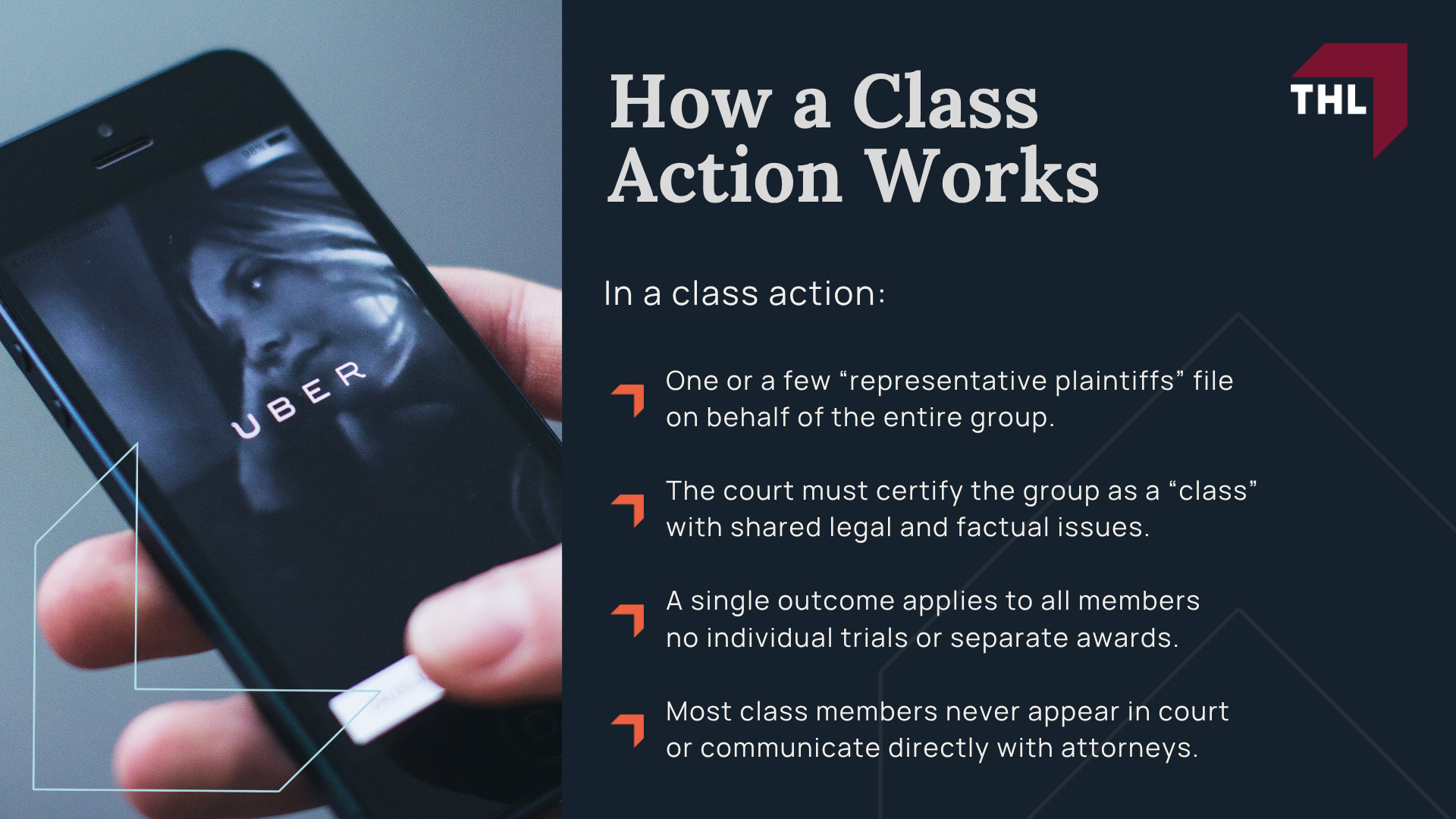
How a Class Action Works
A class action lawsuit allows a large number of people with similar complaints to combine their claims into one unified case.
Instead of each person filing separately, one or a few plaintiffs represent the entire group, and the outcome (whether it’s a settlement or a verdict) applies to everyone in the class.
This approach works best when every claim is nearly identical and the harm suffered is financial or procedural, not deeply personal or physical.
Class actions make it easier to resolve many small, similar cases at once without overwhelming the court system.
Class actions are rarely used for cases involving physical or emotional harm, like sexual assault, because each survivor’s experience, injuries, and recovery are highly individual.
In these situations, grouping everyone under one verdict wouldn’t reflect the personal nature of each case.
Instead, courts use multidistrict litigation (MDL), which lets survivors share evidence and resources while maintaining their right to an individual claim and outcome.
How an MDL Works
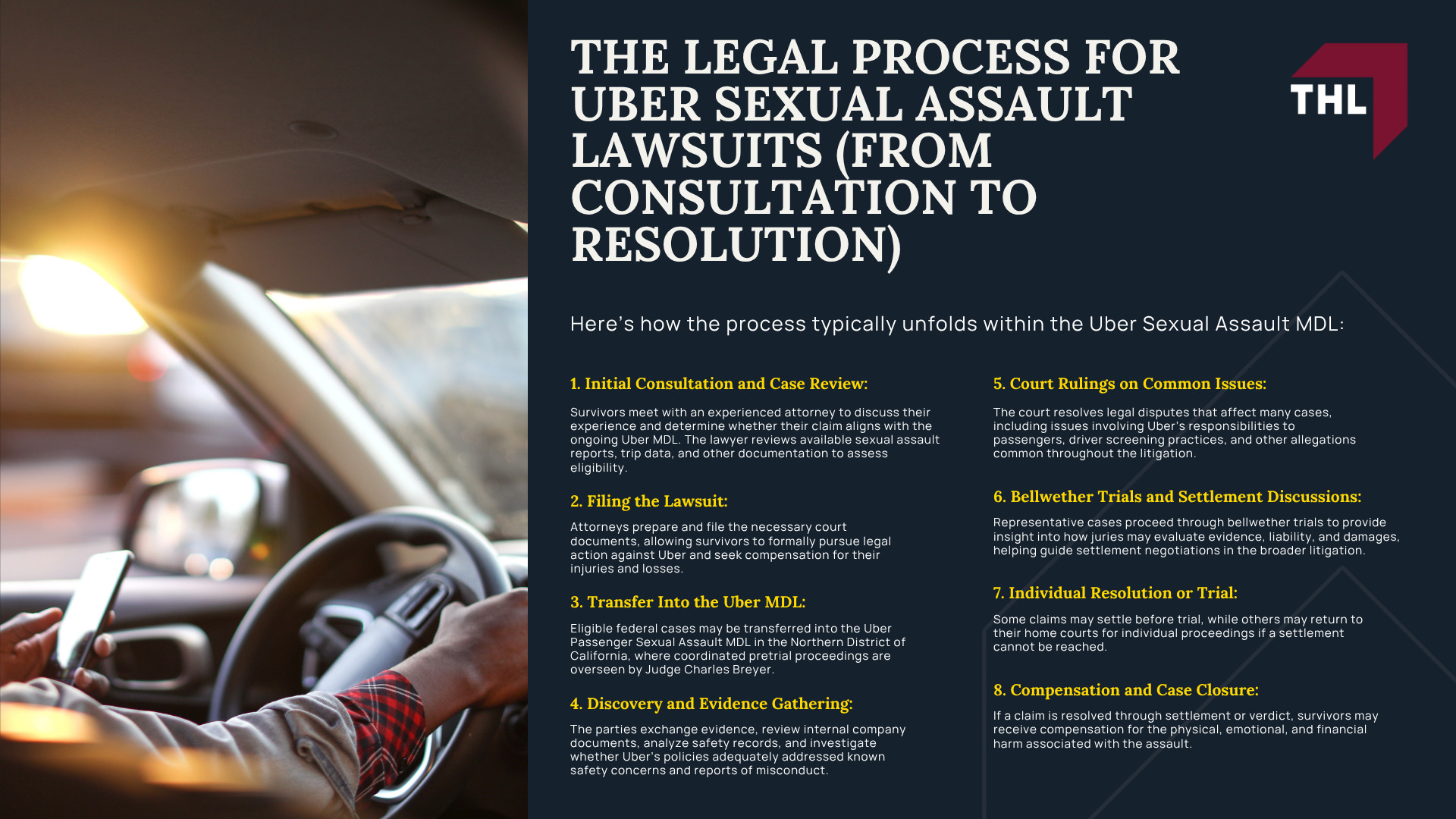
A multidistrict litigation (MDL) is a special legal process used when many people file similar lawsuits against the same defendant – in this case, Uber Technologies.
Instead of merging every case into one, the MDL brings all individual lawsuits before a single federal judge for pretrial coordination.
This allows shared evidence, consistent rulings, and more efficient progress without taking away each person’s right to have their case heard individually.
After pretrial steps like discovery and early rulings, cases may be sent back to their original courts for trial or may reach settlements during the process.
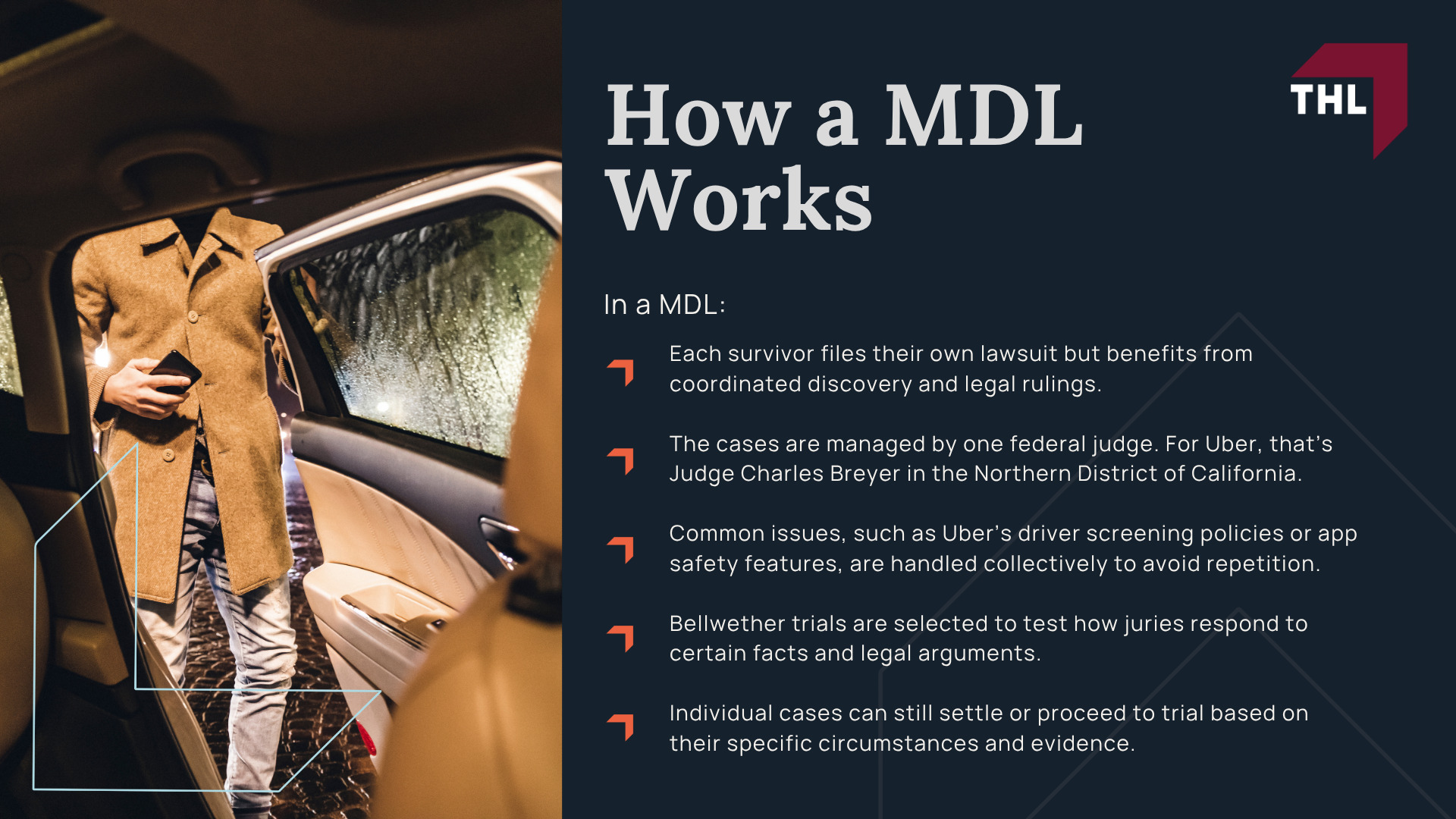
In an MDL:
- Each survivor files their own lawsuit but benefits from coordinated discovery and legal rulings.
- The cases are managed by one federal judge. For Uber, that’s Judge Charles Breyer in the Northern District of California.
- Common issues, such as Uber’s driver screening policies or app safety features, are handled collectively to avoid repetition.
- Bellwether trials are selected to test how juries respond to certain facts and legal arguments.
- Individual cases can still settle or proceed to trial based on their specific circumstances and evidence.
This structure makes sense for claims involving personal injury or trauma, where each survivor’s experience is unique but rooted in the same corporate failures.
The Uber sexual assault cases are part of this MDL process, which balances efficiency with fairness, allowing survivors to maintain their personal voice and seek justice without being reduced to a single group claim.
Why Uber Sexual Assault Claims Use an MDL
The decision to consolidate the many Uber lawsuits into a multi-district litigation (MDL) is rooted in the nature of rideshare sexual assault claims themselves.
While each survivor’s story is unique, many of the legal issues overlap.
Coordinating these cases in federal court helps ensure uniform rulings on shared questions like whether Uber had a duty to implement safeguards and whether the company failed to properly vet drivers or respond to prior warnings.
This structure also makes it easier for Uber sexual assault settlement discussions to occur because both sides can more easily compare critical evidence, account for common issues, and negotiate across multiple cases rather than dozens of individual lawsuits.
For survivors, the MDL offers advantages in legal representation: they can join a broader legal strategy, access resources for discovery and expert testimony, and benefit from attorneys managing coordination of filings and motions.
It also provides a framework for support survivors in presenting their claims, especially when many were discouraged from reporting incidents or feared speaking out on their own.
The MDL structure balances efficiency with respect for individual voices, allowing each survivor who experienced a sexual assault committed by an Uber driver to preserve their right to a tailored outcome and compensation.