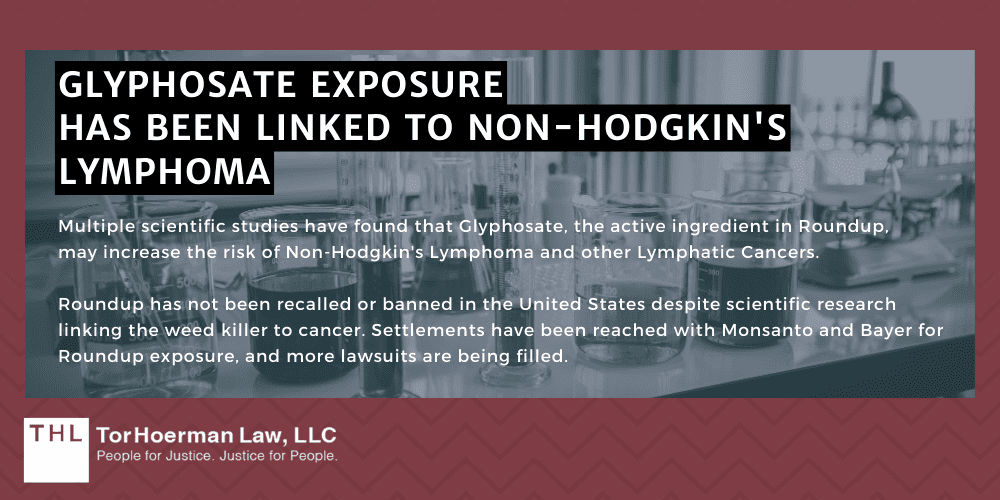
The Roundup lawsuit claims that Monsanto's popular weed killer, Roundup, causes cancer. The main ingredient, glyphosate, has been linked to Non-Hodgkin's Lymphoma.
Numerous studies and the International Agency for Research on Cancer (IARC) have classified glyphosate as a probable human carcinogen. Despite this, Monsanto continues to deny these claims.
Victims of Roundup exposure who developed cancer are filing lawsuits against Monsanto, seeking compensation for medical expenses, pain, and suffering.
No Longer Accepting Claims
Roundup Lawsuit Facts
TorHoerman Law is no longer accepting claims for the Roundup Lawsuit.
Intake Closed
Most Recent Updates
4,508 Roundup Lawsuits are consolidated in federal court, filed mainly by farm workers and landscapers claiming health issues like non-Hodgkin's lymphoma from glyphosate exposure.
Bayer is seeking state legislation to obtain legal immunity from cancer claims related to Roundup, arguing that compliance with EPA regulations should suffice.
Our Roundup Lawyers are reviewing potential claims from individuals diagnosed with non-hodgkin's lymphoma and other diseases potentially caused by Roundup exposure.
Key Takeaways
The Roundup lawsuit claims that Monsanto's popular weed killer, Roundup, causes cancer. The main ingredient, glyphosate, has been linked to Non-Hodgkin's Lymphoma.
Numerous studies and the International Agency for Research on Cancer (IARC) have classified glyphosate as a probable human carcinogen. Despite this, Monsanto continues to deny these claims.
Victims of Roundup exposure who developed cancer are filing lawsuits against Monsanto, seeking compensation for medical expenses, pain, and suffering.
TorHoerman Law - The Premier Roundup Lawsuit Attorneys
The active ingredient in Roundup (Glyphosate) has been linked to an increased cancer risk, specifically Non Hodgkin’s Lymphoma.
Roundup Lawsuits are being filed against BayerAG and Monsanto for failing to warn consumers about the dangers of Roundup exposure.
Over 80% of Roundup Lawsuits, which amount to over 100,000 cases, have been settled.
The landmark $10 billion settlement agreement includes $1.25 billion for future Roundup claims.
If you or a loved one suffered injuries resulting from Roundup weed killer exposure, you may qualify to participate in a Roundup lawsuit.
Contact an experienced Roundup lawyer to discuss your legal options today, free of charge and no obligation required.
Roundup Lawsuit Filed on Behalf of Cancer Patients
As research on the effects of glyphosate continues to indicate that the chemical is a carcinogen, more product liability Roundup lawsuit cases will be filed across federal and state courts.
Federal multidistrict litigation is proceeding under the direction of U.S. District Court Judge Vince Chhabria.
During the first bellwether trial, Judge Chhabria made the following comment relating to Monsanto’s carelessness.
Judge Chhabria said:
“Although the evidence that Roundup causes cancer is quite equivocal, there is strong evidence from which a jury could conclude that Monsanto does not particularly care whether its product is, in fact, giving people cancer, focusing instead on manipulating public opinion and undermining anyone who raises genuine and legitimate concerns about the issue.”
How Many Roundup Lawsuits Have Been Filed? Current Status of the Roundup Weed Killer MDL
The Roundup MDL continues to grow, with nearly 4,500 pending Roundup Weed Killer Lawsuits filed as of January 2025.
New Roundup Lawsuits are currently being filed by lawyers across the country.
If you have been exposed to Roundup weed killers and have developed Non-Hodgkin’s Lymphoma, contact a knowledgeable Roundup injury lawyer to explore your options.
TorHoerman Law offers free, no-obligation case consultations for any potential Roundup lawsuit case.
Any individual who has been consistently exposed to Roundup weed killer may be eligible to participate in a Roundup lawsuit.
If you have been exposed to Roundup weed killers and have developed Non-Hodgkin’s Lymphoma, contact a knowledgeable Roundup injury lawyer to explore your options.
TorHoerman Law offers free, no-obligation case consultations for any potential Roundup lawsuit case.
Call today to speak to an experienced Roundup injury lawyer from our law firm.
Though there have been several Roundup verdicts and settlements in the past, the average Roundup settlement is not consistent across every lawsuit.
Average Roundup settlement amounts for the June 2020 $11 billion settlement were over $150,000 each. This landmark settlement included $1.25 for future Roundup claims.
Our Roundup lawyers estimate that average Roundup settlement amounts fall between $5,000 to $200,000+.
As mentioned previously, the Roundup settlement amounts will depend on a variety of factors, including the strength of the plaintiff’s case, quality of evidence, severity of the injury or illness, extent of medical treatment, and amount of damages sought.
A 2015 report from the World Health Organization’s International Agency for Research on Cancer (IARC) bridged the potential link between the chemical component, glyphosate, and cancer.
The report referenced studies that showed that there was “sufficient evidence” glyphosate causes cancer in animals as well as damaging effects on human cells.
Recent studies suggest that the popular Roundup weedkiller could be deadly to more than just unwanted plants.
In relation to these studies and IARC’s findings, lawsuits were filed against Roundup manufacturer, Monsanto.
The Roundup lawsuit claims that exposure to a chemical component of the herbicide, glyphosate, causes Non-Hodgkin’s Lymphoma.
Glyphosate, a common agent in herbicides, targets specific enzymes in weeds to eradicate them without damaging other plants.
Glyphosate is the active ingredient in Monsanto Co.’s Roundup weed killer.
On a yearly average, American farmers spray nearly a pound of glyphosate on every acre of cropland.
Farmers and landscapers who use Roundup regularly are often exposed to high levels of glyphosate.
Because of the herbicide’s popularity in the agricultural industry, trace amounts of glyphosate have been found in corn, soy, and wheat-based products.
Alarmingly, the chemical has also been detected in human urine samples and women’s breast milk.
Monsanto claims that the chemical is completely harmless to humans, citing years of in-house studies conducted on glyphosate.
The Environmental Protection Agency (EPA) has backed up Monsanto’s claim, citing their own findings which show no link between glyphosate and increased risk of cancer for humans.
Why Isn't Glyphosate Considered Dangerous by the EPA?
The Environmental Protection Agency’s long-standing position is that glyphosate exposure and low-level consumption does not pose any risk to humans.
According to their website, Monsanto supports these claims with their own in-house studies, which have found glyphosate to be “more than 10 times less toxic than caffeine.”
Despite Monsanto’s statements, a number of U.S. agricultural workers and landscapers are currently suing Monsanto, claiming that by using Roundup they were exposed to high levels of glyphosate which caused them to develop Non-Hodgkins Lymphoma.
Monsanto stands by their safety claims, stating “in more than 700 studies, no one has associated cancer with the use of glyphosate.”
However, information obtained through the first cases against Monsanto shows that the EPA reports are likely compromised.
Within the documents lies a chain of Monsanto internal emails, and email communications between the company and EPA staff, suggesting that the EPA research had been ghostwritten by Monsanto, and later signed off by EPA academics.
In one such email, Monsanto executive William F. Heydens wrote:
“We would be keeping the cost down by us doing the writing and they [EPA] would just edit & sign their names so to speak.”
There is also evidence that one EPA senior official had worked directly with Monsanto directors to put a halt to further investigations by other federal health agencies into the potential adverse effects of glyphosate.
Other documents indicate that an EPA senior officials had worked with Monsanto to hide a U.S. Department of Health and Human Services study reviewing glyphosate, which suggested the herbicide could be a carcinogen.
A series of EPA internal emails revealed a great level of dispute among employees about the safety of glyphosate.
Even within the EPA, there seems to be a polarizing disagreement of whether glyphosate is hazardous for humans.
The agency is currently conducting a scheduled evaluation of the chemical though there is no indication of when the results of the evaluation will be published.
Roundup weed killers have been banned in:
The Netherlands
France
Bermuda
Columbia
Sri Lanka
And recently, in Vietnam
On April 11, 2019, Vietnam removed herbicides containing glyphosate from the market because of the damaging effects it has on the environment and severe health consequences for the population.
“The decision to remove herbicides containing glyphosate from the list of plant protection chemicals permitted for use in Vietnam is in accordance with the current law, international regulations and in line with Vietnam’s socio-economic conditions,” Hoang Trung, head of the Plant Protection Department under Vietnam’s Ministry of Agriculture and Rural Development said in the statement.
The herbicide is Monsanto’s flagship product.
Being sold internationally for both mass agricultural purposes and as an at-home gardening applicant, it is the most widely used herbicide in the world.
There are currently more than 700 roundup cancer lawsuits filed against Monsanto related to Roundup weedkillers.
The people claiming injuries are made up of agricultural labourers, lawn care workers, and gardeners who have developed Non-Hodgkin’s Lymphoma because of their high levels of exposure to glyphosate.
Monsanto continues to assert that Roundoff is safe for consumers.
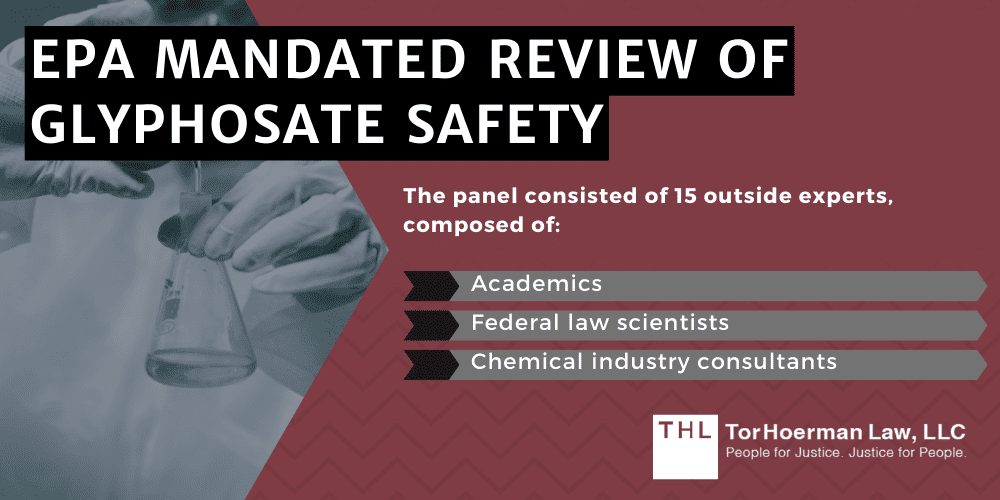
In December 2016, the EPA constructed a panel to review the possible health effects of glyphosate.
The panel consisted of 15 outside experts, composed of:
Academics
Federal law scientists
Chemical industry consultants
The review was not a consequence of the lawsuits, but rather the EPA is required to review health-effects for every pesticide once every 15 years.
Glyphosate had not been reviewed since 1991.
At that time, the EPA determined that the herbicide did not pose a threat to consumers.
In a puzzling move, the December conference began with the Chief of the Office of Pesticides Programs, Jack Housenger, laying out an array of evidence – in the form of a 227-page issue paper –explaining why glyphosate is an unlikely carcinogen.
Housenger then requested the panel review the analysis.
More than half of the expert panelists were concerned with the EPA’s findings.
During the conference, panelist Eric Johnson, an epidemiologist at the University of Arkansas, expressed his concerns.
Johnson said that if any study suggested a positive connection between glyphosate and Non-Hodgkins Lymphoma, the EPA would quickly minimize the findings, citing alleged flaws in the study.
Panelist Lianne Sheppard, a biostatistician at the University of Washington-Seattle, explained that there was a “consensus” on the panel that “the available evidence did not fit with the conclusions drawn in the issue paper, particularly when put in the context of guidelines.”
Three of the experts even expressed concern regarding the Office of Pesticides Programs’ integrity and ability to conduct unbiased studies.
In 2016, approximately 30% of the Office of Pesticides Programs operating budget was funded by the pesticide manufacturing industry.
The office relies on studies and tests conducted by the pesticide manufacturers for much of their data.
After the conference, the EPA publicly released the issue paper.
By law, the EPA had to include any concerns expressed by the panelists.
Using ambiguous language and vague information, the EPA downplayed the severity of the panel’s concerns.
When a majority of the panelists disagreed with the EPA’s findings, the release paper would simply state “some panelists expressed doubt.”
If the panelists denied the data, the release would only explain that “panelists had some concerns.”
The issue paper did not distinguish how many or which panelists were concerned with which specific data sets.
Following the conference, a group of environmental health scientists came together to voice their concerns in the Journal of Epidemiology and Community Health.
The researchers argued that more unbiased safety reviews of glyphosate are needed for market approval.
The study’s authors write that:
“It is incongruous that safety assessments of the most widely used herbicide on the planet rely largely on fewer than 300 unpublished, non-peer-reviewed studies while excluding the vast modern literature on glyphosate effects.”
On July 7, California was the first state to list glyphosate as a known carcinogen, contrasting the EPA’s federal approval of the herbicide.
The 2016 election cycle brought a change in bureaucratic leadership, including a new EPA administrator, Scott Pruitt.
Pruitt previously served as Oklahoma’s Attorney General.
During his tenure as Attorney General, Pruitt sued the EPA on 13 separate occasions, all of which were attempts to end federal regulations on behalf of corporations.
Since taking over the EPA, Pruitt has already reversed a ban on chlorpyrifos, a pesticide similar to glyphosate, which is believed to cause brain damage in agricultural workers and children.
A national group of pediatricians said that they were “deeply alarmed by EPA’s decision not to finalize the proposed rule to end chlorpyrifos uses on food,” saying it puts children at significant risk.
Despite this, Pruitt took the side of chlorpyrifos manufacturer, DOW Chemical, arguing that the data did not directly link chlorpyrifos exposure to brain damage.
Pruitt is in a position now to decide whether to increase regulations on or completely ban glyphosate.
Based on Pruitt’s past history and aggressive attitude towards deregulation, it is unlikely that the new EPA administrator will go against corporate interest.
A lot rides on the EPA’s market approval of glyphosate.
Last September, Bayer AG agreed to buy Monsanto for $66 billion, pending regulatory approvals.
Since 2015, Monsanto has spent more than $10.3 million in lobbying, developing advantageous relationships with political heads and bureaucrats that control agricultural policies and regulations.
With political influence and financial power, as well as a new EPA head administrator favoring environmental deregulation, there is little to hinder Monsanto’s merger with Bayer AG.
The corporate giant will see to it that Roundup stays on the market, even if it is at the expense of the thousands of agricultural workers who are exposed to its dangerous product every day.
If you or a loved one was exposed to Roundup regularly and subsequently was diagnosed with non-Hodgkin’s lymphoma or another form of cancer – you may qualify to file a Roundup lawsuit.
The best way to determine if you qualify is to speak with an experienced Roundup lawyer.
The average payout for an individual who has been diagnosed with non-Hodgkin’s lymphoma or other cancers is between $5,000 to $250,000 in compensation.
One report stated that the average amount per client suffering from cancer is $160,000.
There have been a number of people who have been diagnosed with cancer after being exposed to Roundup.
These individuals have filed lawsuits against Monsanto/Bayer, the manufacturer of Roundup.
The Roundup lawsuits claim that Bayer knew or should have known that Roundup was dangerous and failed to warn consumers of the risks associated with its use.
Bayer denies these claims and is currently appealing a number of Roundup verdicts.
The Roundup litigation is currently in the appeals process.
It is unclear how long the appeals will take or what the final outcome will be.
Tor Hoerman has represented injured individuals for more than 30 years, with experience spanning individual personal injury cases and nationwide mass tort litigation. His work includes car accidents, catastrophic injuries, product liability claims, and other serious injury cases. Tor has served in court-appointed leadership roles in national litigation and tried cases involving major corporate defendants.
Legally Reviewed
TorHoerman Law’s legal content is researched and written by our editorial team and attorneys for legal accuracy, clarity, and relevance. We rely on statutes, court records, government publications, medical research, and other authoritative sources when applicable. This page provides general legal information and does not constitute legal advice.
Fact-Checked
TorHoerman Law reviews its legal content for factual accuracy, current information, and relevant legal context before publication and as material developments occur. This article is provided for general informational purposes and does not constitute legal advice. For guidance about a specific case, contact TorHoerman Law.
4,508 Roundup Lawsuits are consolidated in federal court, filed mainly by farm workers and landscapers claiming health issues like non-Hodgkin's lymphoma from glyphosate exposure.
Bayer is seeking state legislation to obtain legal immunity from cancer claims related to Roundup, arguing that compliance with EPA regulations should suffice.
Our Roundup Lawyers are reviewing potential claims from individuals diagnosed with non-hodgkin's lymphoma and other diseases potentially caused by Roundup exposure.
TorHoerman Law represents people whose lives have been disrupted by serious injuries, unsafe products, and negligence. Our attorneys handle individual personal injury cases as well as national mass tort lawsuits involving major corporations.
Founded in 2009, our legal team brings more than 100 years of combined experience handling serious injury and complex civil litigation.
Do you believe you’re entitled to compensation?
Use our Instant Case Evaluator to find out in as little as 60 seconds!
In this case, we obtained a verdict of $495 Million for our client’s child who was diagnosed with Necrotizing Enterocolitis after consuming baby formula manufactured by Abbott Laboratories.