No Longer Accepting Claims
Roundup Lawsuit Facts
TorHoerman Law is no longer accepting claims for the Roundup Lawsuit.
Intake Closed

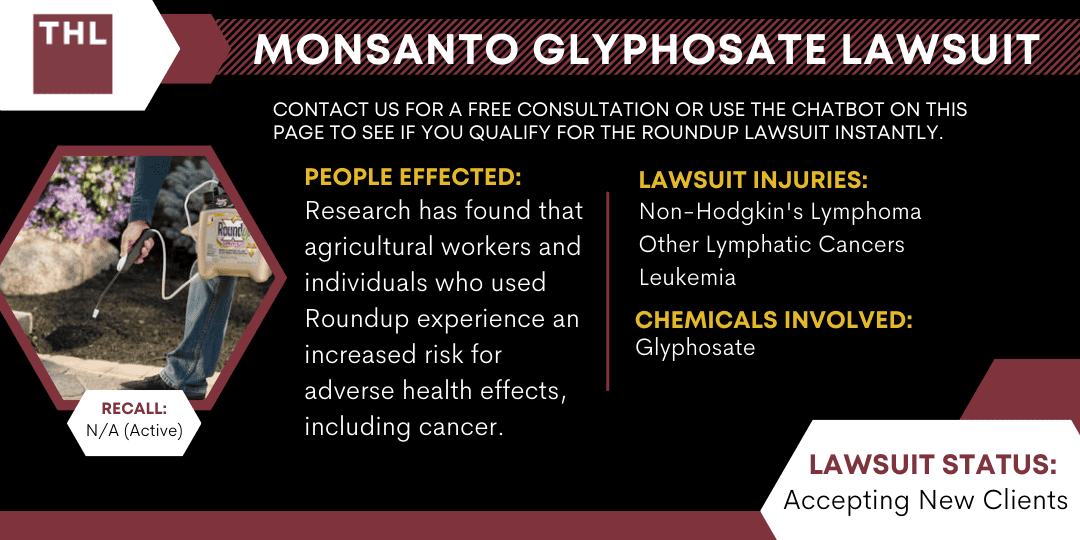
Roundup is a popular herbicide used to kill weeds and unwanted plants.
Monsanto, now owned by Bayer AG, introduced the product in 1976, marketing it as a safe and effective weedkiller for commercial and residential use.
According to National Geographic, Roundup was also a top-selling herbicide in over 160 countries in 2015, including the United States, United Kingdom, Canada, and Australia.
Roundup’s active ingredient is glyphosate, which works by blocking a specific enzyme that plants need to grow.
This property causes the plants to wither and die. Farmers, landscapers, and homeowners commonly use the herbicide to control weeds in agricultural fields, gardens, lawns, and parks.
Monsanto synthesized and patented the glyphosate molecule in the 1970s.
Starting in 1973, they marketed the chemical as a broad-spectrum herbicide under the brand name Roundup.
The company had exclusive rights to produce glyphosate until the patent expired in the U.S. in 2000 and earlier in other countries.
This expiration allowed other companies to start manufacturing and selling glyphosate-based herbicides under different brand names.
Glyphosate, the key ingredient in Roundup, has been the focal point of heated debates and legal battles.
As a broad-spectrum herbicide, glyphosate eliminates unwanted vegetation, making it a popular choice for farmers, landscapers, and homeowners.
The International Agency for Research on Cancer (IARC), an agency within the World Health Organization, classified glyphosate as a Group 2A probable human carcinogen in 2015.
The Group 2A classification means there is limited evidence of cancer-causing effects in humans and sufficient evidence in laboratory animals.
The IARC also found that glyphosate could cause DNA and chromosomal damage in human cells.
These concerns are especially significant for those who are exposed to glyphosate regularly, such as farmers and landscapers.
The primary concern linking Roundup to health issues, particularly cancer, stems from allegations that glyphosate exposure may pose severe risks to human health.
Several routes of exposure to glyphosate may exist, including oral, dermal, and inhalation.
People who work with Roundup directly, such as farmers and landscapers, are at a higher risk of exposure to glyphosate.
However, even individuals who live near areas where Roundup is sprayed or have used the herbicide in their own yards may be at risk.
Glyphosate may contaminate drinking water sources near agricultural areas with substantial Roundup usage.
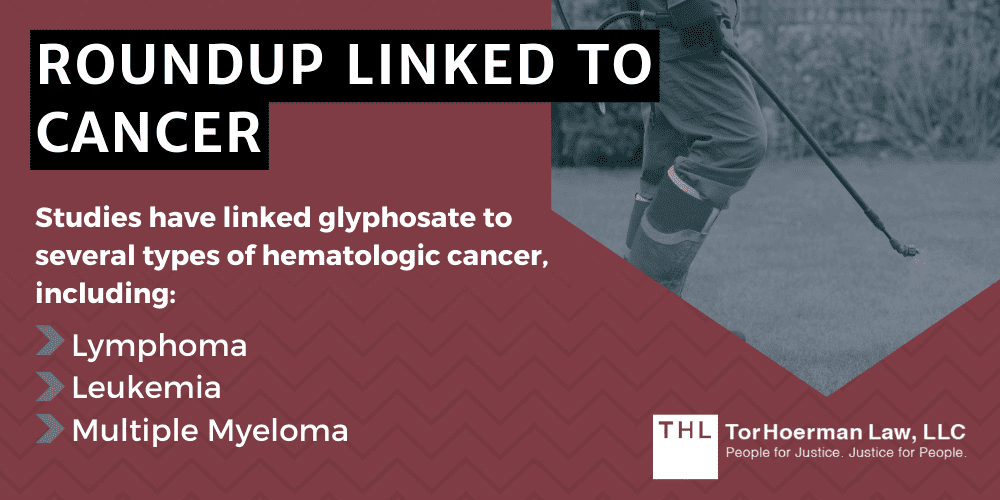
Studies have linked glyphosate to several types of hematologic cancer, including:
A Journal of the National Cancer Institute (JNCI) study found a correlation between glyphosate exposure and specific oxidative stress biomarkers.
Oxidative stress refers to an imbalance between free radicals and antioxidants in the body, leading to cell damage and the development of chronic diseases, including cancer.
Another study discovered that glyphosate exposure can increase the risk of non-Hodgkin’s lymphoma by as much as 41%.
Many victims of glyphosate exposure have filed Roundup cancer lawsuits against Monsanto, alleging that they developed these types of cancer after using or being exposed to Roundup over an extended period.
If you or a loved one have been diagnosed with non hodgkin’s lymphoma or other lymphatic cancers after being exposed to Roundup regularly, you may be eligible to file a Roundup Lawsuit.
Contact the Roundup attorneys at TorHoerman Law for a free consultation.
You can also use the chatbot on this page to find out if you qualify to file a Roundup Lawsuit instantly
Roundup cancer claims have resulted in a series of massive lawsuits against Monsanto and Bayer AG.
The company has settled over 100,000 Roundup glyphosate lawsuits for a total of $11 billion.
With so many cases settled, many people wonder how so many Roundup lawsuits are still pending.
Monsanto and Bayer are still facing over 40,000 pending lawsuits.
Many victims are still filing Roundup lawsuits in their respective state courts, but there are still over a significant amount of Roundup cases included in the Roundup MDL in California federal court.
Recent court decisions have played a pivotal role in shaping the trajectory of the Monsanto glyphosate lawsuits.
Here are some of the significant legal developments and milestones in the Roundup lawsuits:
The Roundup litigation has been ongoing for several years.
The manufacturers have lost multiple court cases and recently settled thousands of claims.
While the companies had their share of wins, plaintiffs consecutively winning recent Roundup lawsuits could push the manufacturers to settle even more cases.
Recent scientific studies continue to investigate the potential health risks associated with glyphosate exposure.
While some studies support the link between Roundup and cancer, others present conflicting findings.
The scientific landscape is complex, with ongoing research influencing legal arguments and contributing to the nuanced understanding of glyphosate’s impact on human health.
Expert opinions are crucial in interpreting scientific data and guiding legal proceedings.
Experts in the field provide valuable insights, evaluating the credibility of studies and offering perspectives on the connection between glyphosate and cancer.
Some expert witnesses have testified in the Roundup lawsuits, including the following:
As the Roundup litigation continues to unfold, expert opinions still play a crucial role in determining the outcome of each case.
The scientific landscape and expert opinions will likely evolve as more studies are conducted, providing essential insights into the potential health risks of glyphosate exposure.
The Monsanto glyphosate lawsuits have not only fueled legal battles but have also significantly influenced public perception.
Since Roundup was one of the most widely used herbicides globally, news of its potential health risks sparked concern among consumers and regulators.
This public awareness has increased scrutiny and regulatory action regarding glyphosate use.
The legal proceedings have prompted regulatory bodies to reevaluate their stance on glyphosate.
Some jurisdictions have implemented stricter regulations, while others are considering bans on using Roundup in specific settings.
The ongoing litigation has become a catalyst for policy changes, with potential implications for the agricultural industry and public health.
Roundup cancer lawyers have played a critical role in bringing justice to those affected by Roundup’s alleged harmful effects.

Attorneys have worked tirelessly to represent their clients and hold the manufacturers accountable for their actions.
Monsanto glyphosate lawsuits continue to evolve, with legal, scientific, and public perception factors playing pivotal roles.
For individuals who believe they have been affected by Roundup exposure, seeking legal consultation is crucial.
The expert Roundup lawyers at TorHoerman Law have extensive experience and resources in handling complex herbicide litigation.
Our team is dedicated to fighting for the rights of individuals who have suffered harm from exposure to harmful chemicals.
If you or a loved one has been diagnosed with cancer after using Roundup, you may be eligible to file a Roundup lawsuit.
Contact our Roundup lawyers today for a free consultation.
You can also use the chatbot on this page to find out if you qualify for the Roundup weed killer lawsuit instantly.


