The Facebook mental health lawsuit is part of a broader wave of social media addiction lawsuits alleging that Meta Platforms failed to responsibly design and manage Facebook and Instagram in a way that would protect children online.
These cases assert that Meta knew or should have known that its platforms posed serious risks to young people, particularly when used intensively during key developmental years.
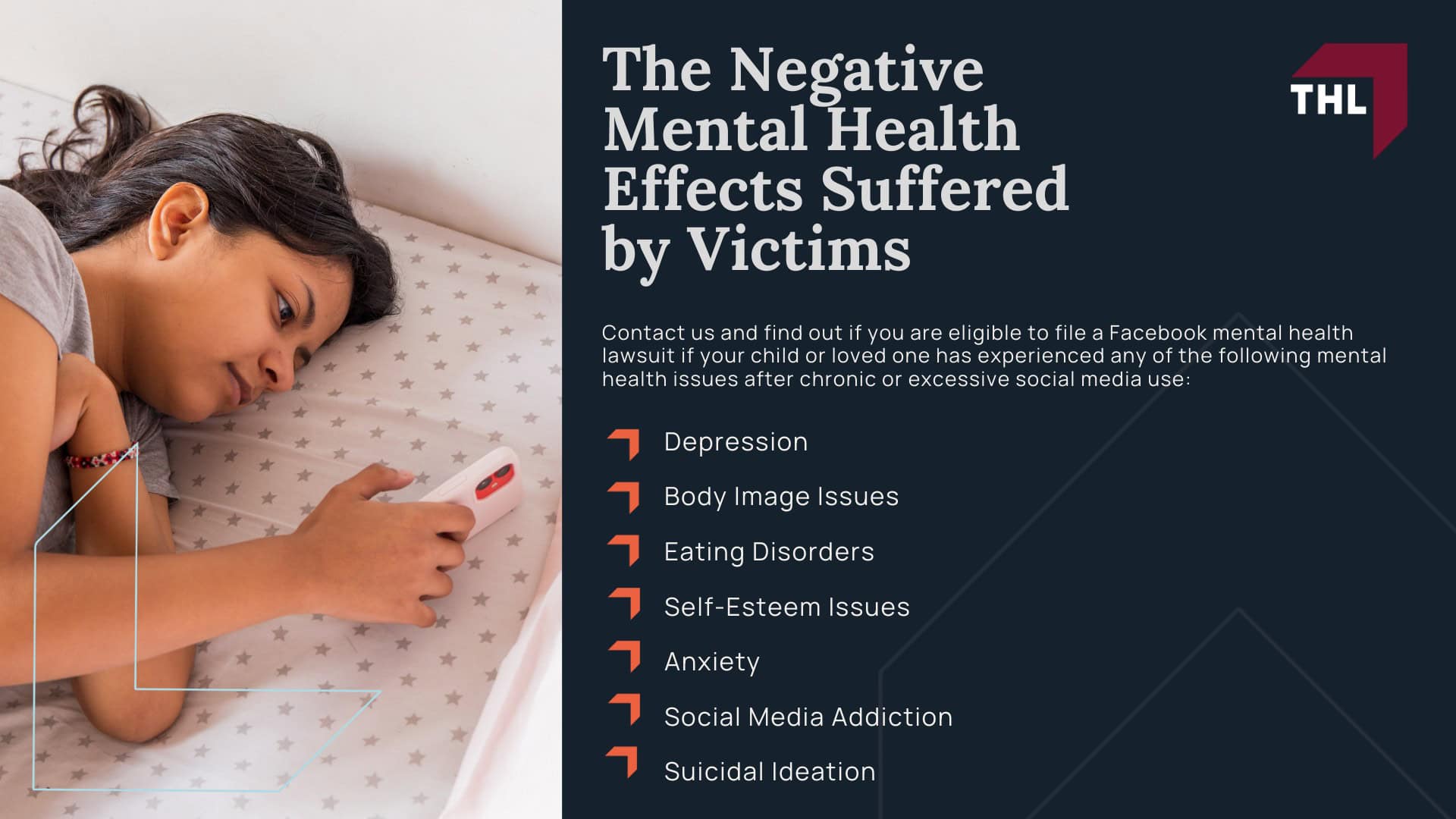
According to allegations in the litigation, years of excessive social media consumption were linked to rising rates of depression, anxiety, eating disorders, and self-harm among teens and young adults, yet meaningful safeguards were not implemented.
At the center of these claims is Meta’s own internal research, which plaintiffs argue revealed troubling connections between platform use and negative mental health outcomes long before the public became aware of the issue.
Rather than redesigning products or taking steps to adequately warn users and parents, the social media addiction lawsuits allege that Facebook continued to expand features that encouraged longer use and deeper engagement.
These allegations form a key part of the Facebook and Instagram addiction lawsuits claim now pending in federal court.
Facebook-related cases are consolidated with similar claims against other platforms in the Social Media Addiction MDL, allowing courts to address shared factual and legal questions about platform design, corporate knowledge, and youth harm.
In addition to individual and family plaintiffs, school district lawsuits have also been filed, alleging that Facebook’s impact on student mental health has forced schools to absorb the costs of counseling, intervention programs, and crisis response.
Together, these claims seek accountability for how Facebook’s design choices may have contributed to widespread harm and a growing national mental health crisis.
Meta Designed Facebook To Be Addictive to Teens and Young Adults
Meta is alleged to have deliberately designed its platforms to be addictive.
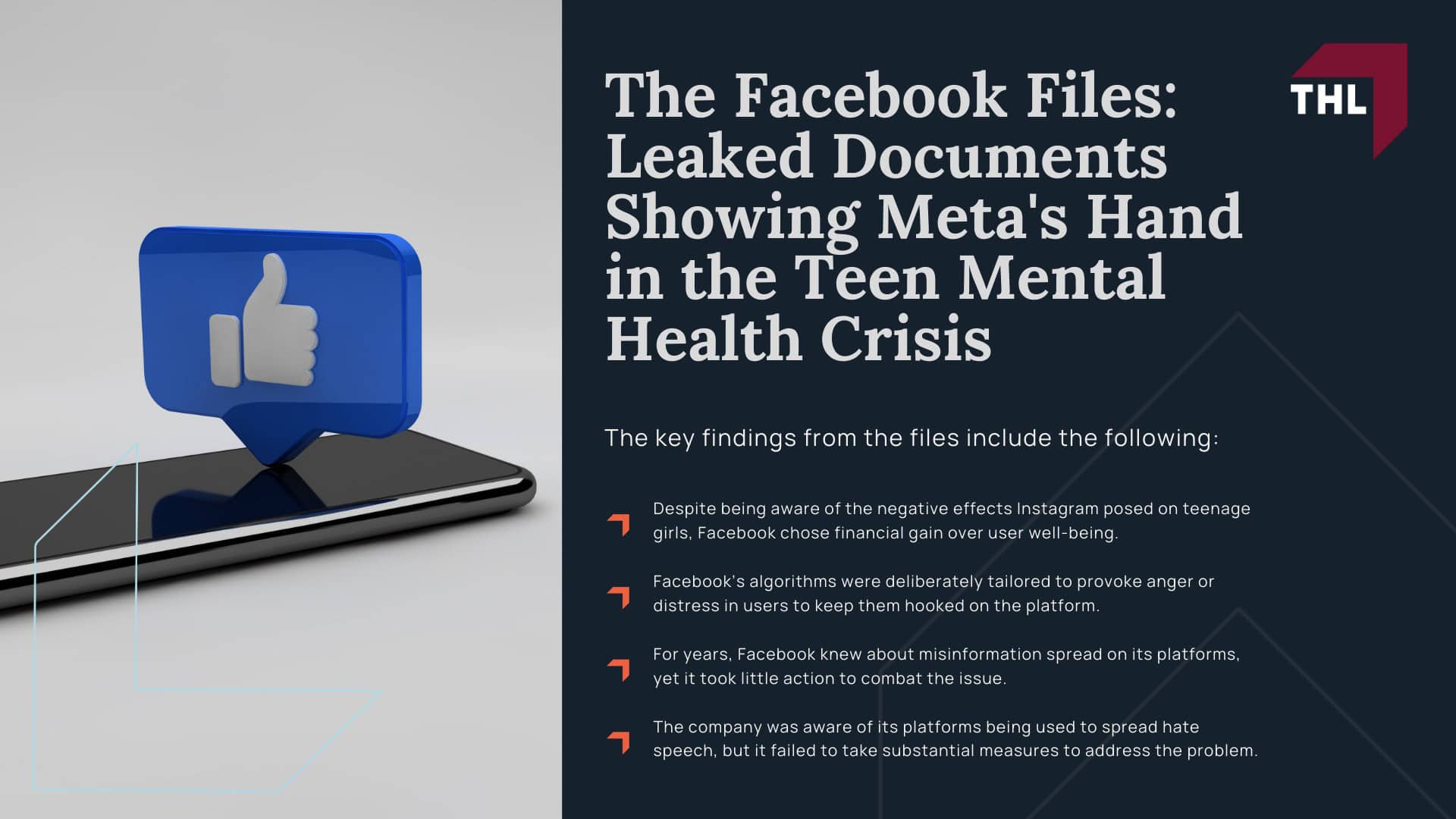
The idea that Facebook and Instagram’s content impacts young users’ mental health is detailed in the internal documents leaked by Frances Haugen to the Wall Street Journal.
In these documents, it was revealed that in 2019, Meta (then called Facebook) conducted research into how its social media apps affected teen mental health.
The researchers found that Facebook and Instagram users suffered from various mental health problems ranging from depression to body image issues.
Facebook responded in multiple press releases that its platforms do the opposite and that it was unaware of the negative effects its platforms have on mental health.
However, according to the leaked documents, Meta knew of the mental health impacts of its social media platforms.
Instead of taking action, Meta continued to engineer its algorithms to keep users engaged — even if it came at the expense of their mental health.
Facebook Either Failed To Protect Users or Refused To Do So
One of the leaked documents from Haugen was a 2017 document that contained details on cyberbullying on Facebook, Twitter, and Instagram (all Meta social media apps).
In these documents, there was indubitable evidence that these platforms have grown into a breeding ground for bullies and abusers who prey on teenage girls.
Once again, Meta knew of this.
However, despite the information the company had, it did little to regulate or monitor cyberbullying activity on all its platforms.
The lack of action potentially makes Meta liable for mental health condition teenage girls may develop from social media usage.
Facebook (and Instagram) Potentially Benefited From the Mental Health Issues Suffered by Its Users
Meta knew of the negative mental health impacts of its platforms.
It reportedly continued to design its algorithms and platforms in a way that keeps users addicted.
By doing so, Meta allegedly made its users susceptible to anxiety disorders, appearance-based social comparison, depression, and other mental health issues.
Meta’s engineering of social media algorithms made it one of the world’s biggest social media companies in the world.
Unfortunately, the company achieved its status partly by taking advantage of the mental health crisis experienced by young users and their family members.
With this perspective, it’s easy to see that Meta’s rise to prominence can be labeled as unethical.
For this reason, the company is facing lawsuits for the harm it has potentially caused teens and young adult users.