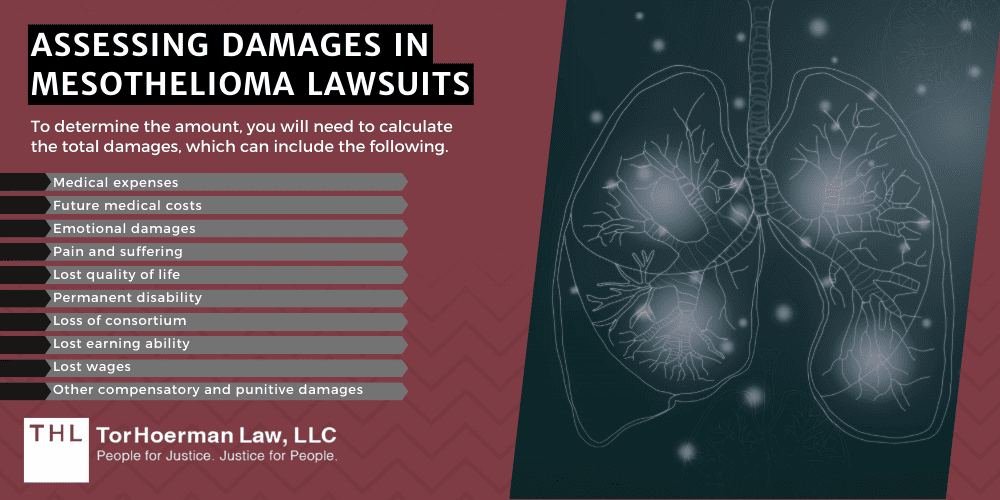

According to the National Cancer Institute, malignant mesothelioma is an aggressive cancer of the mesothelium, which is the thin tissue surrounding internal organs, such as the lungs, chest wall, heart, and abdomen.
More commonly known as mesothelioma, this cancer can take decades to develop after heavy or prolonged asbestos exposure.
There are four types of mesothelioma depending on the location of the cancer:
- Pleural mesothelioma: This is the most common type of mesothelioma that affects the tissues lining the lungs.
- Peritoneal mesothelioma: The cancer cells affect the tissues around other organs in the abdomen. It’s the second most common form of mesothelioma.
- Pericardial mesothelioma: This is a rare type of mesothelioma that affects the tissues surrounding the heart.
- Testicular mesothelioma: This is another rare form of mesothelioma affecting the tissues or membranes covering the testicles.
Depending on the type, mesothelioma victims can suffer from difficulty breathing, chest pain, nausea, abdominal pain, coughing up blood, unusual lumps under the skin, sudden weight loss, and other symptoms.
Here are some critical facts and information about this asbestos-related disease that you should know:
- An estimated 3,000 American people receive a mesothelioma diagnosis every year.
- In 2020, the number of people diagnosed with mesothelioma worldwide was 30,870.
- Worldwide, approximately 26,278 people died from mesothelioma in 2020.
- In the United States, mesothelioma is more frequent in men and more common in White and Hispanic people.
- The average age of diagnosis for mesothelioma patients is 72.
- The symptoms of this cancer do not manifest until 20 to 60 years after asbestos exposure, usually after the growth and spread of tumors.
- Mesothelioma patients have a life expectancy of 12 to 22 months on average.
This alarming data further confirms the staggering, lethal effects of asbestos exposure, whether direct or indirect.