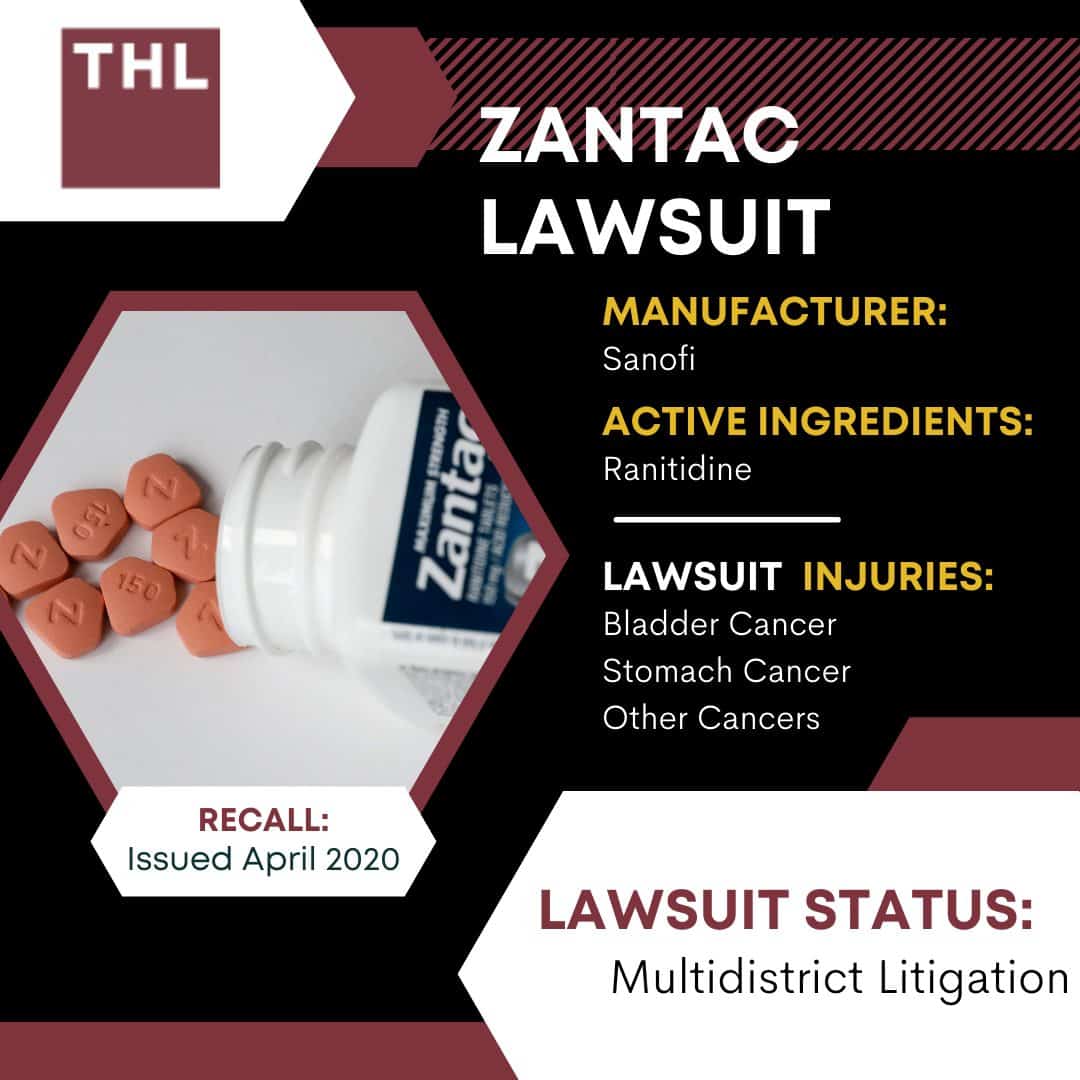
Zantac (ranitidine) has been linked to cancer, leading to numerous lawsuits against its manufacturers. The FDA has recalled the drug due to the presence of a carcinogenic impurity, N-Nitrosodimethylamine (NDMA).
Plaintiffs claim that the manufacturers were aware of the risks but failed to warn the public. As a result, many individuals have filed lawsuits seeking compensation for their injuries.
The Zantac lawsuit alleges that the drug's design is inherently defective and that the manufacturers failed to conduct adequate safety testing.
No Longer Accepting Claims
Zantac Lawsuit Facts
TorHoerman Law is no longer accepting claims for the Zantac Lawsuit.
Intake Closed
Most Recent Updates
An appeal is being considered in the Zantac MDL, but there's a general pessimism about its potential success.
Currently, attorneys are not taking on new clients for the Zantac litigation.
Our firm is available for any questions regarding the Zantac Lawsuit and will provide updates as they come.
Key Takeaways
Zantac (ranitidine) has been linked to cancer, leading to numerous lawsuits against its manufacturers. The FDA has recalled the drug due to the presence of a carcinogenic impurity, N-Nitrosodimethylamine (NDMA).
Plaintiffs claim that the manufacturers were aware of the risks but failed to warn the public. As a result, many individuals have filed lawsuits seeking compensation for their injuries.
The Zantac lawsuit alleges that the drug's design is inherently defective and that the manufacturers failed to conduct adequate safety testing.
TorHoerman Law - The Premier Zantac Lawsuit Attorneys
Zantac Lawsuit Qualifications
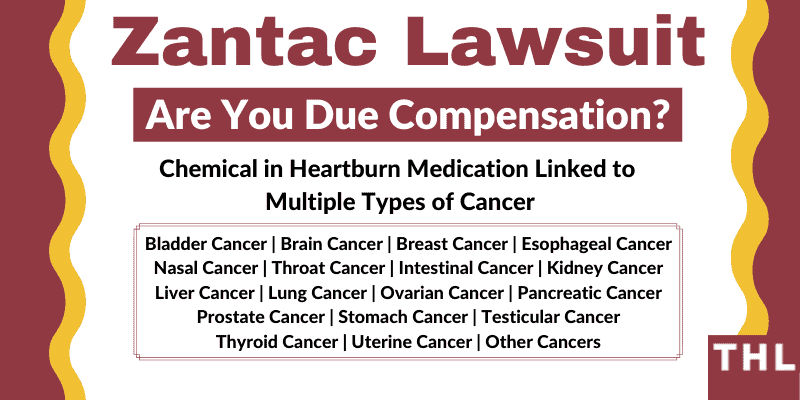
Have you or a loved one taken Zantac and subsequently suffered bladder cancer, pancreatic cancer (pancreatitis), stomach cancer, brain cancer, or other cancers and injuries?
Contact TorHoerman Law today to discuss your legal options with an experienced Zantac lawyer, free of charge and no obligation required.
We are NOT accepting new clients at this time, but if you have any questions about the Zantac Lawsuit, don’t hesitate to reach out.
If you do not qualify for a Zantac cancer lawsuit, you may still qualify for a Zantac class-action lawsuit if you took Zantac and were unaware of the cancer risks associated with the drug.
The Zantac lawsuit is a legal claim filed against the manufacturers of Ranitidine and Zantac for their alleged link to cancer.
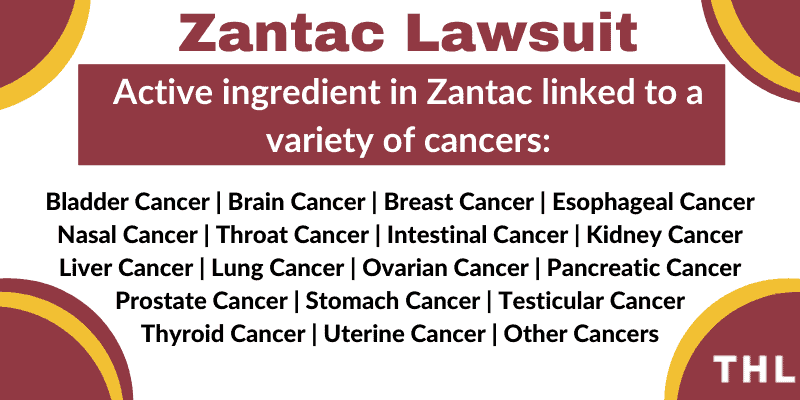
NDMA, a known carcinogen, may be the cause of stomach, liver, and bladder cancer after taking Zantac or Ranitidine.
The judge presiding over the Zantac MDL has dismissed all claims in the Southern District of Florida.
Despite this setback, lawyers are still strategizing legal action against the producers of the drug, and some lawsuits are continuing to be filed in state courts around the country.
We are not accepting new clients at this time, but if you have any questions about the Zantac Lawsuit, don’t hesitate to reach out.
Research revealed that the primary active ingredient in Zantac and similar generic products, ranitidine, contains high levels of NDMA, a possible chemical carcinogen.
NDMA, scientifically known as N-nitrosodimethylamine, is an organic compound found at low levels in:
Different foods
Tobacco
Shampoos
Cleaning agents
And other products
Scientists have found high levels of NDMA, according to FDA standards, in multiple pharmaceuticals which have consistently exposed consumers to the chemical.
Manufacturers failed to warn consumers that Zantac contained NDMA, putting consumers at risk of cancer.
FDA Warning – Ranitidine Products Containing NDMA Poses Cancer Risk
The U.S. Food and Drug Administration (FDA) reported an advisory on September 13, 2019, after discovering the carcinogenic contaminant NDMA in ranitidine, the active ingredient in Zantac, at levels between 3,000 to 26,000 times higher than FDA approved standards.
These high levels of NDMA put users at a higher risk of cancer.
The FDA acceptable threshold of daily NDMA intake is set at below 100 nanograms.
The plaintiffs cited a study that claims that a 150-milligram pill of Zantac contains over 2.5 million nanograms of NDMA.
Over-the-counter Zantac is typically sold in 150-milligram tablets – the recommended dosage to treat peptic ulcer disease for adults is 300 milligrams a night for four to eight weeks.
Plaintiffs allege that Sanofi and Boehringer Ingleham knew the risks of NDMA formation in ranitidine and did not alert the public through the drug’s label or through any other means.
Several published studies have shown that generic ranitidine users have a 400-fold increase of NDMA concentration in their urine.
The suit attests that had consumers known the risks, they would not have purchased or consumed ranitidine.
9 RANITIDINE PRODUCTS CONTAINING NDMA
These are the nine (9) most common Zantac products and generic Zantac products containing ranitidine:
After determining the high levels of NDMA to be dangerous to consumers, the FDA called for patients to stop taking ranitidine.
Further, the FDA has requested that the manufacturers recall the product and discontinue production of both Zantac and generic Zantac drugs.
Prior to this decision, some companies such as CVS, Walmart, and Sandoz have chosen to voluntarily suspend the sales of Zantac while waiting for results from ongoing tests and research.
Zantac Litigation - Zantac Cancer Lawsuits vs. Zantac Class-Action Lawsuit
Both class-action lawsuits and civil lawsuits have been filed against the manufacturers of Zantac.
These are separate types of lawsuits.
It is important that you recognize which legal action is most appropriate for you before pursuing a Zantac lawsuit.
For assistance in determining your best legal action, contact TorHoerman Law for a free, no-obligation case consultation.
Zantac Class-Action Lawsuit
The makers of Zantac, a popular over-the-counter and prescription heartburn medication, are facing a Zantac class-action lawsuit claiming the drug contains unsafe levels of the cancer-causing substance N-Nitrosodimethylamine (NDMA).
The FDA reported an advisory on September 13, 2019, after discovering the carcinogenic contaminant NDMA in ranitidine, the active ingredient in Zantac, at levels between 3,000 to 26,000 times higher than FDA approved standards.
NDMA is a potential hepatotoxic, and exposure has been linked to numerous complications and symptoms including, but not limited to:
Bladder cancer
Stomach cancer
Liver fibrosis and scarring
Tumors in the liver, kidneys, and lungs
Other symptoms of NDMA exposure include:
Headaches
Fever
Nausea
Jaundice
Vomiting
Abdominal cramps
Enlarged living
Dizziness
Reduced function of the liver, kidneys, and lungs
Plaintiffs accuse drugmakers Sanofi and Boehringer Ingelheim of manufacturing and marketing a medication they knew, or should have known, to be contaminated with the cancer-causing chemical without disclosing the risks to consumers or the government.
The CAL has been filed against the manufacturers for concealing adverse health risks associated with Zantac that led plaintiffs to suffer serious injury and death.
NOTICE: TorHoerman Law is not involved in the Zantac CAL.
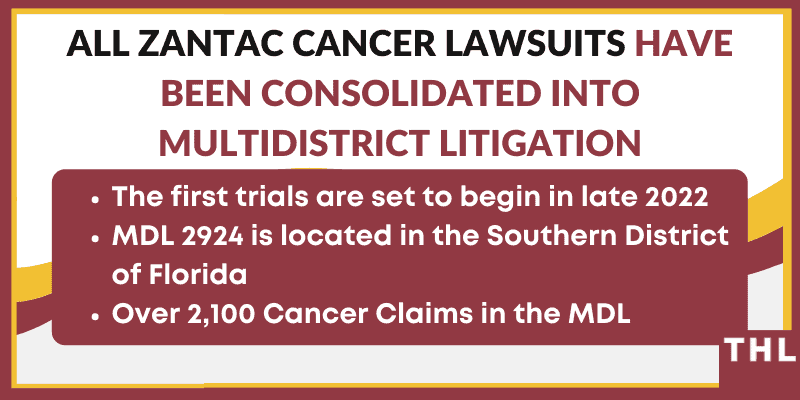
Zantac Cancer Lawsuits [UPDATE: Zantac Cancer Lawsuits Have Been Consolidated Into Zantac MDL]
The makers of Zantac, a popular heartburn medication, are facing lawsuits claiming the drug contains unsafe levels of the cancer-causing substance N-Nitrosodimethylamine (NDMA) which caused plaintiffs to develop cancer.
Plaintiffs accuse drugmakers Sanofi and Boehringer Ingelheim of manufacturing and marketing a medication they knew, or should have known, to be contaminated with the cancer-causing chemical without disclosing the risks to consumers or the government.
The lawsuit alleges that the manufacturer’s failure to warn directly lead to plaintiffs developing a number of life-threatening types of cancer after taking Zantac.
A Zantac MDL has been filed on behalf of individuals who have been diagnosed with cancer as a result of taking Zantac.
The judge in the Zantac MDL dismissed all claims consolidated in the Southern District of Florida in December 2022. Lawyers are appealing this decision.
Notice: TorHoerman Law is involved in the Zantac Cancer Lawsuit.
Which Should You File: Zantac Cancer Lawsuit or Zantac Class-Action Lawsuit?
Which type of Zantac Lawsuit should you file?
Zantac Class-Action Lawsuit
If you took Zantac consistently and did not develop cancer, but were unaware of the cancer risks associated with Zantac, you may be eligible to participate in the Zantac CAL.
This lawsuit will likely compensate a percentage of the money you paid over time for Zantac products.
The award will be split evenly amongst class members.
Zantac Cancer Lawsuit
If you took Zantac and were subsequently diagnosed with cancer, you may qualify for a lawsuit.
The Zantac Lawsuit will compensate a percentage of the total damages that you incurred as a result of your cancer diagnosis, including but not limited to:
We are not accepting new clients at this time, but if you have any questions about the Zantac Lawsuit, don’t hesitate to reach out.
A lawsuit has been filed claiming that Zantac containing NDMA caused plaintiffs to develop cancer, which was not a health risk listed on the Zantac warning label.
Before filing a Zantac lawsuit, you should familiarize yourself with the steps of the civil litigation process so that you are aware of the process of a Zantac lawsuit.
Here are five (5) steps you should take when filing a Zantac Lawsuit:
Doing everything in your power to minimize the costs and losses associated with injuries
Mitigation is extremely important in the process of building a strong and honest case with facts.
2. Hiring a Zantac Lawsuit Lawyer
The first step after mitigation is hiring a personal injury attorney who has experience handling bad drug lawsuits, such as the Zantac Lawsuit.
In the unfortunate event that you are representing a loved one who has died as a result of injuries from Zantac, you may need to consult with a wrongful death attorney who has knowledge of Zantac lawsuits.
Your experienced Zantac Lawsuit lawyer will work to:
3. Understand the Zantac Lawsuit Statute of Limitation
The statute of limitations bar the amount of time that an injured party has to take legal action following an injury or accident.
The Zantac Lawsuit Statute of Limitations differ by:
Type of Zantac litigation
The state in which the case is filed
The type of injury
Generally, a Zantac lawsuit plaintiff has 2 years to file a lawsuit following his or her cancer diagnosis.
However, this is not always the case.
It is best to consult with an attorney as soon as possible to determine your Zantac injury statute of limitations.
4. Gather Evidence
Evidence will help to prove the total cost of losses that you endured as a result of your injury, also known as your damages.
Your attorney will assist you in gathering evidence, but it is helpful if you start gathering evidence yourself as soon as you find out about your injury.
Common types of evidence in Zantac lawsuits include:
Receipts of purchase of Zantac
Medical records & bills
Personal accounts of injury, such as journals
Photos & videos of injury progression
Proof of time off from work
Proof of other costs associated with injury
5. Assess Damages
Damages are the total losses, both non-economic and economic, that an injured party incurs as a result of their injury.
TorHoerman Law - Experienced Zantac Lawsuit Lawyers
At TorHoerman Law, our team of Zantac lawyers is available any time to discuss the Zantac Lawsuits.
We offer free no-obligation case consultations for all potential clients.
Our services are based on contingency fees, so we never charge our clients a dime until they have received compensation first.
With over 100 years in combined litigation experiences and client awards exceeding $4 billion in verdicts & negotiated settlements for litigations we have been involved in – we let our experience and results speak for themselves.
Contact TorHoerman Law to talk to experienced Zantac lawyers and learn about your legal options.
We are not accepting new clients at this time, but if you have any questions about the Zantac Lawsuit, don’t hesitate to reach out.
Zantac is the trade name for Ranitidine, a popular heartburn medication that reduces the body’s production of stomach acid.
The medication is commonly used to treat and prevent ulcers of the stomach and intestines as well as:
Gastroesophageal reflux disease (GERD)
Zollinger-Ellison syndrome
Peptic ulcer disease
Acid indigestion
Heartburn
Zantac is available both over-the-counter and by prescription.
Ranitidine belongs to the h2 (histamine-2) blockers class of drugs.
Zantac OTC is most commonly used to relieve and prevent heartburn, while the prescription-strength drug is used to prevent more serious ulcers and conditions.
The drug came into commercial use in 1981 and is now the 50th most prescribed medication in the United States.
If you or a loved one previously used Zantac or similar products and were subsequently diagnosed with cancer, you may qualify to file a Zantac lawsuit.
Contact TorHoerman Law for a free, no-obligation case consultation with a Zantac cancer lawyer to discuss your legal options today.
Want to find out if you qualify for compensation right away?
Use our chatbot below to receive a free, instant online case evaluation right now!
Since the FDA issued a recall of all prescription and over-the-counter versions of Zantac in April 2020, the original drug is no longer available for purchase in the United States.
The U.S. Food and Drug Administration (FDA) issued a recall of all prescription and over-the-counter versions of Zantac in April 2020 after it was revealed that the popular heartburn medication contained a cancer-causing chemical.
The main injury claimed in Zantac and ranitidine lawsuits is cancer.
The FDA warned that the high levels of NDMA in Zantac posed a “potential cancer risk” to users.
The expected Zantac payout from a Zantac lawsuit would include the total economic damages that you have already incurred, any expected future economic damages, and non-economic damages such as pain & suffering.
Based on current Zantac payout amounts, plaintiffs can expect to receive between $20,000 to $400,000 in Zantac cancer claims and compensation.
However, this range of compensation is not a guarantee, nor is any compensation guaranteed.
If you’d like to learn if you qualify to be a plaintiff in the Zantac Lawsuits, please contact us today!
Tor Hoerman has represented injured individuals for more than 30 years, with experience spanning individual personal injury cases and nationwide mass tort litigation. His work includes car accidents, catastrophic injuries, product liability claims, and other serious injury cases. Tor has served in court-appointed leadership roles in national litigation and tried cases involving major corporate defendants.
Legally Reviewed
TorHoerman Law’s legal content is researched and written by our editorial team and attorneys for legal accuracy, clarity, and relevance. We rely on statutes, court records, government publications, medical research, and other authoritative sources when applicable. This page provides general legal information and does not constitute legal advice.
Fact-Checked
TorHoerman Law reviews its legal content for factual accuracy, current information, and relevant legal context before publication and as material developments occur. This article is provided for general informational purposes and does not constitute legal advice. For guidance about a specific case, contact TorHoerman Law.
TorHoerman Law represents people whose lives have been disrupted by serious injuries, unsafe products, and negligence. Our attorneys handle individual personal injury cases as well as national mass tort lawsuits involving major corporations.
Founded in 2009, our legal team brings more than 100 years of combined experience handling serious injury and complex civil litigation.
Do you believe you’re entitled to compensation?
Use our Instant Case Evaluator to find out in as little as 60 seconds!
In this case, we obtained a verdict of $495 Million for our client’s child who was diagnosed with Necrotizing Enterocolitis after consuming baby formula manufactured by Abbott Laboratories.