
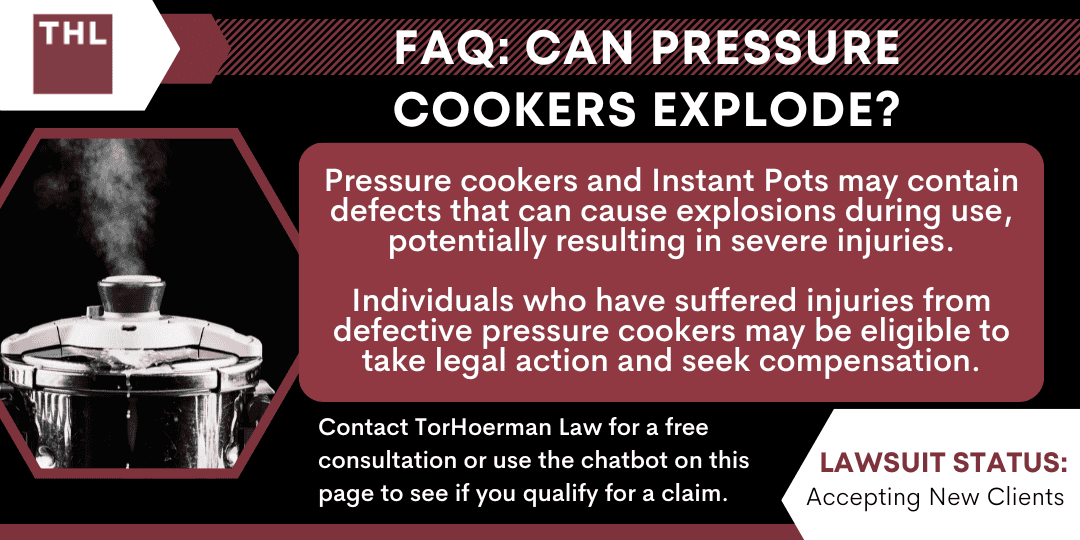
Pressure cooker explosions occur when the appliance fails to control internal pressure, allowing hot steam, boiling liquid, or food contents to escape with sudden force.
Some incidents involve improper use, blocked vents, or attempts to open the lid before pressure has fully released.

Others may involve manufacturing defects, defective lid-locking systems, faulty gaskets, or pressure-release mechanisms that fail during ordinary use.
Determining why the pressure cooker failed is central to any product liability claim because the cause affects whether the incident involved user error, a product defect, inadequate warnings, or a combination of factors.
Common Pressure Cooker Defects that Lead to Explosions
Certain pressure cooker defects can lead to explosions, often stemming from failures in the appliance’s safety features and major parts.
Defects can compromise the pressure cooker’s ability to contain and regulate internal pressure, posing a significant risk to users.
From faulty gaskets that fail to seal properly to malfunctioning digital indicators that provide inaccurate information, each defect has the potential to turn a convenient kitchen appliance into a dangerous hazard.
Common dangers include overfilling the pot, blocked steam pressure vents, and forcing the lid open before all pressure is safely released.

Defects found in dangerous pressure cookers may include:
- Faulty Gasket: A damaged or improperly designed rubber gasket can fail to create an airtight seal, allowing steam to escape prematurely or unevenly, leading to an explosion.
- Defective Pressure Release Valve: This valve controls the release of steam to maintain safe pressure levels. If defective, it may not open as needed, causing a dangerous buildup of pressure.
- Defects within the Pressure Cooker’s Lid: Flaws in the lid’s design or locking mechanism can prevent it from securing correctly, potentially allowing the lid to be forced off by high pressure.
- Faulty Wiring: In electric pressure cookers, faulty wiring can lead to overheating and malfunction of pressure controls, increasing the risk of an explosion.
- Digital Indication Malfunction: Incorrect readings from a malfunctioning digital display can mislead users into thinking it’s safe to open the cooker, resulting in exposure to dangerously high pressure and steam.
- Use of Substandard Materials: Materials that cannot withstand the high pressures and temperatures of normal operation may degrade or fail, leading to ruptures or breaks in the cooker’s structure.
- Inadequate Safety Locks: Safety locks that do not engage properly can allow the lid to be opened while under pressure, releasing hot contents explosively.
- Blocked Steam Release Valve or Vent: Meant to expel excess steam, steam vents or release valves can get clogged with food particles or residue. This can prevent the proper release of excess pressure, creating a risk of explosion.
- Improper Assembly Instructions: Unclear or incorrect assembly instructions may lead to user error in securing components, such as the lid or gasket, increasing the risk of malfunction.
- Flawed Pressure Gauge or Sensor Design: Sensors that fail to accurately detect the internal pressure can prevent the activation of safety mechanisms, such as the pressure release valve.
- Overheating Protection Failure: Lack of or defective overheating protection mechanisms can allow the cooker to reach dangerously high temperatures, contributing to pressure buildup beyond safe limits.
It’s important to note that not all pressure cookers are dangerous pressure cookers.
Many modern pressure cookers are equipped with high-tech safety features and mechanisms that prevent misuse and explosions.
Regularly checking the sealing gasket for cracks or wear is important for safety.
Always monitor the heat level and use the recommended cooking times to prevent overheating, which can lead to pressure cooker explosions.
Many pressure cooker explosions still occur every year and these incidents often involve brands and products that are found in stores across the country.


