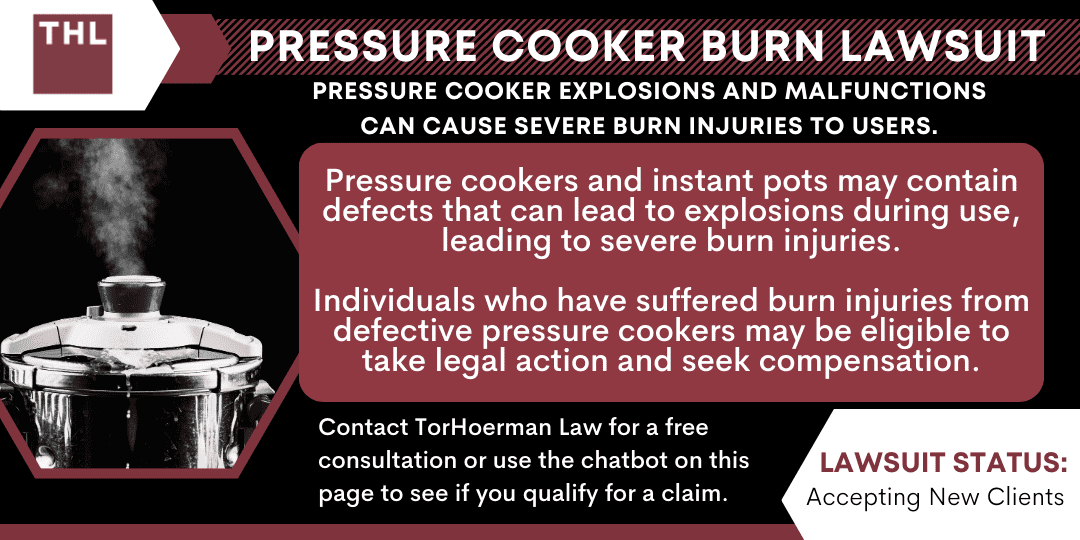
Burns are the most common injury caused by a defective pressure cooker.
Pressure cookers are made to withstand temperatures beyond the boiling point, often reaching up to 266 °F (130 °C).
Because of this scalding hot temperature, a pressure cooker explosion can cause severe burn injuries.
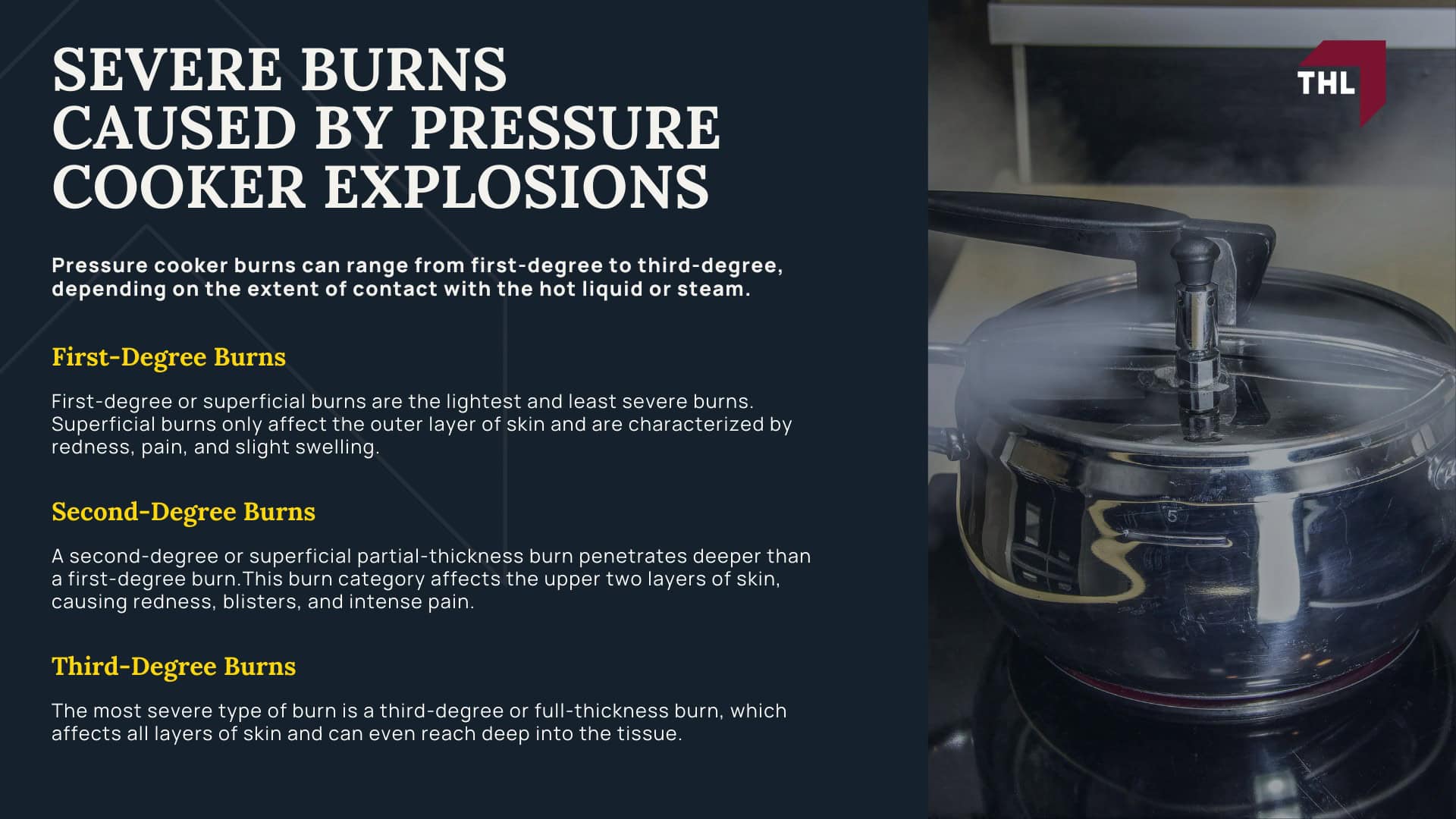
Pressure cooker burns can range from first-degree to third-degree, depending on the extent of contact with the hot liquid or steam.
If you or a loved one have suffered severe burn injuries from a faulty or defective pressure cooker, you may be eligible to file a lawsuit.
Contact our law firm today for a free consultation.
Use the chatbot on this page to find out if you qualify for a pressure cooker lawsuit.
First-Degree Burns
First-degree or superficial burns are the lightest and least severe burns.
Superficial burns only affect the outer layer of skin and are characterized by redness, pain, and slight swelling.
First-degree burns usually heal within a week or two without any scarring.
Superficial burns are often sustained from short exposure to hot liquids or steam, which a pressure cooker explosion can cause.
A first-degree burn doesn’t need an intensive treatment plan and can be treated at home with basic first aid.
Applying a cool compress or running the burn under cool water can help ease the pain and promote healing.
Second-Degree Burns
A second-degree or superficial partial-thickness burn penetrates deeper than a first-degree burn.
This burn category affects the upper two layers of skin, causing redness, blisters, and intense pain.
Partial-thickness burns can leave long-term or permanent scars and lead to infection if not treated properly.
Pressure cooker explosions often cause partial-thickness burns due to prolonged exposure to high heat.
These types of burns require prompt medical attention, as they may need specialized treatment such as a burn cream or antibiotics to prevent infection.
The average healing time of a partial-thickness burn is around two to three weeks.
Third-Degree Burns
The most severe type of burn is a third-degree or full-thickness burn, which affects all layers of skin and can even reach deep into the tissue.
Unlike superficial and partial-thickness burns, full-thickness burns are characterized by dry, white, or blackened skin with a leathery texture.
These burns often require surgery and can result in permanent scarring.
Violent pressure cooker explosions can cause third-degree burns if an individual comes into direct contact with the hot liquid or steam.
These burns are excruciating and can lead to long-term medical complications, such as nerve damage or loss of mobility in the affected area.
Several health institutes and agencies include a fourth category of burns called fourth-degree burns, which includes burns that penetrate beyond the tissues and can affect muscles, tendons, and bones.
These burns could result in amputation or life-threatening infections and require immediate medical attention.