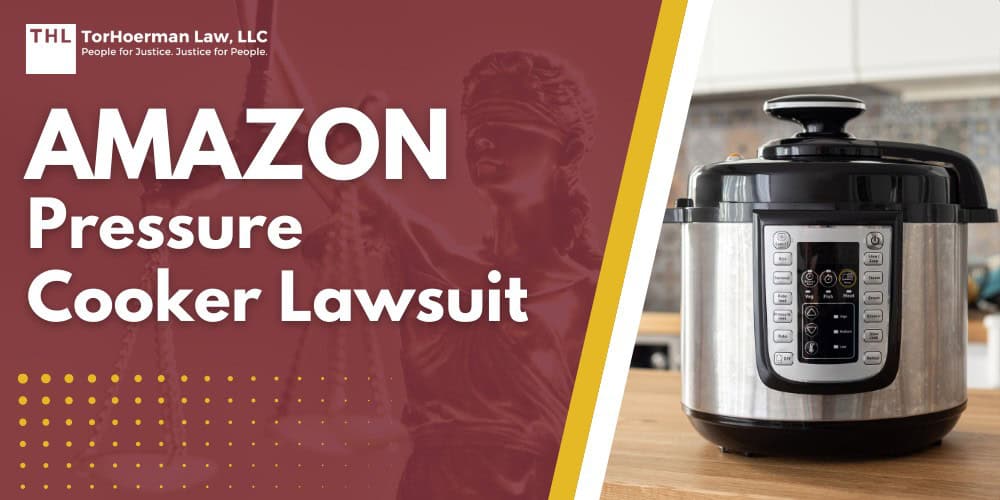
Amazon pressure cooker cases typically involve a pressure cooker made by a separate manufacturer, purchased through Amazon, and later alleged to have caused harm during pressure cooking.
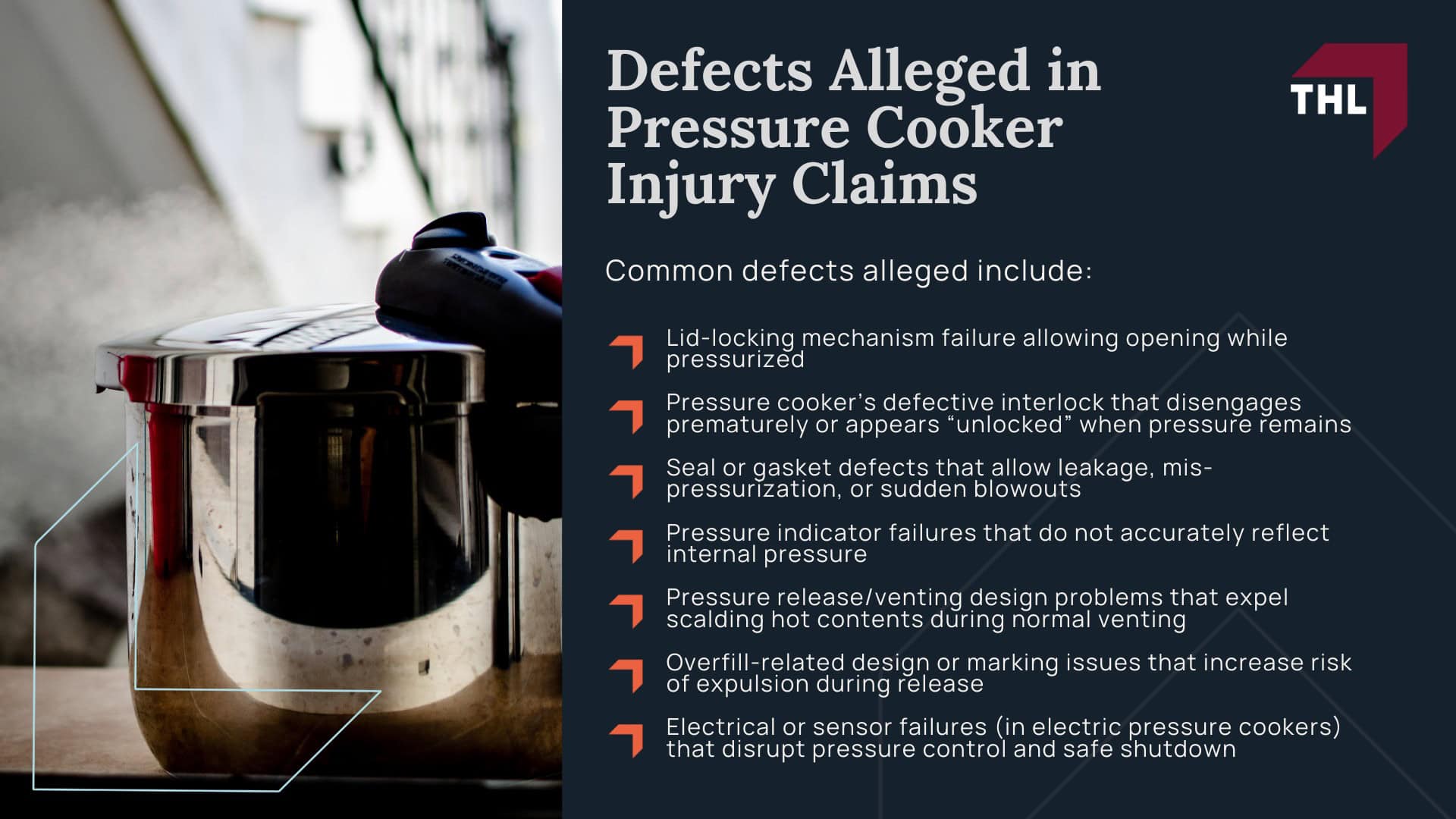
When an amazon pressure cooker is involved in an injury report (such as when a consumer says an amazon pressure cooker exploded), the legal focus is usually on whether a defective pressure cooker had design or safety failures that allowed hot contents or steam to escape unexpectedly.
Many pressure cooker lawsuits center on the same core hazard: a pressure cooker explosion or sudden release of pressurized boiling liquid when users believed the unit was safe to open or vent.
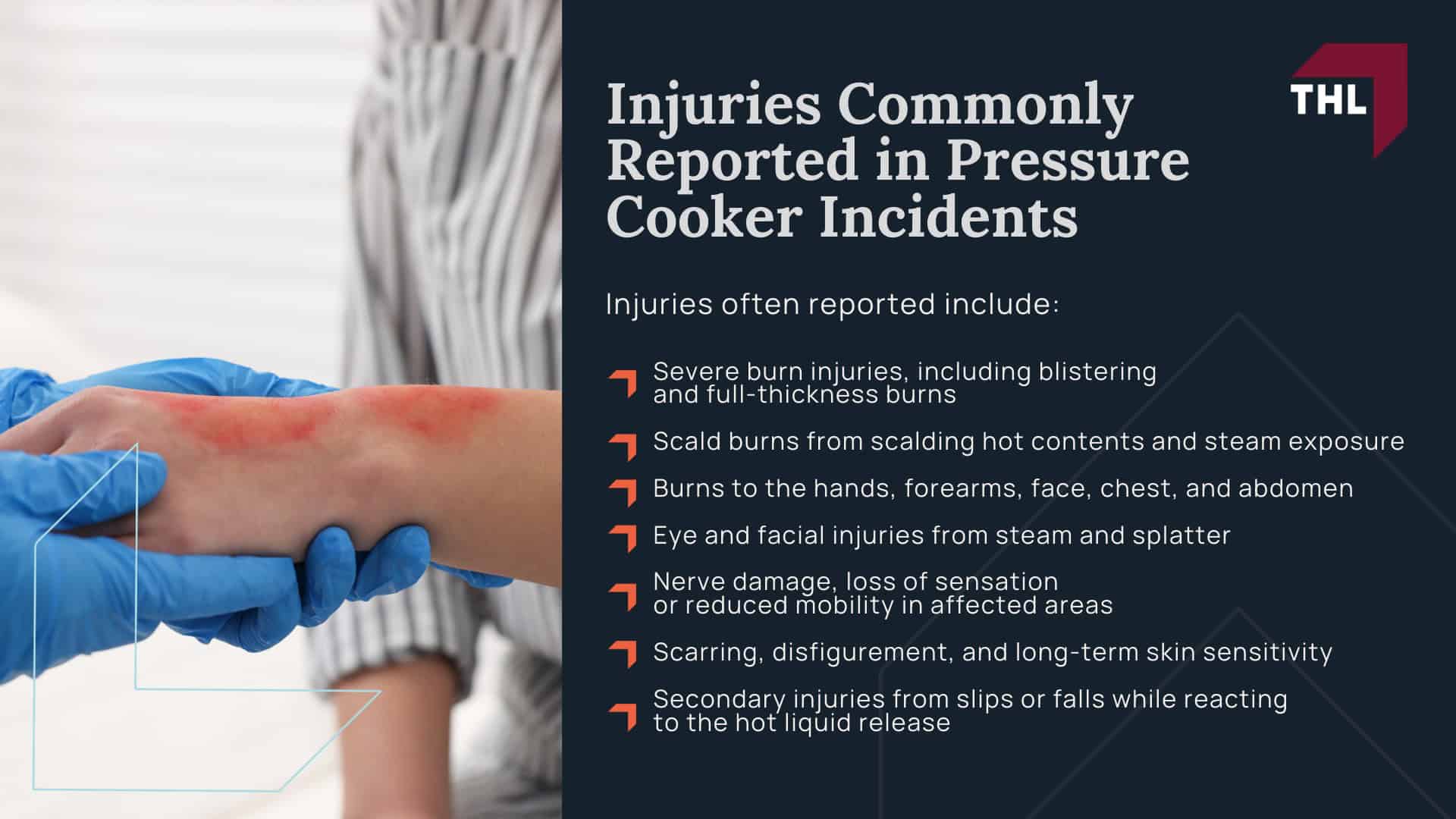
These incidents can cause serious burn injuries, including burn injuries to the hands, arms, face, and torso, because the event happens quickly and at close range.
Amazon comes up in these discussions because it is a major distribution channel for popular cookers, including multi-cookers often compared to an instant pot pressure cooker or instant pressure cooker style device.
This page is framed around three practical questions:
- What defect patterns show up in pressure cooker injury lawsuits
- How recalls help document known hazard mechanisms and failed pressure cooker safety features
- When Amazon may be named as a defendant versus when claims focus primarily on the manufacturer
A pressure cooker lawyer can help assess who is potentially responsible based on the model involved, how it was sold, and what the evidence shows about the lid system, seal, and pressure valve behavior at the time of the incident.
Pressure Cookers Sold on Amazon: How the Sales Channel Works
Amazon is often connected to pressure cooker injuries not because it manufactured the product, but because many consumers bought their cooker through Amazon’s storefront.
In an injury case, how the cooker was sold can influence which parties are investigated and which legal theories may apply, especially in defective pressure cooker lawsuits.
There are two common sales paths include:
- Sold directly by Amazon (Amazon as retailer of record): Amazon is listed as the seller, and the purchase records often reflect Amazon’s retail role.
- Sold by a third-party seller using Amazon’s platform: A separate business is the seller, while Amazon provides the marketplace listing and checkout infrastructure.
That distinction matters because product-liability arguments often examine who “placed the product into the stream of commerce,” who controlled the transaction, and who had the ability to warn or stop sales once safety issues became known.
With third-party sellers, some orders are shipped through Fulfillment by Amazon (FBA).
In those situations, Amazon may store inventory, package items, ship the product, and process payments: facts that plaintiffs sometimes point to when arguing Amazon functioned more like a retailer or distributor than a passive platform.
Whether those facts lead to liability depends heavily on state law and case-specific details, but they can become part of the discussion in an amazon pressure cooker lawsuit.
In many cases, product listings can become evidence.
Listings may include:
- Statements about pressure cooker safety features
- Instructions about opening, venting, and pressure valve use
- Warnings (or missing warnings) about overfilling, lid locking, and safe release steps
- Claims comparing the product to an instant pot pressure cooker or “instant pressure cooker” convenience
If a malfunctioning pressure cooker allegedly caused a pressure cooker explosion, the listing language, manuals, and packaging can matter, especially if they shaped how consumers believed the cooker should operate or when it was safe to open.
Pressure Cooker Recalls Connected to Products Sold on Amazon
Recalls are useful in explaining documented hazard patterns, but they do not automatically prove fault in every individual injury.
Recalls can help show that certain failure modes (like lids opening while pressurized or misleading fill guidance) have triggered major safety actions involving pressure cookers sold through Amazon.
Examples of recalled pressure cookers connected to products sold on Amazon include:
- SharkNinja Foodi multi-function pressure cookers (recall tied to a burn hazard allegation involving the ability to open the lid while pressurized in certain models/conditions)
- Insignia multi-function pressure cookers (recall tied to volume/marking-related burn hazard concerns in certain units)
- Sensio pressure cookers (including brands like Bella/Crux/Cooks; recall tied to allegations that the lid can unlock during use and allow hot contents to escape)
Can Amazon Be Named in a Lawsuit for a Defective Pressure Cooker Sold on Its Website?
Potentially.
Amazon may be named in a pressure cooker lawsuit, but whether claims against Amazon survive depends on state law and the specific facts of the sale.
Product liability law often looks at everyone involved in bringing a product to market, which can include manufacturers, distributors, retailers, and others in the chain of distribution.
Most pressure cooker lawsuits primarily focus on the manufacturer because the central allegation is usually a design or safety defect, such as a lid-lock mechanism, sealing system, indicator, or pressure valve behavior that allegedly made the product unreasonably dangerous.
In other words, the “why” of the pressure cooker explosion is often traced to product design, testing, warnings, and quality control—areas typically tied to the manufacturer.