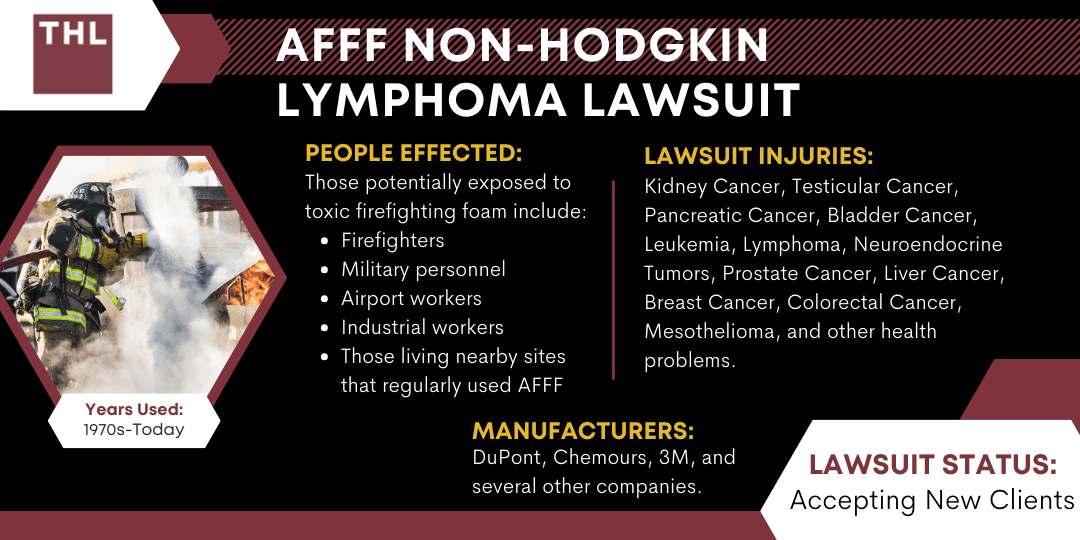
The PFAS chemicals in AFFF firefighting foam have been linked to various illnesses ranging from prostate cancer to other life-threatening potential health risks.
Among the illnesses associated with exposure to PFAS chemicals in AFFF foam is Non-Hodgkin Lymphoma.
According to an epidemiological report from the Centers for Disease Control and Prevention, Non-Hodgkin Lymphoma is one of three cancers linked to prolonged perfluorooctanoic acid (PFOA).
The other two illnesses in the report included testicular cancer and kidney cancer.
PFOA is one of several per- and poly-fluoroalkyl substances (PFAS).
PFAS chemicals are synthetic and are one of the active ingredients found in AFFF firefighting foam.
The American Cancer Society has identified PFOA to be a known carcinogen.
Prolonged exposure to PFAS chemicals like PFOA places a person at an increased risk of developing various cancers like Non-Hodgkin Lymphoma, kidney, and testicular cancer.
PFAS Chemicals in Firefighting Foam and Effects on Human Health
Chemical manufacturers and the U.S. Navy — who first approved AFFF firefighting foam for use — knew about its toxic effects for decades.
Urged by the Environmental Protection Agency, the U.S. Department of Defense finally submitted an official warning stating that the dangerous chemicals in AFFF present an increased risk for serious health problems and environmental contamination.
In several research studies, PFAS have been linked to an increased risk for cancer and other serious health problems.
With the number of chemicals used in firefighting foam, the health impacts of them are widespread.
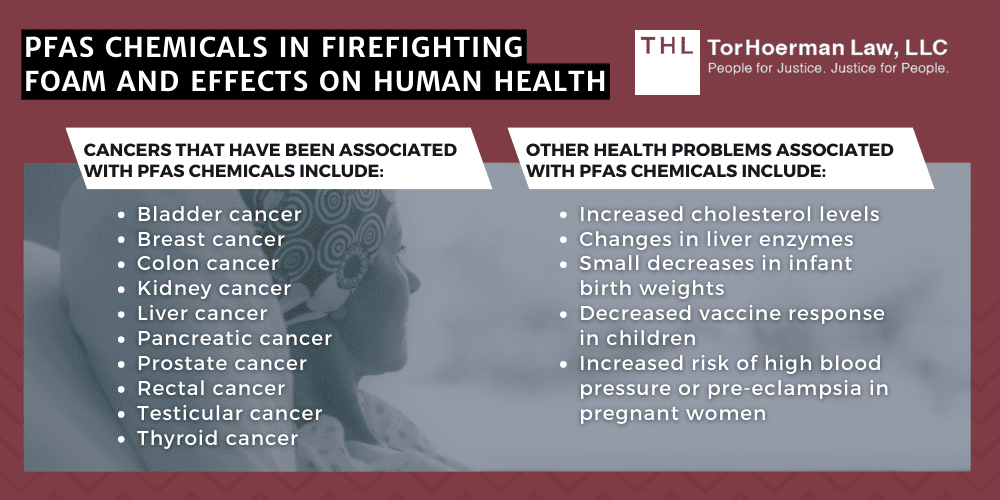
Cancers that have been associated with PFAS chemicals include:
- Bladder cancer
- Breast cancer
- Colon cancer
- Kidney cancer
- Liver cancer
- Pancreatic cancer
- Prostate cancer
- Rectal cancer
- Testicular cancer
- Thyroid cancer
Other health problems associated with PFAS chemicals include:
- Increased cholesterol levels
- Changes in liver enzymes
- Small decreases in infant birth weights
- Decreased vaccine response in children
- Increased risk of high blood pressure or pre-eclampsia in pregnant women
Studies on the links between AFFF exposure and health problems include the following:
- A study published in the Journal of the American Medical Association found a statistically significant association between PFOA exposure and an increased risk of kidney cancer, testicular cancer, and ulcerative colitis.
- Another study published in the International Journal of Cancer found a positive association between PFOS exposure and breast cancer.
- The International Agency for Research on Cancer (IARC) has classified PFOA as a possible carcinogen, and PFOS as possibly carcinogenic to humans.
- The U.S. Environmental Protection Agency (EPA) has issued a health advisory for PFOA and PFOS, stating that long-term exposure to these chemicals above certain levels could be harmful to human health.
- Researchers at the National Research Centre for Environmental Toxicology (Australia) found that firefighters were more likely to have fluorinated surfactants in their bloodstream.
- Researchers at the University of California, Berkeley studied the carcinogenic effects of PFAS on women firefighters and office workers, finding that firefighters who reported using firefighting foam in the past year had higher levels of several PFAS in their bodies compared to those who did not.