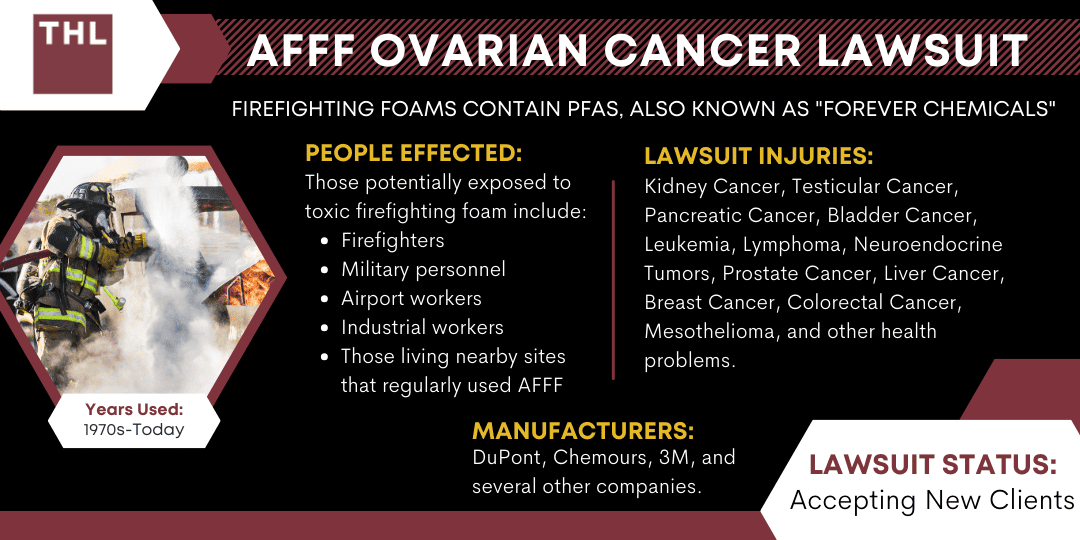
AFFF exposure has been linked to various types of cancer, including ovarian cancer.
Researchers have published studies linking exposure to PFAS chemicals and the increased risk of ovarian cancer.
One study published in Environmental Health Perspectives found an increased risk of developing lymphoma, prostate cancer, ovarian cancer, and other serious health issues in people exposed to PFAS chemicals in water.
PFAS, while an inactive compound, can accumulate in the body.
PFAS chemicals replace fatty acids and prevent organ systems from working properly.
Some scientists even theorize that PFAS can confuse cell receptors, precipitating the uncontrolled growth of malignant cells.

Another recent study, published in the September 2023 edition of the Journal of Exposure Science & Environmental Epidemiology found that exposure to PFAS chemicals and other endocrine-disrupting chemicals may play a role in the development of certain cancers, including ovarian cancer.
If you or a loved one were exposed to AFFF firefighting foam and subsequently developed ovarian cancer, you may be eligible to file an AFFF Lawsuit.
Contact TorHoerman Law’s AFFF lawyers for a free consultation.
You can also use the chatbot on this page to find out if you qualify for the AFFF Lawsuit instantly.
PFAS Chemicals in Firefighting Foam and Effects on Human Health
Chemical manufacturers and the U.S. Navy, who first approved AFFF firefighting foam for use, knew about its toxic effects for decades.
Urged by the Environmental Protection Agency, the U.S. Department of Defense finally submitted an official warning stating that the dangerous chemicals in AFFF present an increased risk for serious health problems and environmental contamination.
In a number of research studies, PFAS have been linked to an increased risk for cancer and other serious health problems.
The health impacts of PFAS chemicals are widespread, and individuals exposed may be at an increased risk for several different health issues.
Studies on the links between AFFF exposure and health problems include the following:
- A study published in the Journal of the American Medical Association found a statistically significant association between PFOA exposure and an increased risk of kidney cancer, testicular cancer, and ulcerative colitis.
- Another study published in the International Journal of Cancer found a positive association between PFOS exposure and breast cancer.
- The International Agency for Research on Cancer (IARC) has classified PFOA as a possible carcinogen, and PFOS as possibly carcinogenic to humans.
- The U.S. Environmental Protection Agency (EPA) has issued a health advisory for PFOA and PFOS, stating that long-term exposure to these chemicals above certain levels could be harmful to human health.
- Researchers at National Research Centre for Environmental Toxicology (Australia) found that firefighters were more likely to have fluorinated surfactants in their bloodstream.
- Researchers at the University of California, Berkeley studied the carcinogenic effects of PFAS on female firefighters and office workers, finding that firefighters who reported using firefighting foam in the past year had higher levels of several PFAS in their body compared to those who did not.