
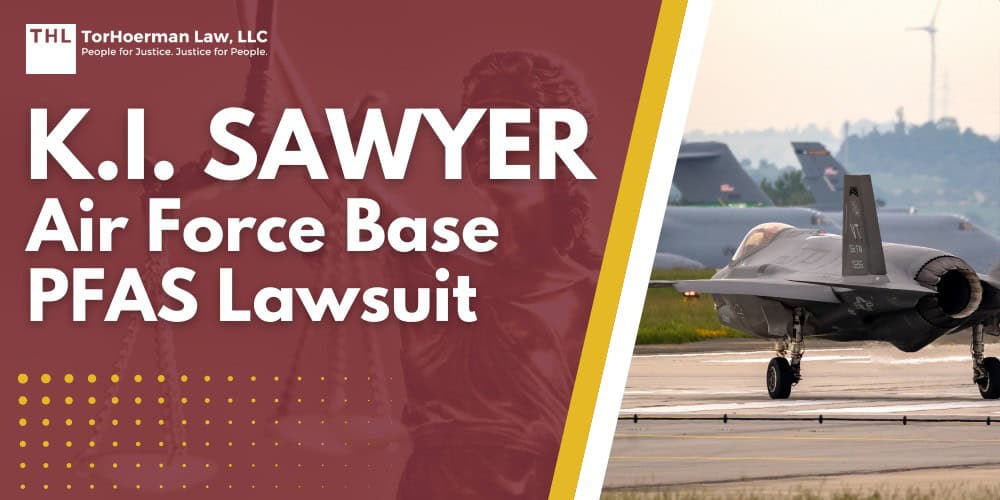
K.I. Sawyer Air Force Base in Michigan has been identified as a significant site of concern for PFAS contamination, with levels far exceeding safe limits set by the Environmental Protection Agency (EPA).
PFAS contamination primarily stems from the historical use of Aqueous Film Forming Foam (AFFF), a firefighting foam used extensively on military bases since the 1970s.
AFFF contains high concentrations of PFAS, which have leached into the soil and groundwater over decades of use during firefighting training exercises, emergency responses, and system maintenance.

These chemicals are highly persistent in the environment, earning the nickname “forever chemicals” due to their resistance to breaking down naturally.
At K.I. Sawyer AFB, PFAS have migrated through the soil and contaminated the base’s groundwater, posing significant health risks to those relying on nearby drinking water systems.
Residents in surrounding areas, including Marquette County, have expressed growing concerns about the safety of their water sources and the long-term implications of exposure to these hazardous substances.
Alarming PFAS Levels at K.I. Sawyer AFB
Testing has revealed dangerously high concentrations of PFAS chemicals in the groundwater near K.I. Sawyer Air Force Base.

According to available data, the following levels were detected:
- PFOA: 14,475 parts per trillion (ppt) — 3,619 times above the EPA’s 2024 standard of 4 ppt.
- PFOS: 2,068 ppt — 517 times higher than the EPA’s limit.
- PFOS + PFOA Combined: 16,543 ppt — 4,136 times above the regulatory threshold.
These alarming levels underscore the need for immediate action to mitigate contamination and prevent further exposure.
Who May Be Exposed to PFAS at K.I. Sawyer AFB?
Individuals who may have been exposed to PFAS-contaminated drinking water at K.I. Sawyer AFB include those residing on or near the base and relying on nearby water sources for their daily needs.

Individuals most at risk of PFAS exposure at K.I. Sawyer AFB include:
- Military personnel and families: Those who lived on base or relied on the water supply.
- Nearby residents: Households using private wells or public systems near the base.
- Former base workers: Civilian employees and contractors who worked at K.I. Sawyer AFB.
The prolonged nature of PFAS contamination has affected the surrounding community, with many residents unknowingly consuming contaminated water for years.
EPA Standards and Public Health Implications
In April 2024, the EPA implemented the first-ever national drinking water standards for six PFAS chemicals, setting a limit of 4 ppt for PFOA and PFOS.
The levels found at K.I. Sawyer AFB exceed these standards by thousands of times, highlighting the severity of the contamination.
These regulatory updates reflect the growing body of scientific evidence linking even minimal PFAS exposure to serious health conditions, including cancers, liver damage, thyroid disease, and immune system suppression.
Efforts to address PFAS contamination at K.I. Sawyer AFB remain ongoing, but the persistence of these chemicals poses significant challenges.
Federal and state agencies, along with local advocacy groups, are pushing for enhanced cleanup measures and long-term monitoring to safeguard public health and the environment.


