After a truck accident in Maryville, your immediate priorities should be safety and medical care.
Collisions involving semi-trucks, tractor-trailers, delivery vehicles, and other large commercial vehicles can cause serious injuries because of their size, weight, and the forces involved in a crash.
If you can do so safely, move away from traffic, damaged cargo, leaking fuel, or other roadway hazards and call 911.
Seek medical attention for any injuries or symptoms, including those that become apparent after leaving the accident scene.

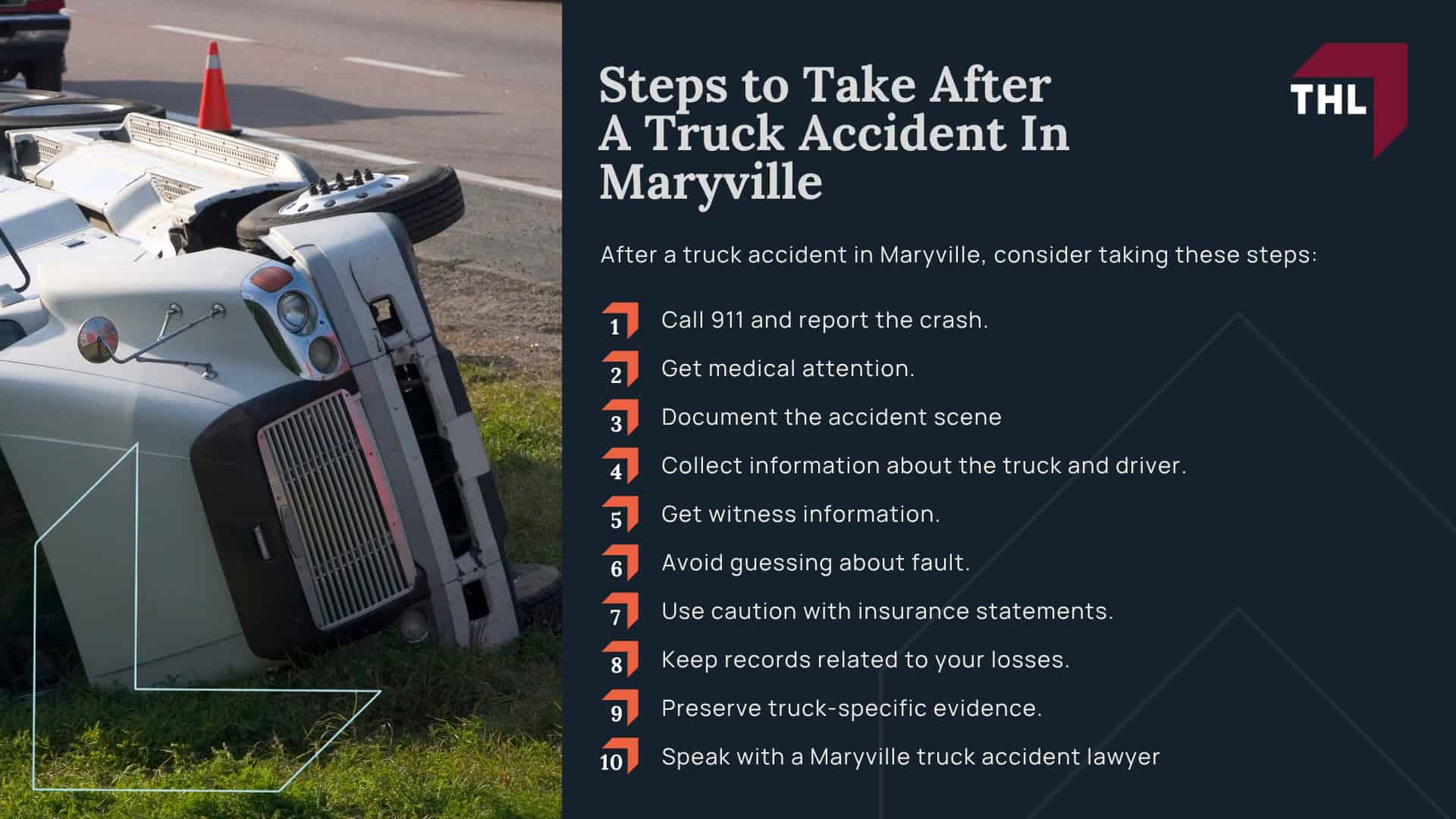
After a truck accident in Maryville, consider taking these steps:
- Call 911 and report the crash. Request police and emergency medical assistance when needed.
- Get medical attention. Some injuries, including head, back, spinal, and internal injuries, may not be immediately apparent after a collision.
- Document the accident scene. If you can safely do so, photograph or record the vehicles, truck and trailer, roadway, debris, skid marks, cargo, property damage, and visible injuries.
- Collect information about the truck and driver. Record the driver’s name, trucking company, insurance information, license plate, truck number, and other identifying information available at the scene.
- Get witness information. Names and contact information from other drivers, passengers, or bystanders can help establish how the crash occurred.
- Avoid guessing about fault. Give police accurate factual information, but do not speculate about the cause of the accident or accept responsibility for something you are unsure about.
- Use caution with insurance statements. Before providing a recorded statement to another party’s insurance company, understand who is requesting it, why it is being requested, and how the statement may be used.
- Keep records related to your losses. Save medical records and bills, repair estimates, photographs, employment records, and documentation of lost income and other accident-related expenses.
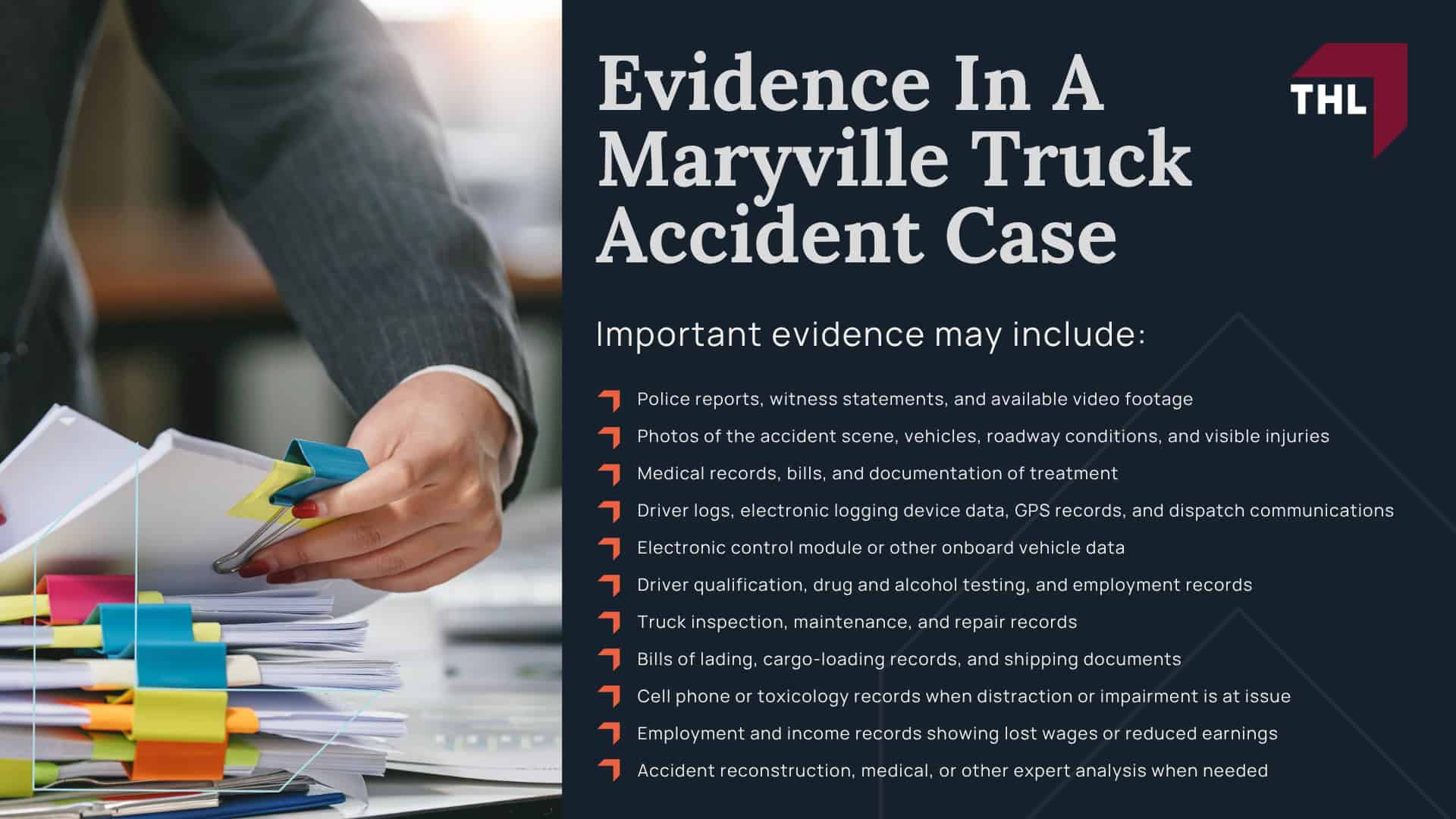
- Preserve truck-specific evidence. Driver logs, electronic logging device data, onboard vehicle data, dispatch communications, inspection records, and maintenance documents may become important when investigating the crash.
- Speak with a Maryville truck accident lawyer. An attorney can identify evidence that should be preserved, investigate potentially responsible parties, and explain the filing deadlines and legal options that may apply.
Some of the most important evidence in a commercial truck case may be controlled by the motor carrier or another company involved in the truck’s operation.
Acting early can make it easier to identify and preserve those records before they are overwritten, discarded, or otherwise become unavailable.
Types Of Truck Accidents That Can Occur In Maryville
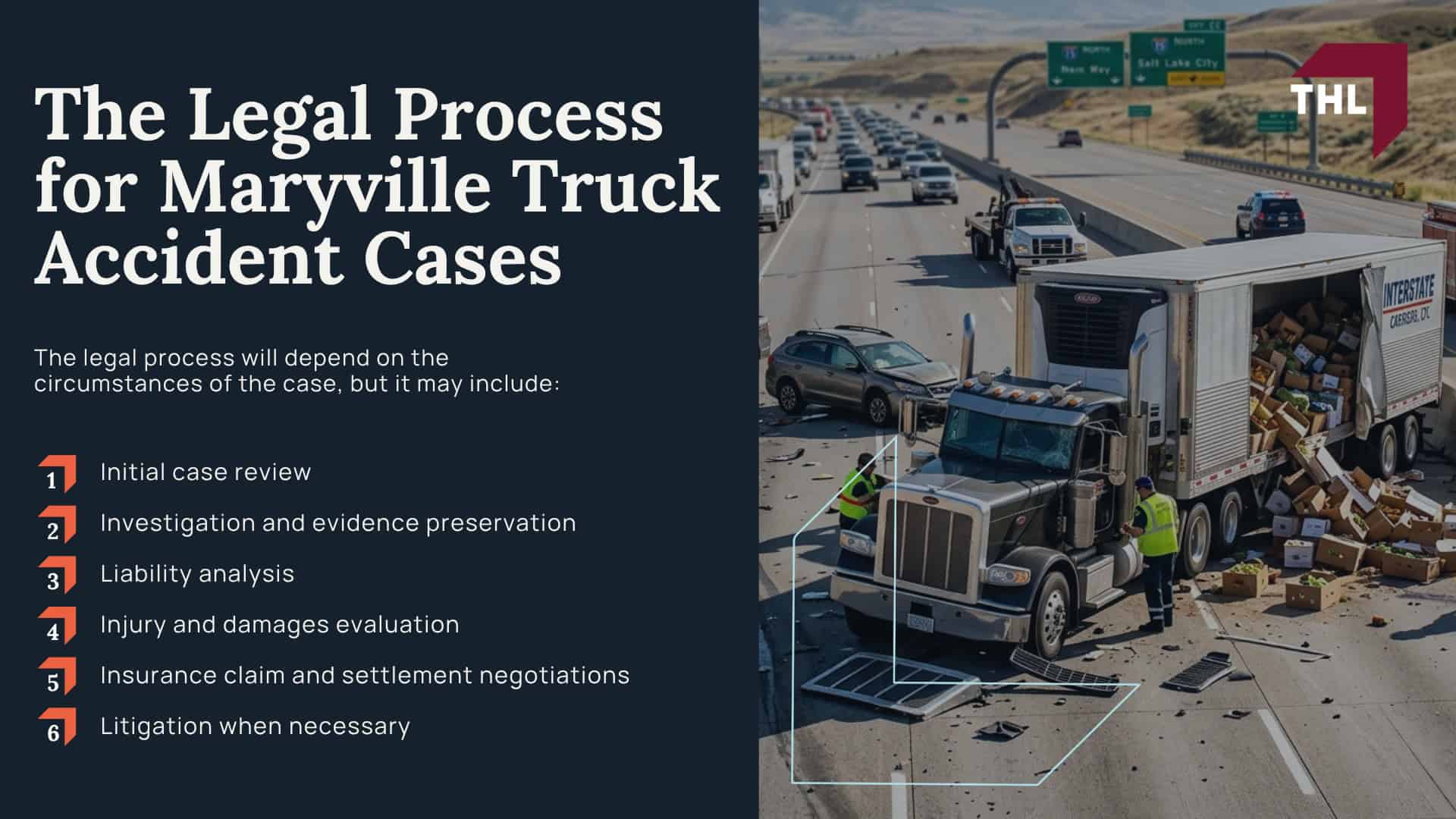
Truck accidents in Maryville can occur on local roads, interstate routes, commercial corridors, construction zones, and other areas used by passenger vehicles and commercial traffic.
The type of collision can help determine how the crash happened, what evidence may be available, and which parties may be responsible.
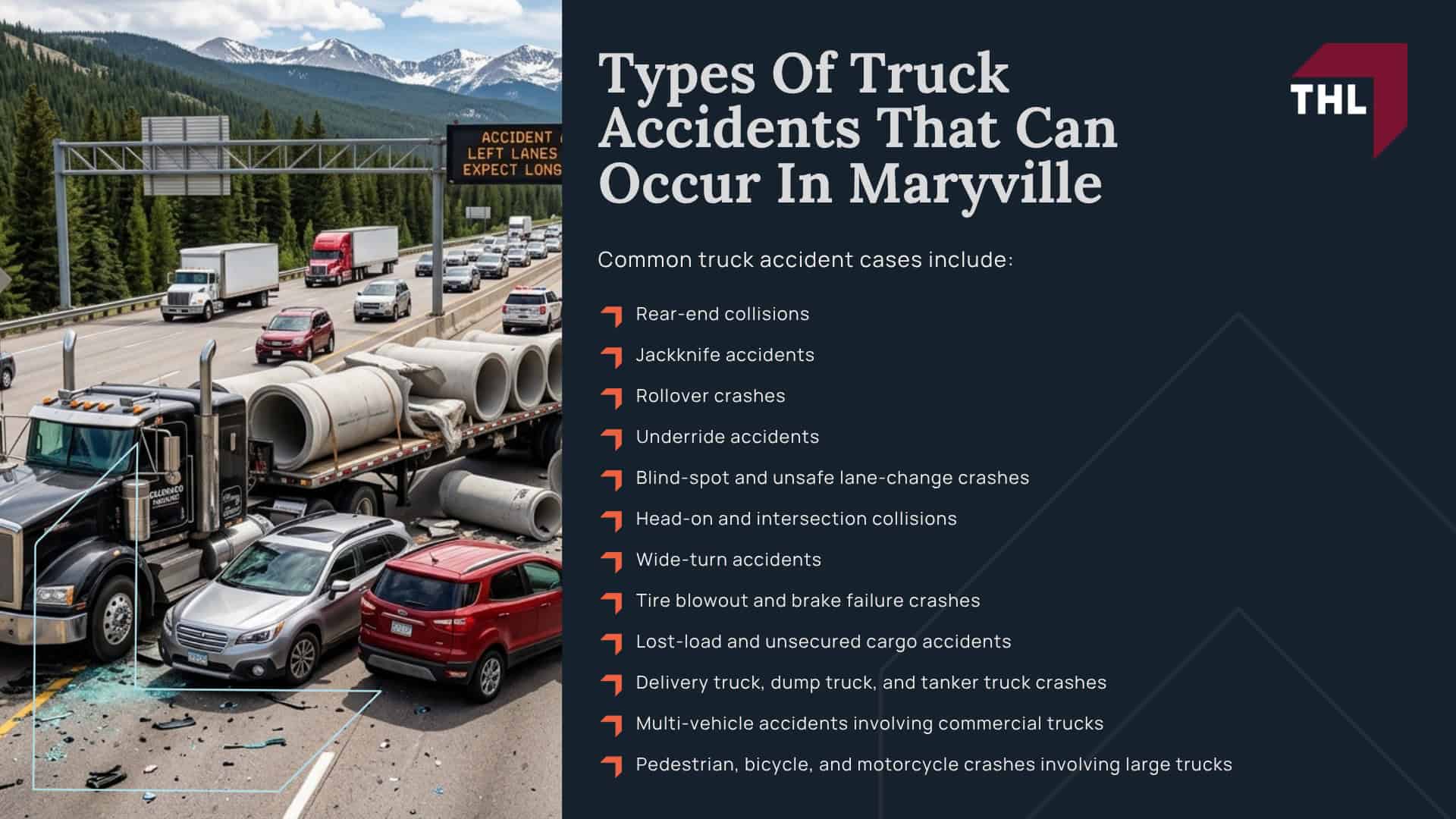
Common truck accident cases include:
- Rear-end collisions
- Jackknife accidents
- Rollover crashes
- Underride accidents
- Blind-spot and unsafe lane-change crashes
- Head-on and intersection collisions
- Wide-turn accidents
- Tire blowout and brake failure crashes
- Lost-load and unsecured cargo accidents
- Delivery truck, dump truck, and tanker truck crashes
- Multi-vehicle accidents involving commercial trucks
- Pedestrian, bicycle, and motorcycle crashes involving large trucks
Common causes of these crashes can include speeding, distracted driving, driver fatigue, impaired driving, unsafe lane changes, poor vehicle maintenance, improperly secured cargo, inadequate training, and violations of applicable trucking safety rules.
In some cases, accidents happen because more than one person or company contributed to the crash.
Common Truck Accident Injuries
Truck accidents can cause serious injuries because of the size and weight differences between large commercial trucks and passenger vehicles.
The Insurance Institute for Highway Safety reports that large trucks can weigh 20 to 30 times as much as passenger vehicles, while their greater height and ground clearance can increase the risk of underride in collisions with smaller vehicles.
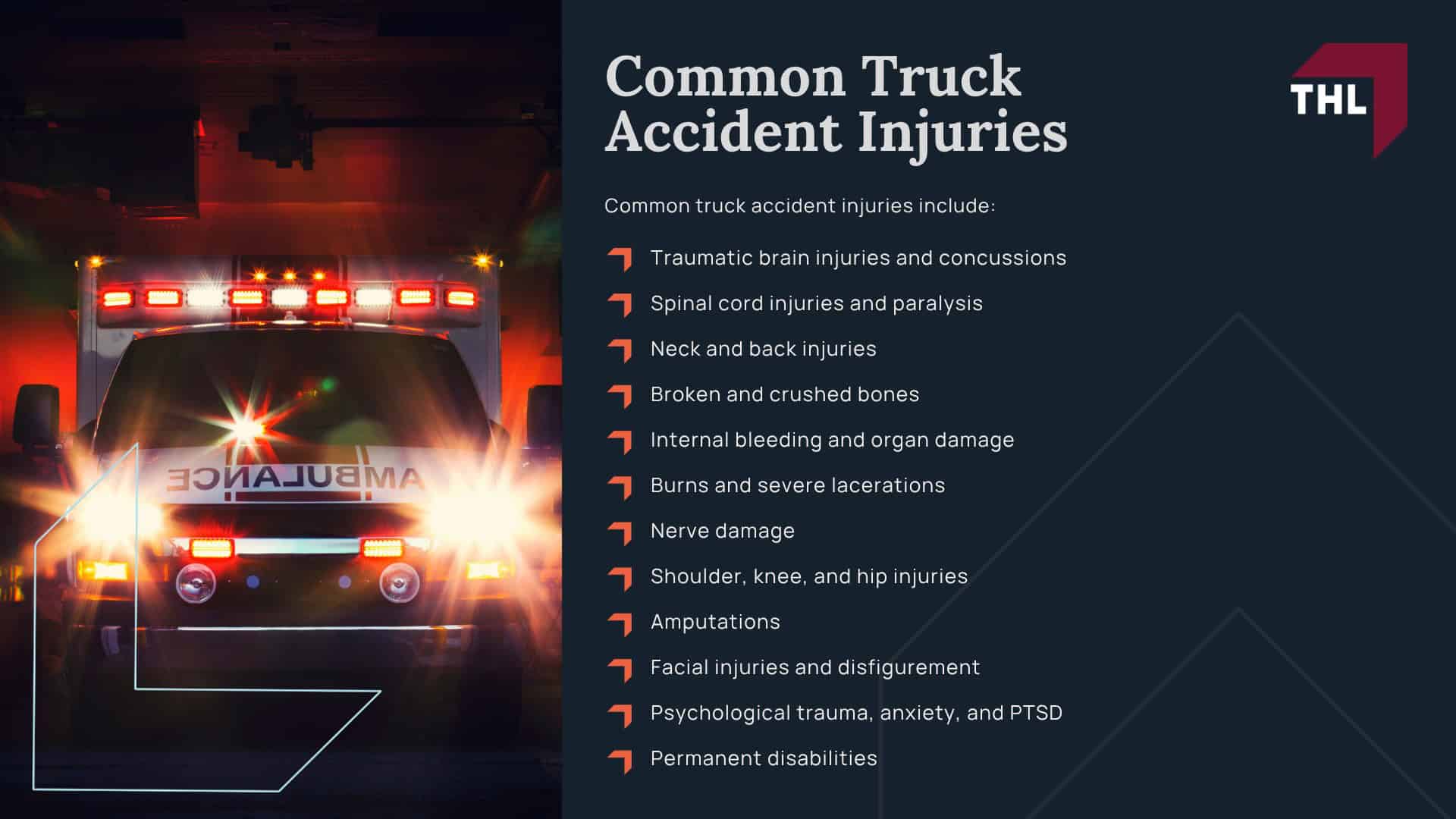
Common truck accident injuries include:
- Traumatic brain injuries and concussions
- Spinal cord injuries and paralysis
- Neck and back injuries
- Broken and crushed bones
- Internal bleeding and organ damage
- Burns and severe lacerations
- Nerve damage
- Shoulder, knee, and hip injuries
- Amputations
- Facial injuries and disfigurement
- Psychological trauma, anxiety, and PTSD
- Permanent disabilities
The effects of a serious truck accident can extend well beyond the initial emergency treatment.
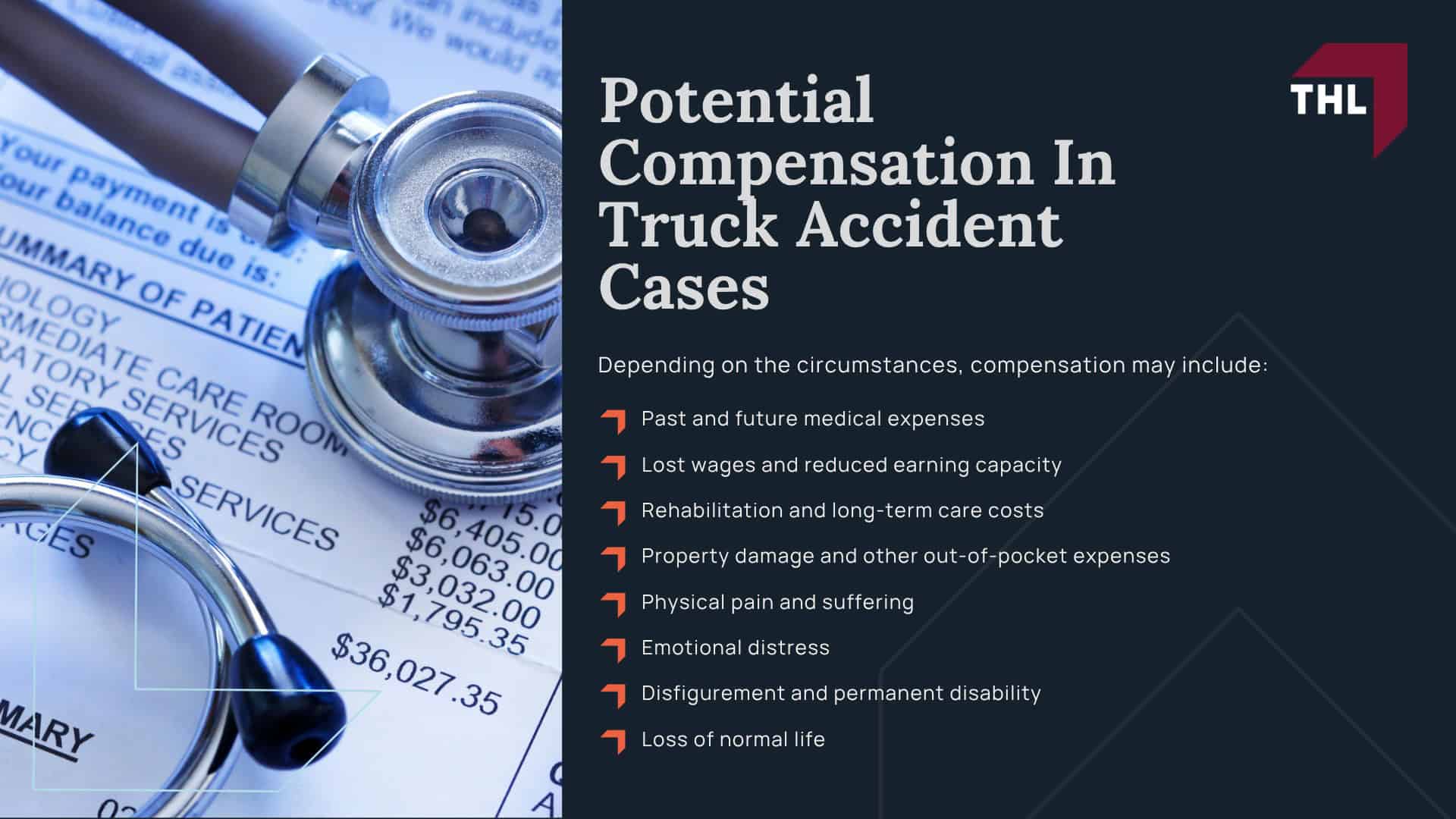
An injured person may require surgery, physical therapy, rehabilitation, medication, assistive devices, or ongoing medical care, and some injuries can result in permanent limitations or an inability to return to work.
Medical records can help document the relationship between the truck accident, the injuries suffered, and the treatment required.
Records of hospital care, follow-up appointments, rehabilitation, work restrictions, and future treatment recommendations may also help establish the medical and financial effects of the crash.