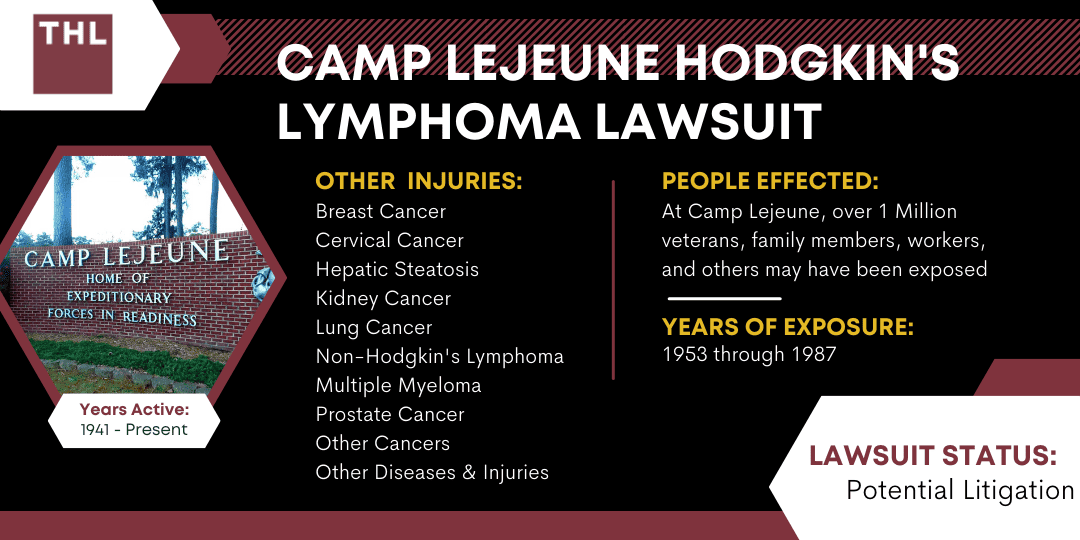
Camp Lejeune veterans, civil workers, and family members were unaware that they had been drinking and using contaminated water for years.
This long-term exposure to toxic substances led to the development of severe medical conditions, including Hodgkin’s lymphoma.
For those diagnosed with Hodgkin’s lymphoma, the disease can profoundly impact their physical health and daily life, often requiring intensive treatments and regular medical follow-ups.
Hodgkin’s lymphoma can be fatal, especially if not diagnosed and treated promptly — however, with early detection and appropriate treatment, many patients can achieve remission and have a good prognosis.
If you or a loved one were diagnosed with Hodgkin lymphoma after being exposed to contaminated drinking water at Camp Lejeune, you may be eligible to file suit.
Contact our Camp Lejeune attorneys for a free consultation, or use the chatbot on this page to find out if you qualify for a Camp Lejeune claim instantly.
About Hodgkin’s Lymphoma
Hodgkin lymphoma is a cancer that originates in the lymphatic system, a critical part of the body’s immune system.
Aside from helping fight infections and diseases, the lymphatic system also helps control fluid flow throughout the body.
Lymphoma starts when white blood cells called lymphocytes grow out of control and don’t die naturally.
They become cancer cells that swell and form lymph node tumors.
Since lymph tissue is found throughout the body, Hodgkin’s lymphoma cells can start almost anywhere.
The most common sites are in the upper part of the body, such as the chest, neck, or under the arms.
It then spreads throughout the lymphatic vessels from lymph node to lymph node to other body parts.
Later stages of this cancer can also disperse to the bone marrow, liver, lungs, spleen, and other organs.
The most common symptom of Hodgkin’s lymphoma is swollen lymph nodes, usually in the neck, underarm, or groin area.
People often mistake this bump for an infection, causing them to delay diagnosis and treatment.
Hodgkin’s Lymphoma and Camp Lejeune Water Contamination
Exposure to water contamination at Camp Lejeune has been linked to an increased risk for certain cancers, including Hodgkin’s lymphoma.
Scientific studies linking Hodgkin disease or Hodgkin lymphoma to the toxic chemicals in Camp Lejeune’s water supply include:
- Environmental Health Perspectives: Trichloroethylene and cancer: epidemiologic evidence.
- Journal of Occupational and Environmental Medicine: Cancer in relation to occupational exposure to trichloroethylene
- Journal of Epidemiology: Mortality of Aerospace Workers Exposed to Trichloroethylene
- Journal of Occupational and Environmental Medicine: Mortality of aircraft maintenance workers exposed to trichloroethylene and other hydrocarbons and chemicals: extended follow up
- Scandinavian Journal of Work, Environment & Health: Occupational exposure to organic solvents and Hodgkin’s disease in men: A case-referent study
- International Journal of Human and Ecological Risk Assessment: Trichloroethylene in the Environment: Public Health Concerns
- Journal of Experimental and Clinical Hematology: Chronic exposure to benzene as a possible contributory etiologic factor in Hodgkin’s disease
- American Journal of Industrial Medicine: Benzene and lymphohematopoietic malignancies in humans
- British Journal of Cancer: Malignant lymphoma and exposure to chemicals, especially organic solvents, chlorophenols and phenoxy acids: a case-control study
Other Causes of Hodgkin Lymphoma
The exact cause of Hodgkin’s disease is unknown.
However, some medical experts believe that the Epstein-Barr virus triggers DNA changes that cause the production of Reed-Sternberg cells, the cancer cells in Hodgkin’s lymphoma.
The National Cancer Institute lists potential Hodgkin’s lymphoma risk factors. These include:
- Age: Early adults aged 20 to 39 are more likely to develop Hodgkin’s lymphoma.
- Sex: Men are more prone to the disease than women.
- Family History: Having a first-degree family member with Hodgkin’s lymphoma can increase your risk of developing the disease.
- Epstein-Barr Infection: Those infected with the virus are at a higher risk of developing Hodgkin’s lymphoma.
- HIV Infection: This virus weakens a person’s immune system, making them vulnerable to diseases like Hodgkin’s lymphoma.
- Chemical Exposure: Studies suggest that long-term exposure to dangerous substances, such as solvents, pesticides, insecticides, and other chemicals, can increase the risk of Hodgkin’s lymphoma.
Because of the improper disposal of cleaning solvents, Camp Lejeune victims were exposed to toxic chemicals without their knowledge.
As a result, some of them developed Hodgkin’s lymphoma years later.
Hodgkin’s Lymphoma Complications
Hodgkin lymphoma can have a devastating impact on a person’s quality of life, and the disease can even lead to death.
The National Cancer Institute cites several symptoms of Hodgkin’s lymphoma, including:
- Swollen Lymph Nodes: Painless swelling in the lymph nodes, typically in the neck, underarm, or groin, is the most common symptom of Hodgkin’s lymphoma.
- Fever: An abnormal fever of 100 degrees or higher may occur if Hodgkin’s lymphoma disrupts the body’s ability to control its temperature.
- Excessive Sweating: Excessive nighttime sweating can be a symptom of Hodgkin’s lymphoma.
- Weight Loss: People with Hodgkin’s lymphoma may experience severe or rapid weight loss.
- Pruritus: Severe skin itching is a common symptom, especially after taking a bath or consuming alcohol.
- Fatigue: People with Hodgkin’s lymphoma may feel drained and exhausted without any known cause.
Hodgkin’s lymphoma can lead to complications, especially if left untreated or the disease progresses:
- Weakening of the Immune System: As the disease affects the lymphatic system, it can weaken the body’s ability to fight infections, leaving individuals susceptible to other illnesses.
- Spread of Cancer: If not diagnosed and treated early, Hodgkin’s lymphoma can spread to other organs and tissues, making it more challenging to treat.
- Adverse Effects of Treatment: The treatments for Hodgkin’s lymphoma, such as chemotherapy and radiation therapy, can have significant side effects, including nausea, fatigue, and an increased risk of other health problems.
Fortunately, Hodgkin’s lymphoma is a treatable disease.
Additionally, the American Cancer Society states that the five-year relative survival rate of Hodgkin’s lymphoma patients improved from 80% to 89%.
However, Camp Lejeune victims may have suffered from Hodgkin’s lymphoma and other illnesses after decades of toxic exposure, delayed diagnosis, and medical attention.