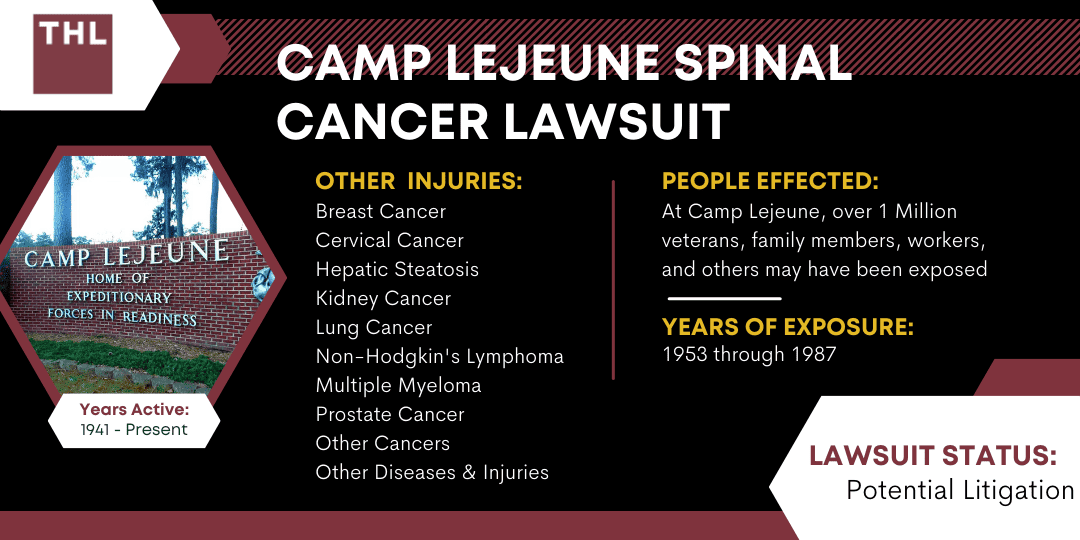
The toxic water contamination incident at Camp Lejeune resulted in countless and persistent life-threatening diseases for victims.
Cancer is one of the many well-documented diseases related to to Camp Lejeune water contamination.
Spinal cancer is among the many types of cancers that Camp Lejeune victims may be at an increased risk to develop.
Exposure to volatile organic compounds (VOCs) has been known to affect the central nervous system (brain and spinal cord).
Medical evidence linking spinal cord injuries, tumors, and cancer to contaminants found in the water at Camp Lejeune includes:
- Scandinavian Journal of Work, Environment & Health: Irreversible effects of trichloroethylene exposure on the central nervous system
- Japanese Journal of Health Science: Immunotoxic Effects of Trichloroethylene and Tetrachloroethylene
- Neurobehavioral Toxicology and Teratology: The neurobehavioral toxicity of trichloroethylene
- International Archives of Occupational and Environmental Health: Transverse lesion of spinal cord after accidental exposure to trichloroethylene
- Critical Reviews in Oncology/Hematology: Occupational exposures in rare cancers
- Diagnosis, Management and Modeling of Neurodevelopmental Disorders: The environmental pollutant trichloroethylene disrupts key neural pathways during brain development
- Journal of the National Cancer Institute: Association Between Outdoor Air Pollution and Risk of Malignant and Benign Brain Tumors: The Multiethnic Cohort Study
- International Conference on Health Informatics and Medical Application Technology: Measurement of Benzene Levels in Decrease Hemoglobin Levels among Printing Industry Workers
About Spinal Cancer
The spinal cord is a crucial component of the central nervous system.
The spinal cord transmits messages between the brain and the rest of the body, controlling essential functions such as movement, sensation, and reflexes.
Spinal cancer is a rare but devastating condition that affects the spinal cord.
There are many types of spinal tumors, but here are the most prominent types:
- Intramedullary Tumors: These types of tumors grow within the spinal cord itself. These types include ependymomas, astrocytomas, and gliomas.
- Extramedullary Tumors: In contrast, these tumors grow around the surrounding structures of the spinal cord and reach the organs. These types of tumors include meningiomas, schwannomas, and neurofibromas.
Spinal Cancer and Its Causes
The exact causes of spinal cancer are not fully understood, and in many cases, the development of spinal tumors remains idiopathic.
However, there are several risk factors and potential contributing factors that have been associated with the development of spinal cancer:
- Genetic Predisposition: Some individuals may have a genetic predisposition that makes them more susceptible to developing spinal cancer or other cancers of the central nervous system.
- Exposure to Radiation: Exposure to ionizing radiation, whether through medical radiation therapy or environmental factors, might increase the risk of developing spinal tumors.
- Family History: A family history of spinal tumors or certain genetic conditions associated with tumor development can increase the risk of spinal cancer.
- Immune System Weakness: Individuals with weakened immune systems, such as those with HIV/AIDS or those who have undergone organ transplants and are on immunosuppressive medications, may have a higher risk of developing spinal tumors.
- Chemical Exposures: Limited evidence suggests that exposure to certain chemicals or toxins in the environment may be associated with an increased risk of spinal cancer.
Spinal Cancer Complications
Spinal cancer can lead to various complications that severely impact an individual’s quality of life.
Here are some of the most notable complications associated with spinal cancer, spinal tumors, and cancers of the central nervous system:
- Neurological Deficits: As spinal tumors grow, they can exert pressure on the spinal cord, leading to various neurological deficits. Patients may experience weakness, numbness, tingling, or loss of limb sensation.
- Pain and Discomfort: Spinal cancer often causes severe back pain, which can be constant and debilitating. The pain may radiate to other parts of the body, making it challenging for patients to find relief.
- Loss of Bladder and Bowel Control: As the spinal tumor affects the nerves responsible for controlling bladder and bowel function, patients may experience urinary and fecal incontinence.
- Psychological Impact: Spinal cancer can also affect a patient’s mental health. The uncertainty of the disease’s progression, coupled with the physical and emotional challenges, can lead to anxiety and depression.
Early diagnosis and a comprehensive treatment plan that may include surgery, radiation therapy, chemotherapy, and supportive care are crucial in managing spinal cancer and improving the patient’s prognosis and overall well-being.